





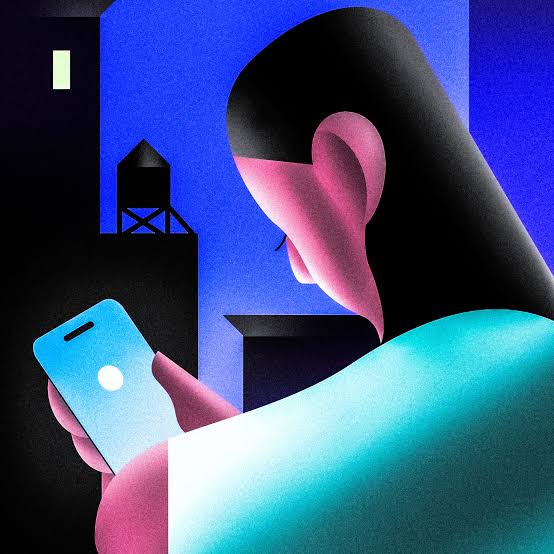
We live in an age of instant communication, which makes it difficult to even imagine a time when connection required waiting. To share good news, ask after someone’s health, or simply tell a loved one they were missed, people wrote letters, sealed them in envelopes, delivered them to the post office, and waited weeks and, if they were lucky, days, for a response. We were intentional about our communication. We spent time articulating our feelings because our communication had to carry the weight of distance, time, and longing.
Naturally, we desired a faster, easier and more efficient mode of communication. We wanted something that could minimise the ache that distance brought, and we waited for technology to answer. We are witnessing an era where communication travels as fast as thought itself. A message takes seconds to reach another continent. Families separated by cities, countries and time zones can feel physically present with each other through video calls. Technology has then, undeniably, solved humanity’s oldest logistical problems: distance no longer has to mean absence. Yet, there seems to be a conundrum: the loneliness that distance created, technology has only worsened. As a 2023 Meta Platforms-Gallup survey found, “Nearly one-fourth of people — more than a billion people — worldwide feel very or fairly lonely.” It would be far too convenient to attribute the problem solely to technology. The problem lies in how we turned a means into an end in itself and allowed technology to occupy far more space in our lives than it was ever meant to.
Communication technology came to solve our problems, make our lives easier and bridge distance. It was not created to replace human connection. It was not intended to be a substitute for relationships. Somewhere along the way, we confused connectivity with connection and started chatting with chatbots rather than our families. We started replacing family time for screen time. We prefer asking about wellbeing over a voice note instead of visiting the sick; watching movies and spending quality time together are replaced with ‘Netflix and chill,’ where everyone is glued to their screens like a geek, and get-togethers somehow dulled in the background.
Technology did not just solve the communication problem but also another: boredom. Earlier, people gravitated toward human interaction when they were bored. They spent evenings together on their verandas; they visited their siblings without formal dinner invitations. They took walks with their neighbours and played chess with them. Now, ‘boredom’ seems to be a word I last heard in school. It has somehow disappeared with the sands of time; every time we are idle, we can simply pick up our phones. Memes. Reels. Endless content. The aftermath of this lack of boredom is a society that is perpetually stimulated yet alarmingly isolated.
The pocket-sized worlds that all of us carry offer an endless stream of distraction; there are no limits on how much one can scroll, and the seamless switching from one application to another ensures our distraction remains uninterrupted. The attention economy thrives on our inability to reflect. Reflection happens when one is alone with his thoughts. In silence, stillness and boredom. Thanks to our phones, we have almost no memory of how to sit with discomfort or boredom; we know very well how to distract from it. This spiral has created an illusion of connection.
Another bestowal of communication technology, especially social media, upon our lives is the way it has altered the architecture of our relationships. In previous times, people were rarely confused about who their closest friends were and who remained acquaintances. Today that distinction is no longer so simple. Likes, comments, streaks and public affirmations cascade an impression of closeness where little closeness may actually exist. A person celebrating your success online may remain absent during your rough patches of life. This is the strange dilemma of digital life; almost everyone seems to be accessible, familiar and connected. We have never before been so in touch yet so alone.
This hyperconnectivity has also left its blot on how we perceive our own selves. Arguably, its most psychologically dangerous result is the collapse of natural comparison. Research increasingly points to the psychological consequences of excessive social media use. A study of 467 adolescents found a clear association between higher social media use and lower self-esteem. Before this hyperconnectivity, individuals had a close circle to measure themselves against. However, now social media places the lives of multi-billionaires, celebrities, fitness enthusiasts, influencers, classmates, colleagues and neighbours all within the same landscape.
Comparison is no longer linear or local. It has become global, relentless and often deeply unfair. Against this backdrop, feelings of inadequacy almost become inevitable. We are persistently exposed to curated achievements, filtered happiness, and pompous news of success. We pick up our phones, and almost everyone seems to be living their dream lives, achieving, travelling, celebrating and ticking off things from their vision board. The verification of whether this portrayal reflects reality is secondary; the exposure already influences our perception. Gradually, hypervisibility breeds insecurity, low self-esteem, and social anxiety. Pitted against a competition which has no commonality, one feels in a perpetual state of not being enough.
Much to our surprise, this constant connection often results in emotional withdrawal, and as many studies now also evidence the same, Generation Z actively avoids phone calls and expresses annoyance due to constant accessibility. From feed posts to stories and the new Instagram feature, ‘instants’ is an excellent example of how Gen Z wants to control this hypervisibility and is exhausted by the constant fear of being seen. Even though communication has become easier than ever, connection has culminated in a concerning modern problem.
This inverse relationship between the ease of communication and our desire to communicate is not a natural phenomenon. The issue is not ease itself, but rather the means we mistake for ends. The issue is that we mistake means for ends. We overestimate tools and let them crawl beyond their purpose. A painkiller’s purpose is to numb our pain for some time, especially if we start using it to keep us distracted from identifying the root cause of that pain. We are not using it for its purpose; we are misusing it through its overuse.
Technology functions similarly. Phones, social media, and instant communication do not inherently make us feel lonely, isolated, or inadequate. They are tools, remarkably effective ones. However, when tools designed to facilitate connection begin replacing the very relationships they were meant to support, they develop a crack in the foundation. We need to retreat, build a stronger social infrastructure, and prioritise community-centred urban planning, parks, libraries, community spaces, and activities that encourage people to gather and interact. Policymakers need to identify loneliness as a serious public health concern and raise awareness of its real psychological and physical consequences. Having said that, policy alone cannot eliminate a problem that is deeply human; we must take a step back and reassess our relationship with technology. Addressing loneliness requires more than just limiting screen time; we need to learn to sit with our thoughts instead of distracting from them and consciously cultivate a culture of genuine connection, one rooted in meaningful human bonds.
so true
the author aptly captured the prevailing times
“We are not using it for its purpose; we are misusing it through its overuse.”
Applicable to my kids 👏🏻👏🏻
As sad as it is, it is true.
Lovely articulation of ideas, Ms. Hafsa.
Very well written and very true! It’s very interesting to note how isolation caused by excessive social media use affects the way we design our spaces. It’s something that unfortunately affects all of us in every way. Very good article!
wow, an amazing article
🙈
So well written.
Good
highly agreed and perfectly explained!
Unfotunately so true, we are talking to chatgpt but not our own families! And we complain of depression