





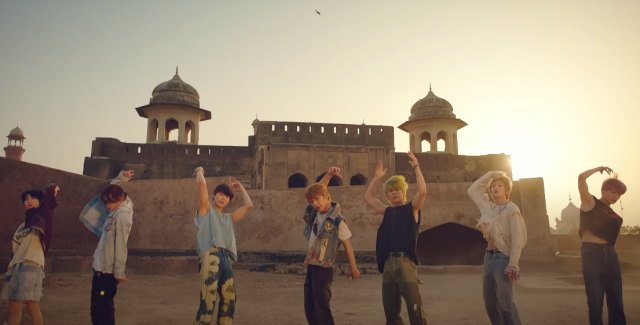
A teenager in Karachi listens to K-pop on his/her way to college. A designer in Paris incorporates Japanese streetwear with African prints. A New York rapper uses Latin rhythms and internet lingo. This is the collage of culture of the new modern world.
Music, fashion, and language have become as quick as a flash. One playlist on the phone could have sounds from three continents. One post on social media can lead one into styles that used to be exclusive to a specific neighbourhood. Culture is not a slow process but a rapid one that spreads in seconds.
The streaming sites are causing this change. The listeners do not have to stick only to the local radio stations. They can switch between Afrobeats and K-pop, indie rock and Punjabi rap in the course of an hour. There is a looser sense of genre. Artists are free to make borrowings of sounds and experiment with various influences.
The same case is true with fashion. Streetwear has now become a universal language. Hoodies, sneakers, oversized jackets, and mixed patterns are found in cities that are thousands of miles apart. Designers incorporate symbols of culture to make something different. A Tokyo brand may make use of Western silhouettes and add some traditional Japanese elements.
Language is also evolving. The internet jargon has no boundaries. Memes contain words and phrases that belong to other cultures, captions, or common speech. The youth blend terms used in numerous locations without the slightest consideration.
This fusion is exciting to many creators because it creates new avenues of creativity. Artists are no longer limited by geography; they can refer to various traditions and use them to develop new ideas. The result of music, fashion, and art is so lively that it can seem unpredictable.
This freedom assists the smaller cultures in reaching global people. A local song may explode globally, and an old-fashioned pattern may be seen in the runways. To certain communities, international exposure is a source of pride and chance.
This trend is, however, not perceived positively by all people. Critics fear that there is a danger that, with constant mixing, the culture can be lost. In the event that all this is mixed, it is possible that unique traditions lose their original context and that cultural elements will be viewed as a trend, not as a symbol of something important.
The credit is also in question. In some cases, a global brand or artist uses styles of a particular culture without giving credit to the source. What started as an intimate tradition may end up being a fast aesthetic decision, and admiration may degenerate into appropriation.
The culture is evolving speedily in the digital world. What used to take decades to disseminate is now transmitted within 24 hours, creating a multicoloured, multifaceted combination of sounds, styles, and voices.
This is the era of time when culture is a giant collage. Fragments of different locations lie in one another, harmonising in some cases and at other times warring.
It is still unclear whether this moment is the freedom of creativity or the flattening of the culture. What is evident is that the current cultures are more interconnected than ever before and are exerting an influence on each other, something that the past generations never had to go through.