





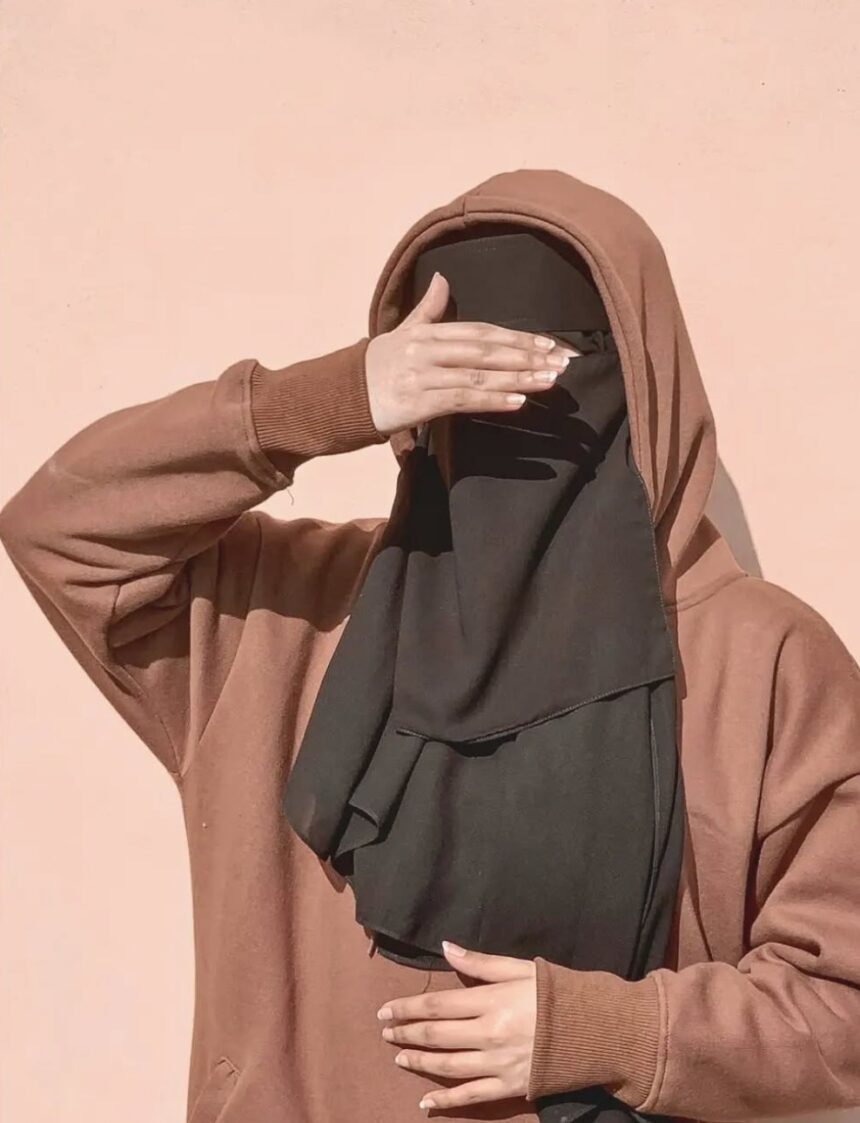
Women are judged all around the world for the way they dress. The way they carry themselves and the amount of skin they show, every little detail is scrutinised by society. From a young age, girls are policed on what they wear and given instructions on how to dress. They grow up with the idea that society’s opinion about their outfit is significant and that they must not gain a reputation for dressing in a way that the people around them are not fond of.
But society’s opinions change. The judgement of a woman’s clothes varies depending on the person who is judging. In some cases, women are told to be more modest and to cover up. Thus, if a woman’s outfit is considered immodest, it is assumed that she is seeking a certain kind of attention. This judgement ignores the possibility that the woman might just like the style or the way the outfit looks. On the contrary, in some situations, women who dress modestly (mostly due to religious reasons) are considered ‘oppressed’ and ‘subjugated’. This happens quite frequently with Muslim women who wear the hijab and burqa. In both cases, a woman’s situation and character are criticised based on their outfit, which is unfair because these do not correlate, thus showing that there is no winning for women when it comes to modesty.
The Objectification Theory developed by psychologists Barbara Fredrickson and Tomi-Ann Roberts states that living in a society that constantly sexualises and scrutinises a woman’s body causes her to internalise the perspective of the observer. Women are socialised to view their bodies as objects to be evaluated. As a result, women see their bodies through the eyes of an observer and habitually monitor their appearance. Dangerous habits emerge due to this constant evaluation, like eating disorders and mental health issues such as unipolar depression. Thus, women are seen more like ‘objects’ than humans with emotions and agency.
Nowadays, society says women have the choice to wear what they want. However, it can be argued that this ‘choice’ is just an illusion. Women live with the fear of others having a negative perception of them. Thus, they do what society wants them to do and not what they want to do. This can be seen in the everyday lives of women who wear modest clothing just to avoid explaining and defending themselves in front of family and peers. Moreover, women also make the conscious decision to wear modest clothes just to avoid harassment. This shows that there is no choice. Women do what society likes because if they don’t, it could cost them their lives.
Modesty is a weapon that society uses for victim blaming. When a woman is raped or harassed, instead of blaming the perpetrator, society asks, “What was she wearing?” In the legal system, even when the woman is clearly the victim, modesty is used to pour all the blame on her. The actual perpetrator either gets freed or gets a minor punishment, while the victim bears the physical and emotional pain of the event throughout her life.
The constant suffering of women caused by this ‘modesty tightrope’ has forced women to step up for themselves and reject such ideas. Women have started to raise their voices in order to stop the objectification of their bodies and to make sure perpetrators get the punishment they deserve. Furthermore, women have stopped caring about what society thinks of them, and they have started dressing the way they like instead of doing what society favours, taking control over their own bodies and releasing themselves from the tight hold of society’s opinions, thus limiting the influence of stereotypes relating to modesty.
Mashallah very interesting article related to women. The author of this article must be appreciated for this kind of work!
This article literally shows what women goes through because society is based on patriarchy and these norms make the lives hell of women.
Women deserve the freedom to dress according to their own values and preferences without being judged, stereotyped, or blamed for the actions of others.
An exceptionally insightful article that highlights the complexities and contradictions women often encounter in society.
The depth of analysis and clarity of expression are truly commendable.
Thank you for raising awareness about such a significant issue with grace and conviction.
Not just a article but my deep heart feelings…being hijabi I also feels depressed about these stereotypes n norms of society….the author must be appreciated for highliting this topic….
Very well written piece of work. Alot of issues are pointed out here which we sadly ignore in our daily life cuz it has become a norm. Loved that element. Keep going!!!
Acha
What struck me most is the paradox at the heart of the article: when society becomes too focused on appearance, even opposite choices can be judged for the same reason. A woman who covers is assumed to lack freedom, while a woman who uncovers is assumed to lack virtue. In both cases, people replace understanding with assumptions.
Perhaps true respect begins when we stop treating clothing as a reliable measure of character and start recognizing the complexity of individual choice. Freedom is not merely the ability to choose between options, but the ability to make choices without having one’s humanity reduced to them.
Very good article 👏
Very well written especially the depiction of societal norms is very appreciated. Great to see women actually speaking up rather than suffering quietly.
so well written. it perfectly explains the stereotypes of societies, amazing piece of work!!
Loved this article!Thank you for highlighting how often women’s choices are shaped by societal pressure rather than true freedom.
Very well written