





Political leaders in Balochistan have strongly opposed proposals to create new provinces on administrative grounds, claiming such moves could be intended to gain greater control over the province’s natural resources.
The leaders also cautioned against involving unelected and non-political figures in sensitive constitutional and political matters, saying public opinion should not be influenced through individuals lacking an electoral mandate.
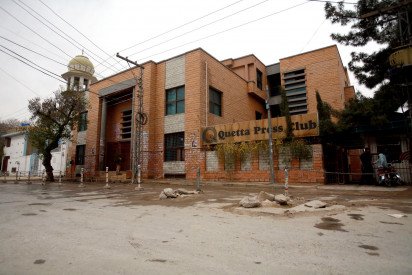
Their remarks came during a condolence reference at the Quetta Press Club commemorating the Babara massacre of Charsadda. Representatives from several political parties, lawyers’ groups and other organisations attended the gathering.
Speakers argued that the terrorism experienced by the region over several decades was not a sudden or unavoidable phenomenon, but the result of flawed policies whose consequences had been borne heavily by Pashtun, Baloch and Hazara communities.
They also criticised what they described as the weakening of Parliament, disregard for the public mandate and questionable electoral practices, warning that placing unelected individuals in positions of authority could further damage democratic institutions and public confidence.
The leaders said restrictions on political activity, journalism and the judiciary would be opposed. They also criticised arrests of political workers and the use of the Fourth Schedule against activists, arguing that political disagreement should not be treated as a criminal offence.
Participants welcomed the gathering of different democratic and political groups on a common platform, describing it as an important development.
They said greater cooperation among Pashtun, Baloch, Hazara and other democratic forces could help resist efforts to create political divisions between communities and strengthen the collective defence of democratic rights.