





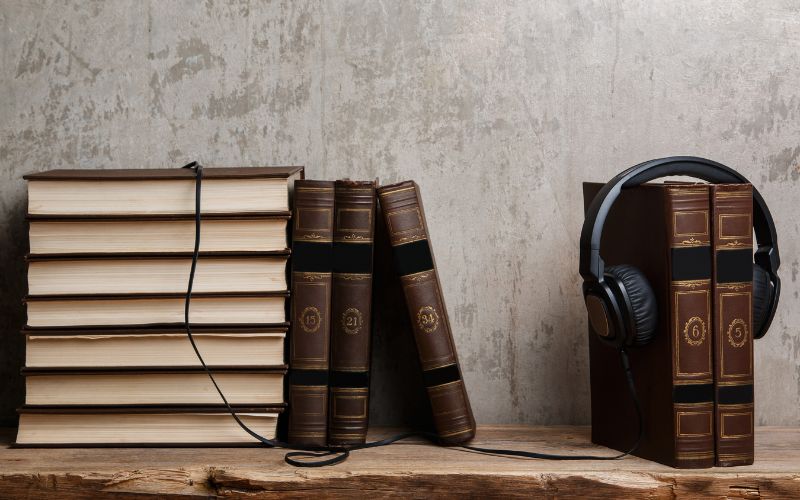
Long before ink touched paper, literature was words and voice. Stories were conveyed in rhythm and memory. Today’s audiobooks not only reframe the literature but also revisit the ancient tradition of storytelling.
In fact, this relationship is not new. Listening to literature may feel like a younger trend, but the roots go much deeper in oral tradition, the earliest form of storytelling. This is how stories were told, lived and reached us. The Legend of ‘Beowulf’ — the famous heroic epic — is considered the earliest literary masterpiece, first articulated through oral tradition and later rendered into text.
This historical foundation shapes a stark contrast. In that age, it was how the stories survived, but in the age we live in, it’s how the readers survive. Audiobooks have been the shoulder to ensure that visual impairments and dyslexic tendencies leave nobody outside the circle. Though the audiobook hustle may have started in response to reduced focus and the rise of multitasking, the psychological inclusivity and sustainability of the book culture are enough to justify the surge in its demand.
Beyond historical footprint and accessibility, experience itself decides how we welcome stories. Remember, watching a movie or listening to a loved one go about their day is important to you. You take it in as a crafted version before you process it. Audiobooks carry the same potential for listeners. Delve into acknowledging that voiced narratives do not invite you to construct them but receive them in a vocal presence that already gives them direction, tone and emotion. Listening to a narrator gives you the cadence unasked, while reading coaxes you to create your own rhythm. Perhaps the way it is voiced also shapes the reflection it leaves behind. Reading pulls in the inhale of ideas; take a moment to notice and then picture and voice them. Movies give you pictures; audiobooks are the voices, but reading lets you create both.
It really sits with us how the mind reshapes itself around what the ear receives. Neuroscience backs up the fact that listening heavily relies on memory. But as we read, it’s the sprinkle of our own imagination, not a mere memory of something narrated, which you try hard to remember to build up the story.
The resurgence of a famous tradition of antiquity against a modern backdrop makes one ponder about this ever-changing world. It becomes even more interesting that we have come from the domination of visual storytelling to spoken narration, witnessing the emergence of voice performance as a distinct art form.
What seems like a trend and a convenience is actually the revival of the art form where stories live in rhythm, tone and breath. In this audio era, literature is not only read but also heard and carried through the human voice again.
Informative and engaging likewise.👏
So glad that I got to read another article of yours! I love reading your words, they are just so knowledgeable and inspiring.✨❤️