





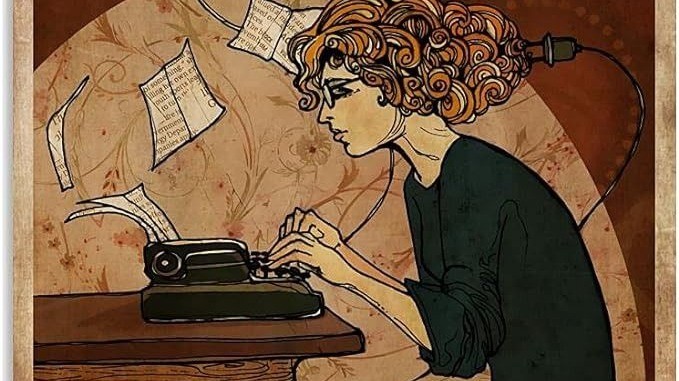
For centuries, male authors have been getting credit for the genius that wasn’t theirs. Some notorious writers allegedly stole their wives’ manuscripts or ideas and presented the great masterpieces as their own. One such widely speculated example is of F. Scott Fitzgerald, who used his wife Zelda Fitzgerald’s diaries and letters as an inspiration for his own novels. Zelda got to know about it when she read the novels and found similarities between her diaries and the novels Scott presented to the world proudly. She then made a public remark that plagiarism often transpires from home.
In the 18th, 19th, and 20th centuries, the work of female writers would be stolen, or they would not be allowed to publish their work openly. Their work would not be considered worthy of containing intellect. Many publications rejected the manuscript because it was submitted by a female before even giving it a read. Female writers then had to resort to writing under male pseudonyms in order to give their manuscripts a fair chance of getting published. It was a necessary step to ensure their drafts wouldn’t get rejected based on gender discrimination. Those literary eras were heavily male-dominant. Beloved writers like the Brontë sisters wrote under the pseudonyms of Currer, Ellis and Acton Bell. Authors like Mary Ann Evans, Louisa May Alcott, and Alice Bradley Sheldon had to follow the same suit.
As women didn’t get the liberty to express themselves, history shows that most historical records were often written by men, excluding the experiences of women and silencing their voices. Women were denied the ability to freely write and read. Silence was imposed on them so the male narratives could get preference. They were denied the resources and education that were preserved for the men. In A Room of One’s Own, Virginia Woolf argues that a woman doesn’t just require talent but material conditions to be able to write. Their absence from literature is because they aren’t getting the same opportunities that are available to male authors. The title is a symbolic way of conveying that for a woman to make use of her voice, she needs a room of her own where she can explore freedom, autonomy and authority over her own voice.
However, with the literary shift, more and more women are coming forward with their experiences to be known to the world. Female authors like Toni Morrison examined the tribulations of a Black girl in a marginalised society, offering a perspective into how history is laced with bigotry against them. Her work is primarily fiction, but it probes the real adversities women had to withstand.
A Woman Is No Man by Etaf Rum sheds light on inherited silence. It unveils the generational weight of abuse, misogyny and cultural expectations on women.
Essays in Men Explain Things to Me by Rebecca Solnit addresses the phenomenon of “mansplaining.” It investigates how women’s voices are spurned and their authority is queried.
In Our Bodies, Their Battlefield, Christina Lamb exposes the brutalities war ravages on women. Her work challenges the narratives that mostly focus on the plight of a man in war. This book is an unfiltered account of the barbarity women endure in their own words.
Storytelling in both fiction and nonfiction has become a tool for women to not just write but also to be “seen.” They’re harnessing literature to shape the history that denied them inclusion. They’re not rewriting history but reclaiming the hidden truths.