





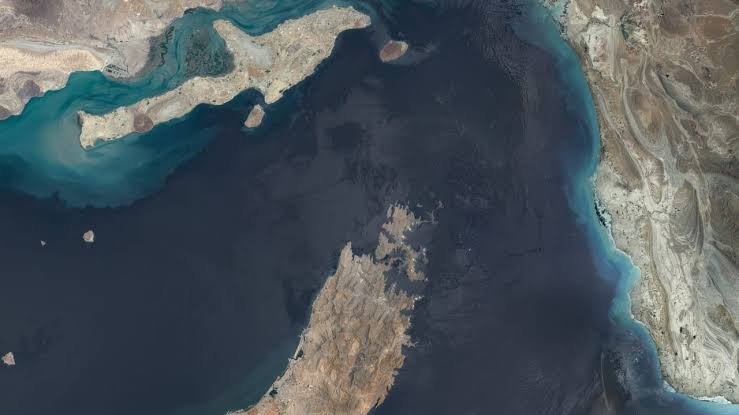
The future status of the Strait of Hormuz is still uncertain, following the blockade that started in early 2026.
• Current Status: In late September 2026, Iran proposed a 7-day reopening plan during the UN General Assembly, demanding a regional ceasefire, an end to the US naval blockade, the release of $12 billion in frozen funds, and an oil sanctions waiver. President Donald Trump and the US rejected the proposal, refusing to compartmentalize the issues without immediate discussion on Iran’s nuclear program.
• Ongoing Hostilities: On October 11, 2026, Iranian security chief Mohsen Rezaei dismissed the US response (passed by Qatari intermediaries) as “insufficient,” and the waterway continues to face disruption, maritime mine threats, and localized tanker attacks.
• Future Scenarios: If the US Navy continues to enforce a counter-blockade and escort operations (like shuttle services for tankers) to keep vital global energy and trade routes functioning, it will be despite high operational wear and tear.
• Stalled Regional Management: Previous back-channel negotiations, including an Iran-Oman framework that would have granted Iran control or fee structures over inbound commercial traffic through territorial waters, remain frozen due to US opposition to Iranian fee collection and unresolved security guarantees.
• Post-Midterm Escalation Risk: Analysts and reports indicate that a major military or diplomatic breakthrough is unlikely before the US November 2026 midterms, with potential for heightened military actions or expanded strikes afterward, depending on the political and security climate.
Pakistan is a Muslim country. Although I am a Christian, I am proud of it, but many times I feel sorry, as when Pakistan was coming into existence, the so-called Christian leaders of that time gave their vote for Pakistan only in hope of a ministry post. They did not make any deal for the future of their community. Like the Muslim leaders of Pakistan, they want a percentage or commission from any project. They are so used to it that if some country wants to help Pakistan with food shortages, they demand a percentage. I think their thinking is that they need money to move their democracy forward, because voters demand money, their supporters demand money, the election body cannot be favorable without money, and police, judges, and the election body need money. So they know that the tenure of their service is limited, and if they lose their position, they will be under accountability, so they spend their whole time earning money.
I am a very jealous man. When India can get an underwater way from India to Abu Dhabi, why did a Muslim country like Abu Dhabi not consider Pakistan first, as we are close to it in religion and geography? But our leaders cannot think.
Pakistan is lowland, although Western Balochistan of Pakistan and Eastern Balochistan of Iran are the same plateau. They share a continuous landscape of rugged mountains and high steppes (averaging 1,500 to 2,000 meters in elevation). The actual geographical “lowlands” in this context are located to the east of Pakistani Balochistan, where the rugged mountains drop sharply into the Indus River plains of Sindh and Punjab.
If, with the cooperation of Pakistan and Iran, an oil channel pipeline from Iran to Pakistan is made, this pipeline will have two world-class seaports: one is Karachi and the other is Gwadar, and Iran will be able to sell its oil. It needs only a few things. If we see the topography of East Balochistan and West Balochistan, a pipeline on the ground is feasible from east to west Balochistan without any steep downhill of highly elevated mountains, and will naturally push petroleum products to its destination in Pakistan, when Iran is taking other Muslim countries’ help, Pakistan is an Islamic country too.
• It depends on the Balochi people who are busy in insurgent activities, because no country, even Iran, will invest where people are destroying factors of their countries.
• Leaders of the country should let Pakistan develop without reasoning. If Iran starts selling its oil…