





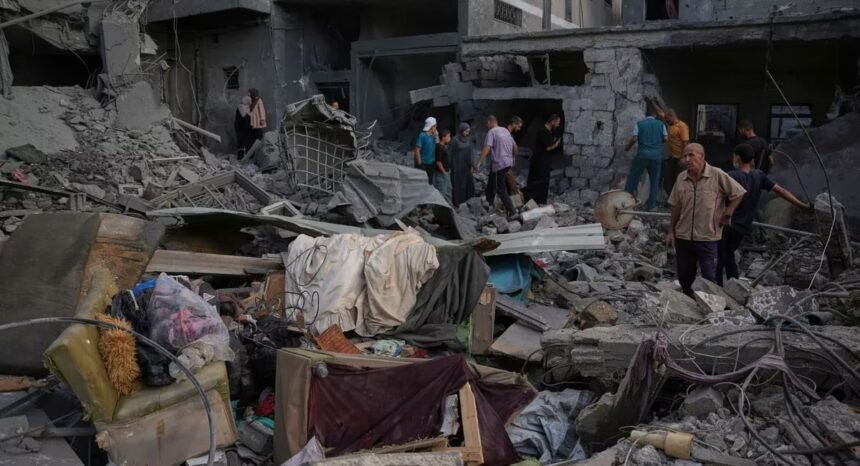
GAZA CITY: One year after a US-brokered ceasefire was announced in Gaza, displaced Palestinians say continued Israeli strikes, limited humanitarian aid and the absence of reconstruction have left them with little hope of a return to normal life.
Although Israel has reduced the intensity of its attacks, strikes continue and Israel now controls around 70 per cent of the territory, according to the report. Reconstruction envisaged under the ceasefire plan has yet to materialise.
“Nothing has changed for the better; everything has gotten worse,” displaced resident Fatima Awkal told AFP, saying shelling and the sound of drones continued to disrupt daily life.
Another displaced resident, 51-year-old Ahmed Jonaid, said he had expected to return home after the ceasefire was announced. Instead, he remains in a displacement camp, sleeping on makeshift bedding and carrying water back to his tent.
According to the United Nations, 82 per cent of standing structures in Gaza were damaged or destroyed by mid-2026. With much of the population displaced during the war that followed Hamas’s October 7, 2023 attack, many residents continue to live in tents and makeshift shelters, where overcrowding and poor sanitation have contributed to disease outbreaks.
Ahmed Shawan, a doctor at a hospital in Khan Yunis, said the ceasefire had yet to bring meaningful changes on the ground, describing it as an agreement that existed “only on paper”.
The agreement’s second phase was intended to include a political transition away from Hamas rule, with technocrat Ali Shaath appointed to lead the National Committee for the Administration of Gaza. However, Hamas effectively remains in charge of security, while Shaath has maintained a low profile.
Five countries, including Morocco, have agreed to join the International Stabilisation Force intended to prepare for Gaza’s post-war period, but troops have yet to begin operating in the territory.
Israel continues to control Gaza’s entry points and permits only limited aid to enter, according to the report. Displaced resident Ismail Hamouda said many people still lacked drinking water, food and financial assistance, adding that conditions in displacement camps continued to deteriorate.