





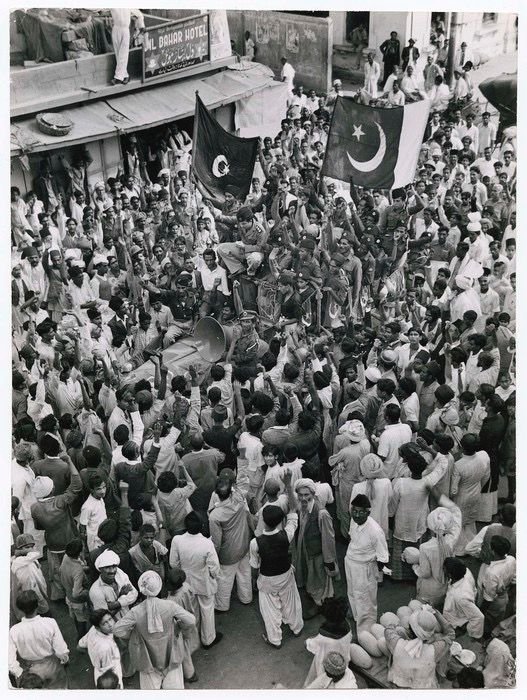
In recent times, Pakistan has become a permanent abode to public demonstrations — carving a question mark onto the effectiveness of what a protest may produce. But is it all that is problematic? Perhaps not.
Let us take political rallies into account. Next, let us reflect upon how these events are made available to us on the internet. Is our most commonly available source of coverage not some 15-to-30-second-long TikTok video or Instagram reel? These short videos extraordinarily instil a rapid emotional surge within the viewer, stimulating a rather sentimental reaction. This is where logic and facts are displaced by bias and opinions based upon what is displayed on screen — aestheticised with partisan use of language and emotive music. When mass production of such content is in action, a clash in judgements and beliefs is born and a cyber quarrel begins that never ends.
Amidst the prevailing patriotism of PTI supporters who appear to be on their toes to step out upon every rally call, what we witness today is the glorification of blocking the entire country. And the clever use of applications like Instagram and TikTok to document these events holds most credit. In a massive PTI rally in Sambrial on 30 May 2025, we witnessed the circulation of snippets of protestors and journalists being lashed by police officers. While this remains unjustified, we see similar footage gathering a great deal of resentment and sentiment from supporters. Many use these clips as mere scraps of content to boost their views and likes; others, to justify their blind support for the party.
The Mechanics of “Edits Culture”
Moreover, the wicked “edits culture” merits a special address amidst the entire situation. Every day, we open our social applications to a new trend, a new format of video editing, and captivating background audio. When all of it is paired with striking footage from protests to support your favourite politician, logic dies and dopamine-driven dissent and acceptance take over. The use of trending signs and memes, wearing specialised outfits during marches, and using cunning music overlays to sell content and buy views in the name of activism facilitates the demise of a consumer’s intellect, telling them the greatest lie: “passion and patriotism will help choose your leader”.
Consequently, a “content creator” who was known for “activism” yesterday is today a viral influencer who receives 20 PR packages a day because they went viral over a reel with their theatrical and flashy editing skills. All thanks to algorithms: carefully curated For You Pages and Instagram feeds that recommend content based on user engagement, individual preferences, and followed trends. The system frequently learns about an individual’s interests and therefore recommends similar content; in this case: glamourised protest footage and unnecessarily tacky “edits” which produce more damage than virtue.
What do we mean by “damage” in this context? We believe damage is when a father claims during a live protest broadcast that he could slit his child’s throat if a certain party leader ordered it. Damage is when we witness the international media base their stance upon blatant lies that are spread on Pakistani social media — again, largely through such emotionally invigorating posts and videos that are circulated by Pakistanis themselves.
The Commodification of Suffering and Misinformation
Let us take into account the open fire on protestors on 26 November 2024 in Islamabad. It is true that the incident did in fact occur, and that a man was pushed off a container by the rangers in charge with obvious negligence, videos of which were constantly circulated for days and months. That is where the commodification of suffering held its strongest ground. We also watched foreigners like Khalid Beydoun tweet about the massacre of 100 people in Islamabad, Zalmay Khalilzad reporting the alleged killing of 400 peaceful demonstrators, and on top of that, PTI’s own Twitter account claiming the massacre of thousands of Pakistanis — which was later proven to be an exaggeration when the Chairman of PTI, Barrister Gohar, tweeted to disown any claim exceeding the killing of 12 people.
It needs to be understood that international media is greatly facilitated by public reaction in terms of the content that they publish. When a video of one man being murdered is spread with sensitive music and effects, the psychology of misinformation allows the human brain to trust a caption claiming far higher numbers were killed. But it could very much be false. Being a responsible citizen, one should understand that:
- They are responsible for every single word that they put out, and every single piece of news they choose to believe, no matter the medium.
- A “memer” or an “influencer” is NOT a journalist, and there is a reason why.
Digital Censorship and Real-World Risks
Nevertheless, while these social applications provide a space for marginalised voices to be heard and make everyday news accessible to larger audiences, they come with several other risk factors. It is highly common for broadcasters on the internet to leave a digital footprint. Several individuals have allegedly been threatened with arrest, or their families with assault, in exchange for posting sensitive information against a certain political party. The 2024 rape case emerging from PGC Lahore was a textbook example. We observed micro-activists like Bilal Asif and Abdullah Tariq on Instagram having their accounts deactivated for apparently trying to dig deeper into the matter. While the rape case was closed without any transparent conclusion, it was visible that anybody attempting to continue their search was silenced.
It is also greatly common in Pakistan for apps like WhatsApp and Instagram to randomly black out during a political outbreak in the country. Furthermore, Twitter/X in Pakistan has faced countless bans for unknown intervals. Acts like this point towards the higher authorities’ attempt to silence the public.
We cannot disregard the significance of social media used to circulate beneficial news; it allows a major chunk of the population — particularly youth — to learn the matters of the state, helps every citizen engage in political discourse and meaningful dialogue with fellow internet users, and challenges dangerously dominant narratives. However, the use of trends to broadcast suffering and the erosion of one’s country shall only desensitise and trivialise the complex issues facing us. We might no longer witness the drive among the public to rationally stand up for what is right if the state’s misery is normalised through discounted measures.
We might remain limited to the TikTokification of protests where children are crushed under the vehicles of the influential, females are harassed through several filthy physical means, and others are harassed in a comment section for what they wore to the protest. We cannot win if we stick to algorithmic demands in the name of resistance, filter the cries of a targeted public, fancy their anguish for engagement, and disconnect ourselves from real-world stakes. Let us not turn protest into performance and resentment into clout. Let us not limit systematic problems to a 10-second poignant TikTok video.