





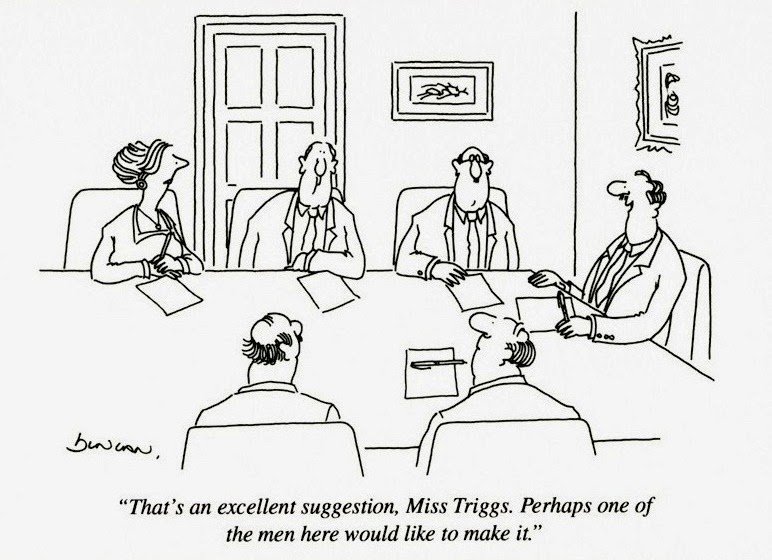
A hand raised to hush. A curt nod declining her opinion. A sense of normalcy with which she is silenced. This is an unfortunate reality for millions of women worldwide. It is widely acknowledged that a woman in a male-dominated field is almost bound to be interrupted — her sentences cut off and her opinions discarded with a scoff or a shake of the head, as if being policed like a child. On paper, it may appear to be a minor issue or a momentary inconvenience. But for women and young girls fighting to make their mark, it is far more than a simple rejection: it is a systematic silencing of their voices.
A Consistent Pattern
No matter how frequently it is denied, this is not an isolated issue. Countless researchers have affirmed that men consistently interrupt women more than their male peers. According to research conducted at George Washington University, men interrupted women 33% more often than they interrupted other men. These conversational patterns stem directly from an underlying power imbalance.
This imbalance is frequently weaponised in everyday dialogue through techniques designed to confuse, control, or bait women into frustration. By instigating an argument and then dismissing the response as “emotional” or “too sensitive,” the interrupter shifts the blame onto the victim. Particularly in male-dominated fields such as law and politics, women are subjected to constant conversational dismissal, where their contributions are either taken lightly or cast aside entirely.
A Problem Prevalent Across Generations
Contrary to popular belief, this dynamic is not confined to formal corporate boardrooms or adult professional settings. It is equally prevalent in schools and universities among young adults who have been socialized into gendered hierarchies.
The trope that women are inherently “emotional” not only reinforces this practice but also offers interrupters a convenient excuse. During student council elections, debate competitions, and routine classroom discussions, male students frequently seek to dominate the room by raising their voices, talking over, or ridiculing their female counterparts.
The Cultural Amplifier
In Pakistan, deeply ingrained patriarchal norms act as a powerful amplifier for this phenomenon. In a culture where women are socialized from an early age to be soft-spoken, agreeable, and submissive daughters and wives — while men are raised to be dominant decision-makers — the act of interruption often becomes redundant, as women are discouraged from speaking out in the first place.
Dissent from daughters is frequently shut down, and questioning authority within the household carries heavy social costs. Society continues to reward quiet acquiescence over vocal assertion, reinforcing the idea that a woman’s voice is something to be managed rather than heard.