





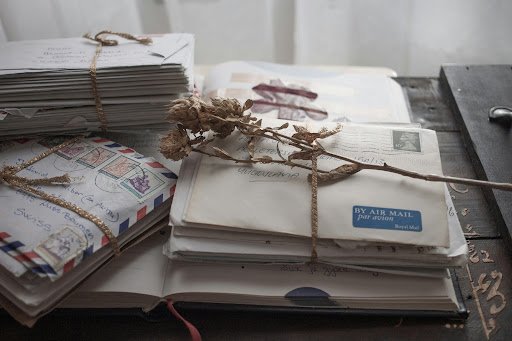
Letters and diaries occupy a strange middle ground in a writer’s work, in the version of a life that never makes it to print. Such is the version literary history keeps circling back to – not because it is more truthful than the published work, but because it feels unearned in a way unpublished work can’t. It still makes it all the way to the readers anyway.
While a novel is armour: revised, defended, and built to withstand arguments. Letters make no such pact at all, and they promise nothing to a reader because they address no one. Precisely, this is what distinguishes letters from novels or memoirs. Somehow, we all read journals and letters from authors who died centuries ago, such as Plath, Keats, Kafka, and many more. The part of their life they had kept private became public when their personal journals were leaked to the public.
Sylvia Plath’s journals show a woman’s life as far more frightening and mundane than the myth she always wanted to live up to. Moreover, many critics argued that Plath’s hidden life, or the posthumous editing of her life, became destructive when it claimed authorship. It’s more like a second author appeared to shape a new record of the previous author when, in reality, both are the same person. Similarly, Kafka’s diaries are full of complaints about his health, meaningless confessions to Milena, and the fragments of his life that would be considered more like a performing role of a writer. Eventually, the letter is the writer forgetting that anyone is watching. It’s as simple as a writer forgetting that their other writings will come out in the world. This is exactly why this material is appealing to readers, and why it should trouble us more than it does. A polished book is an offering from the writer himself, as he has consented to its marketing and has chosen to let readers see it. On the other hand, a diary is not an offering. It’s evidence. Evidence of everything writers could have said but didn’t.
Readers are not receiving them as gifts; rather, we as readers are conducting an autopsy of the life we never saw. There’s no revision in the diary entry, no second draft where the writer cuts the line or replaces it with a new one. What we are reading is unfiltered residue, with the context of everything that happened and everything that came after. And we never come across these versions through a book or a novel. Yet the criticism has also made the diaries and letters an object of literary study, not just raw material. Here comes a paradox as well: the private diary, once published, reads more like literature than the polished book, precisely because its fragmentation resists the arc that finished prose imposes. Losing diaries’ material would be a loss to craft criticism, since most of the criticism stems from subjective perspectives.
It might get to the position that readers don’t have an ethical claim to unpublished material, but we do have an ethical interest in it. The real claim belongs to time. If there’s no hidden or private identity, then “the author” becomes the archive’s construct, not something the person can control. Furthermore, diaries do have a readership deadline. A diary written last year and a diary written centuries ago are not the same. The passage of time doesn’t erase the trespass; it just changes the world and who’s left to become its reader. A diary shows the false starts, the abandoned places and lives, the days without work, and burnouts. It reveals a contradiction without the pressure to solve it. Similarly, it reveals pettiness, vanity, and grudges, such as Plath’s jealousy, Kafka’s self-loathing, and Chekhov’s impatience, as well as the unglamorous lives of many writers out there. It reveals the process in its rawest form, before the idea becomes defensive.
I came across some writers who kept diaries with the intention of being recognised once they were published. Their half-aware selves that they might get an audience for what they’re writing still owe a different kind of caution. Across centuries, diaries and letters are written to hold the specific value that anticipated their audience, and can be read as texts for which no analysis can be done because we don’t yet know who they were written for.