





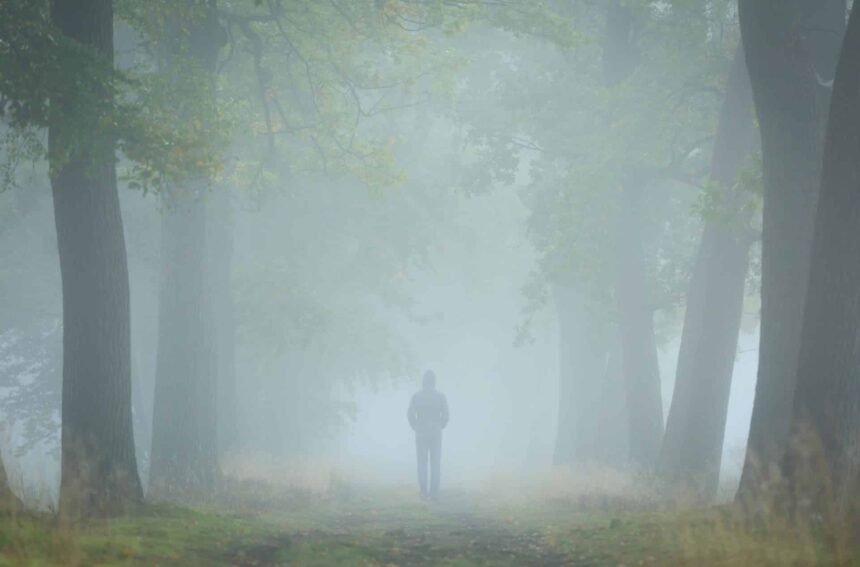
There comes a moment in your lifetime when the grief of what was plagues the heart. A lost home, a sweet childhood, your mother’s cooking or a scar that reminds you of the warmth of that summer holiday that felt as if it would never end. A moment not anticipated, and even when it is, the heart feels as if it is bleeding all over you. You think that as you age, you might move on. Those losses of your life will be left behind. But what we forget is that the mind is no less than a holy sanctuary. What enters its dominion never leaves. It forever resides in a place we call memories.
More formally known as nostalgia, it is a feeling of pleasure and also slight sadness when you think about things that happened in the past, as defined by the Cambridge Dictionary.
An emotion that makes you feel both happy and sad at the same time can feel a bit overwhelming. At times, you might have wondered if nostalgia is an innocent pleasure or a moral distortion. Does remembering moments we can no longer go back to reclaim make us feel stuck, or does it help us move on when life gets hard? Nostalgia in itself is not inherently damaging. It’s a complex emotion that can’t help but take one back to a time when the warmth of joy enveloped us.
Genocide: An incurable loss
Nostalgia helps us preserve history and memory that define a part of ourselves. Think of all those Palestinians who have lost their homes, their loved ones, their land and above all, their identity. Israel is not only slaughtering them openly but has been actively making efforts to erase the history and any affiliation they have with their land. That includes uprooting olive trees and planting pine trees, as olive trees are a family inheritance and symbolise the land being an integral part of the Palestinians. The forceful occupation and the targeted killing of journalists further demonstrate this.
So, for any Palestinian who is forced to become an immigrant and a stranger to his or her own home, nostalgia becomes the backbone to preserve a history that is actively being erased, for the world to remember the atrocities of a barbaric genocide. And yes, it is a daunting task to be reminded of absolutely unnecessary suffering. Yet, the haunting shouldn’t be allowed to consume oneself. For this grief is a sign of all the love that had existed. And allowing yourself to live a life with the heart alive with the memory of a beautiful past is what makes the resistance to the suffering possible. And yes, even when the suffering was not just. But the spirit of the Palestinians shall not be broken by those who wish their existence to slowly decay from the face of the Earth.
An ordinary life of loss and love
Perhaps it should also be explored how life, as ordinary as it may seem to us, can at times be consumed by nostalgia. Some of us might not know what war is. Yet, loss is something we are all familiar with. A family member, the childhood home, or perhaps a time when adulting was a distant reality, when our naive selves couldn’t fathom our own luck.
Loss remains a constant in our lives. And nostalgia simply reminds us of those moments. It’s up to us how we let it affect us. Whether allowing the past to consume us or allowing it to remind us how we have outgrown those versions of ourselves. The younger you, you would be in awe of how you wandered beyond your comfort zone to pursue your dreams and embraced a life as messy yet holistic as possible.
So yes, the past haunts us by manifesting itself as nostalgia. But it has an inherent beauty, for it allows us to preserve our history and connect with ourselves as we stand to witness how far we have come in life. These memories of a distant past, in which we witness happiness, prompt us to reach for the love that resides within us. When life gets hard, nostalgia teaches us that happiness and sadness can coexist, and we can find hope for peace amid the uncertainty embedded in the voyage of our existence.