





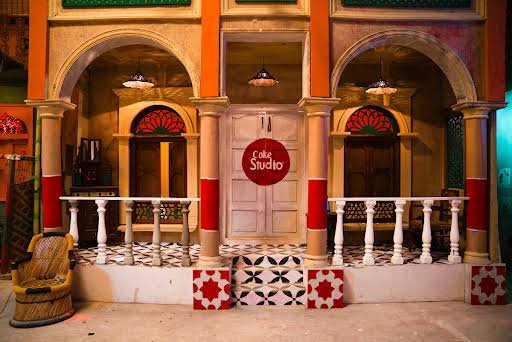
Ask someone outside Pakistan to name a Pakistani song, and the answer is likely to come from Coke Studio: Pasoori, Tajdar-e-Haram, Afreen Afreen, or perhaps Jhol or Tu Jhoom. For many listeners, these songs have become a representation of Pakistani music itself. That is remarkable considering Pakistan has never had a single musical identity to begin with.
A country where Punjabi tappay, Sindhi kaafi, Balochi melodies, Pashto folk, qawwali, ghazal, rock, hip-hop, and Karachi’s indie scene exist side by side, music cannot be reduced to one sound. And yet, over the past two decades, one television programme has convinced millions that such a sound exists in the form of Coke Studio.
This never happened because Coke Studio invented Pakistani music, but because it placed artists from all the different regions into the same visual and musical world. A Balochi folk song, a centuries-old qawwali, and an urban indie ballad suddenly shared the same studio, the same production style, and the same audience. Listened to individually, these songs came from very different traditions; but when played together over a timeline of 15 seasons, they began to feel like parts of the same national conversation — and that achievement deserves immense recognition.
Before YouTube playlists and streaming platforms pushed Pakistani music across borders, many regional traditions remained unfamiliar even within Pakistan. Coke Studio introduced audiences in Lahore to Balochi music, listeners in Karachi to Punjabi tappay, and viewers overseas to artists they may never have encountered otherwise.
Kana Yaari brought Balochi lyrics to millions of listeners. Latthay Di Chaadar and Chal Meley Nu Chaliye carried folk traditions into homes that might otherwise have overlooked them. Tu Jhoom reminded younger audiences that spiritual music could still command attention without becoming a relic of the past.
The studio’s greatest success, however, is not preservation; it’s the way it translated the cultures for a worldwide audience. The programme found ways to present regional traditions without asking audiences to already understand them. Songs remained rooted in their own histories, but they were framed through polished production by producers like Rohail Hyatt, Strings, and Xulfi — contemporary arrangements and a format familiar to modern listeners through experience.
Afreen Afreen became, for many young Pakistanis, their first encounter with Nusrat Fateh Ali Khan’s legacy. Tajdar-e-Haram introduced another generation to a qawwali that had long existed before Coke Studio in the voice of the Sabri Brothers, but now everyone recognises it through Atif Aslam’s voice. The best part about it all is that the versions performed on the show did not replace the originals, and yet they often became the versions the new-coming generations became the most familiar with.
Over time, though, the songs begin to resemble one another, even when they come from completely different traditions. The slow build. The polished arrangements. The carefully staged intimacy. The same studio somehow smooths very different histories into a familiar shape.
There is nothing inherently wrong with that, because every artistic project develops its own identity. The difficulty begins when that identity starts standing in for an entire country’s musical culture. Pakistan’s musical landscape extends far beyond the studio. Wedding dhols, shrine performances, village gatherings, underground rock concerts, brass bands, classical mehfils, and local festivals all exist outside the frame. They are no less Pakistani because they have never appeared beneath Coke Studio’s lights.
And yet, for many international listeners, as well as increasingly for Pakistanis themselves, the programme has become the first reference point for what Pakistan sounds like. That is a point for self-reflection, perhaps — especially for those of us who live in Pakistan and still refuse the luxury of exploration.
Pasoori by Ali Sethi and Shae Gill illustrates both sides of this story. It became one of Pakistan’s biggest cultural exports without abandoning Punjabi or Urdu. It proved that a song rooted in local languages could find listeners across the world. At the same time, its success encouraged a particular image of Pakistani music: polished, multilingual, emotionally accessible, and ready for global streaming platforms. There is nothing accidental about that image, because it reflects the tastes of producers, audiences, and the platform itself as much as it reflects the country.
Perhaps the strangest part of this story is that Pakistan’s most influential musical institution is not a conservatory, a public broadcaster, or a ministry of culture. It is a programme funded by a multinational soft-drink company. That does not diminish what Coke Studio has accomplished. If anything, it shows how cultural influence often emerges from unexpected places.
The programme succeeded where many official efforts struggled, and the same reality can be reflected upon in multiple areas of our country’s identity. While Coke Studio gave millions of people, both inside and outside Pakistan, a shared musical vocabulary, it leaves us with a question: if a multinational company’s funding was able to form such a face for the Pakistani music industry, what heights could we achieve if our own corporations and government were behind the funding and support for such programs? But that’s a conversation for another day (is it really?).
Regardless of the fact that the story that Coke Studio music tells about Pakistan is incomplete and leaves out countless musicians, traditions, and communities, one cannot ignore that it opened doors that had long remained closed. Pakistan’s music is larger, with newer and bigger names being involved in recent years. There’s definitely a long road ahead for all. But it is impossible to discuss how the country sounds today without discussing the programme that changed the whole conversation for us.