





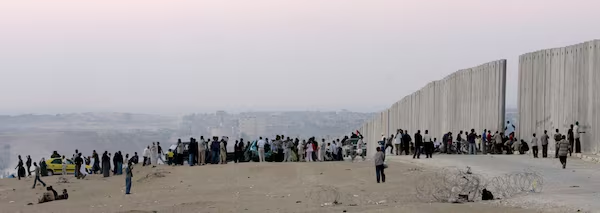
The prevalence of state sovereignty is embedded in the ideology that fuels governments and their citizens to draw physical and metaphorical boundaries around themselves. Although a consistent feature of political history, the modern manifestation of nationalism emerged after the seventeenth century. It quickly took over the evolution of foreign policy across nation-states, motivating efforts to outpace competitors and gain influence over contemporaries. The anarchic nature of the international state system legitimises the border monopoly — which serves as a potent political symbol — of nation-states and suppresses the rudimentary human practice of migration undertaken to seek a better life.
The Dynamics of Nation-States and Border Monopolies
‘Nation’ and ‘state’ are not synonyms; they are complementary concepts. States define the legal territorial bounds within which administrations exist, independent from foreign rulers, while nations represent the collective identity of a people bound by shared roots. The nation-state serves as the common ground for a unified society occupying its own independent territory.
This creates confusion during the advocacy of nationalism — a phenomenon that calls for nations to possess their own states, emphasising their unification regardless of existing barriers. Nationalism is the primary key that world leaders now deploy to bolster identity and construct walls against migrants. The visible barriers erected between societies manage perceived security threats while simultaneously creating rigid class systems on a global scale.
When viewed in a broader light, global connectivity is beneficial for governments, yet administrations attempt to restrict it strictly to domains such as technology and tourism. In reality, bureaucratic fortification is a defining feature of this ‘era of global connectivity’. While the 1648 Peace of Westphalia established territorial sovereignty, it did not do so on a global scale. From the twentieth century onward, ‘paper walls’ proliferation began after the First World War through the international standardization of passports to legally partition populations everywhere. Post-Second World War international law rendered border incursions a violation of sovereignty, which underpins modern frameworks surrounding illegal immigration and human smuggling.
Realism, Colonial Responsibility, and the Myth of Protection
Where political theorists like Joseph Carens argue that the geographical luck of being born into a wealthy state should not hinder the centuries-old natural process of migration, realists contend that states must maintain control over their territory to preserve credibility in international politics. However, powerful states cannot defend building walls as a viable solution to population movement, considering that major powers are frequently the catalyst behind the instability that forces people to flee weak states — a reality demonstrated through a history of colonialism, economic sanctions, military interventions, and resource extraction.
Apart from combating security threats, walls performatively project political strength. Heads of state require their electorates to feel secure, and a visibly indestructible blockade conveys that message effectively. Domestic voters align their preferences accordingly, while rival states take note of heightened border security.
Furthermore, physical barriers generate adverse psychological effects by instilling an “us versus them” ethos — the belief that one’s own populace is inherently superior and more deserving of prosperity, while undocumented migrants are viewed merely as parasites draining public resources. This dynamic absolves leaders of powerful countries from making genuine efforts toward global peacebuilding, while simultaneously relieving leaders of weaker nations from accountability when they fail to uphold basic social conditions for their people.
The Inefficiency of Physical Barriers
When examining the statistics, physical walls prove futile as a long-term tool for border security. In the United States alone, the population of undocumented residents grew from 11 million in 2022 to 14 million in 2023, despite the US constructing approximately 654 miles of border barriers over the past quarter-century. If an expensive policy merely delays a threat rather than mitigating it, states must scrutinise their approach and consider alternative strategies — measures that may not bolster a leader’s political grandeur, but will effectively address administrative concerns.
Ultimately, the anarchic nature of the international order is invoked to justify these physical blockades. In the absence of a centralised global government and international law enforcement apparatus, states argue they must do whatever necessary to protect themselves. Yet, while this self-help logic is widely accepted in international relations, it is consistently denied to individuals. When a country’s domestic environment collapses under failing leadership, why should an individual be forbidden from doing whatever they can in a “self-help” capacity to protect their own life?
References
- American Civil Liberties Union (ACLU). (2021). Subterranean & Overland Border Barrier Report. ACLU Publications.
- Carens, J. (1987). Aliens and Citizens: The Case for Open Borders. The Review of Politics, 49(2), 251–273.
- Pew Research Center & Office of Homeland Security Statistics (OHSS). (2024). Estimates of the Unauthorized Immigrant Population Residing in the United States. DHS Annual Report.