





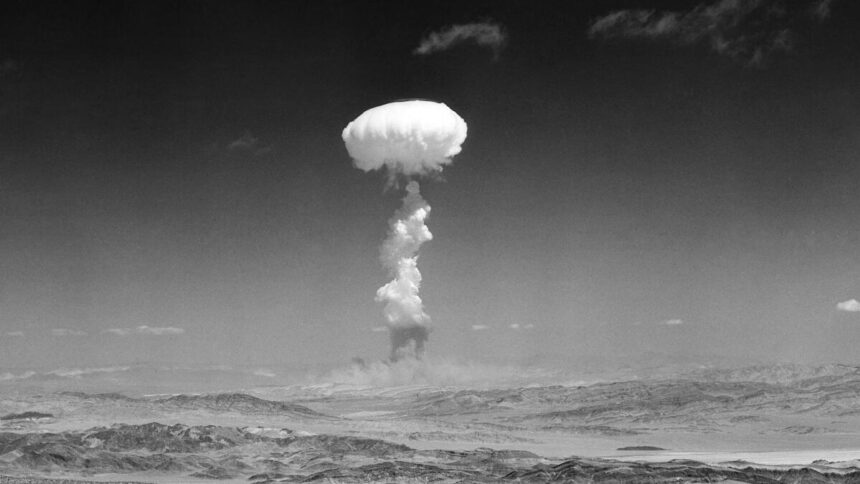
Are we truly concerned about nuclear war? If so, should our concern be greater? Anxiety about nuclear war emerged after the 1945 bombings of Japan and has risen and fallen over the decades. It peaked during the Cuban Missile Crisis in 1962. However, it seems that this subconscious fear has been lost today.
The world has entered a new nuclear era characterised by the deterioration of the global nuclear order. The worsening relationships between nations, along with the modernisation of arsenals, is troubling.
The Decline of the Nuclear Order
The nuclear order of the Cold War era no longer exists in the same form. Nonetheless, the new order is becoming weaker. This order has three main pillars: the belief that using nuclear weapons is unacceptable, strategic stability, and the prevention of the spread of nuclear weapons through the Nuclear Non-Proliferation Treaty (NPT).
Since 1991, there have been clear signs of the erosion of these elements. Therefore, the NPT has come under immense pressure. This demonstrates that the world remains at risk of fearful consequences.
The creation of treaties and the development of international organisations are not enough to resist negative influences. The desire to become a powerful nation, alongside the failure of diplomatic cooperation, is becoming increasingly dangerous. These are the “broken stairs” in the system.
Moreover, these stairs favour hegemonic states, create unaccountability, and increase uncertainty. This leads to non-compliance by other authorities:
“I do not pose a threat to any state, so why me? That nation has already been involved before, so why not them?”
The Security Dilemma and the Modernisation of Nuclear Arsenals
Additionally, the modernisation of arsenals by major powers cannot be overlooked. A concept in international relations called the “security dilemma” suggests that when one state tries to strengthen its security, others do the same, anticipating conflict. Awareness is crucial.
During the Cold War, led by just two nuclear states, the world was only one word away from nuclear annihilation due to tensions and miscalculations. Sadly, the number has now grown to nine nuclear-armed countries. These nations — the United States, Russia, the United Kingdom, France, China, India, Pakistan, North Korea, and Israel — are continuously upgrading their nuclear programmes.
This indicates that as the cracks in the nuclear order deepen, the world could face another nuclear catastrophe. Interestingly, recent studies show that people are less worried about this situation now. Most attribute this to nuclear deterrence. However, this is a serious concern; it is a subtle yet vital issue.
Conclusion
In the end, Earth is our only hope for life. Yet, over time, even this hope seems to fade. Currently, the world is facing relatively limited conflicts, but we must remember the Cold War example where minor unrest between two superpowers nearly led to a third world war.
Furthermore, people must recognise this dilemma. Pressure from individuals and the international community can resist change in the nuclear order.