





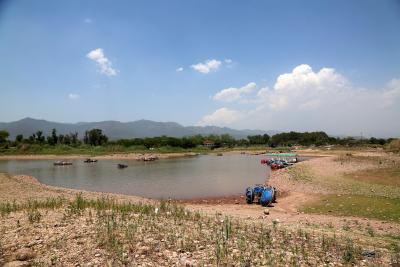
Pakistan, which was once considered a water-abundant nation, is now drying up. The Indus River system was the world’s largest system, as it supported life. Per capita water availability has fallen from 5000 to roughly 1000 cubic meters since the partition. Pakistan is on the verge of water scarcity. Moreover, water is being extracted at alarming rates, as it is used to feed cattle, in agriculture, households, and industries. In Punjab and Sindh, the number of tube wells has crossed an alarming threshold, reaching around a million in recent decades. In these places, the water tables have also dropped by 1-2 meters annually. In a big city like Karachi, 20 million residents depend on broken infrastructure, tanker mafias, and polluted water.
Here, another aspect to consider is political measures, as this disaster isn’t only natural but also man-made. After the construction of Tarbela Dam in 1976, no other major water reservoir has been built. Over these 50 years of inaction, many factors have been at play. Moreover, the Diamer-Bhasha Dam remains incomplete due to political gridlock. The Council of Common Interests, an institution mandated to resolve such issues, has failed to achieve peace. There is no single water authority; instead, bodies like WAPDA, the Indus River System Authority, and irrigation departments have taken control of operations. Political bodies that have attempted to raise this issue have found almost no support. On the other hand, growing tensions with India have strained the Indus Water Treaty.
Pakistan is also suffering economically as a result of this, since its economy is heavily dependent on water. Around 19-23% of the GDP comes from agriculture, and around 40% of the labour force is employed in this sector. The Indus Basin Irrigation System irrigates the vast majority of this cycle. Moreover, around 40% of the water is lost before it even reaches the fields due to seepage, poor infrastructure, and poor management.
While first-world countries have moved on to the latest technologies, Pakistan remains stuck in the same old cycle of costs and insufficient funding. 25-30% of the country’s electricity comes from water production (hydroelectricity). Due to unpredictable river flows, the electricity supply has also become unpredictable, putting more pressure on national grids. Pakistan is flagged as a country with risks on the international level, as it fails to provide consistent electricity and economic conditions aren’t stable.
Like everything else, this has some socioeconomic conditions attached to it. Mass migration from rural Balochistan and Sindh, increased women’s labour to collect water, outbreak of waterborne diseases, which also happen to be fatal, and contaminated drinking water, these factors don’t contribute to GDP, but they can cost someone their entire life. This causes a strain on the public health policy, declining incomes, indebtedness, ultimately causing wealth inequality. Pakistan, a country with already existing major wealth gaps, continues to fall short of standards.
Pakistan is home to many glaciers, which are rapidly melting. The 2022 floods submerged 1/3 of the country and caused $30 billion in losses. Once the glaciers are gone, matters would be worse, as they are the primary source of water flow. On the other hand, monsoon patterns are becoming incredibly unpredictable. Highly uncertain, they bring destruction, and agriculture is greatly impacted. Most of the time, various schedules are followed, and elaborate plans are carried out. If the rain is uncertain, planning fails, and systems get ruined.
The solution to this isn’t some mysterious path; it lies right in front of us. Building new dams and reservoirs, proper management, increased efficiency, and the latest technology will strengthen our waterways and help them thrive. By overthrowing mafias that exploit groundwater resources and negotiating with the government, urban water utilities will be reformed. By taking inspiration from other countries and learning from them, water damage can be reversed, and we can achieve sustainable water use. It’s a long way to go, but not impossible. We need to start acting now, as climate change doesn’t wait for anyone. Through commitment, political will, and the right leadership capacity, Pakistan will be able to solve the water crisis.