





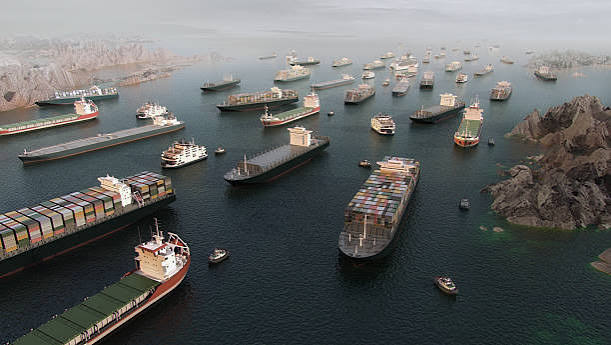
The idea of Conquest has evolved over time rather than vanished from geopolitics. In the 18th and early 19th centuries, conquest meant the direct occupation of territories. The concept of conquest in the modern world is different. In the modern era, powerful states gain control over weaker states through trade, economic dependence, technological development and infrastructure projects.
In modern geopolitics, states don’t just spread their influence through military strength, but through trade routes, ports and canals; for instance, China’s claim over the South China Sea shows how, through the South China Sea, China wants to project its influence in the region and to control the trade because almost one-third of the world trade is done through the South China Sea. In addition, any conflict in the region can affect global trade and can highly impact the trade of Japan and South Korea.
Moreover, the ongoing US-Israel war on Iran showed how important the trade routes are. The Strait of Hormuz is a narrow opening between Iran and Oman; 25% of world waterborne oil trade is done through this route. At the beginning of the conflict, Iran blocked the strait, as a result of which the entire world was affected. A sudden increase in oil prices is experienced in developing countries like Pakistan and in global powers such as the US.
Powerful states also dominate weaker ones through financial dependence. Sanctions and loans affect the economy of the developing and underdeveloped states and ultimately their internal and foreign policy as well. The US imposes sanctions on states that do not follow the world order it designs.
For instance, the US Sanctioned Iran because of its nuclear program. Iran claims the nuclear enrichment is for civilian uses, while the US claims that they are enriching Uranium for the development of nuclear weapons. As a result, the US imposed sanctions on Iran, affecting the state’s economy. Due to sanctions, Iran experienced economic crises and ultimately civilian protests because of increasing inflation. Through this example, it is evident that because the US dollar is an important global currency and the US dominates global financial markets, sanctions impact the entire state system. The global economic giants IMF and World Bank are West-centric. They play a crucial role in imposing Western, especially US dominance on the world. Developing and underdeveloped countries get debt from the IMF or the World Bank, as a result of which their internal policies are affected. These organisations provide a framework for debt-receiving countries, instructing them on the investment and return of the debt.
In the 21st century, technology has become one of the major tools to dominate and influence the world. The two global powers, the US and China, are competing powers to dominate the world through technological developments. US-based technologies such as Apple, Microsoft, Google, and Meta are among the most dominant in the world. People around the world use these technologies for their businesses, research and jobs. In addition, US-made semiconductors are used in high-tech military equipment, AI, and smartphones.
On the other hand, China has heavily invested in technological development and experienced rapid technological development. China controls the world’s AI systems and has also provided 5G technology to the world. This shows how the powerful states dominate the world through technological development.
To understand the dominance of powerful states through infrastructure, China’s Belt and Road Initiative is the best example. The Belt and Road Initiative of China is spread across South Asia, Central Asia, the Middle East, Africa and Latin America. In this project, China provided loans to finance the infrastructure and energy projects. As a result, countries become dependent on Chinese Finance for development projects, which affects the political and economic decision-making of the states. This gives China dominance over the states. For Example, the Hambantota port of Sri Lanka. China provided large loans to Sri Lanka to build the port. However, the port generated less revenue than expected; as a result, Sri Lanka granted its port to a Chinese company for a 99-year lease. This shows how dominant states conquer weaker states through infrastructure.
The above-discussed analyses show that direct conquest and colonial rule have not completely ended; rather, they have been replaced. In the 21st century, dominance prevails through technological, economic and infrastructure projects.