





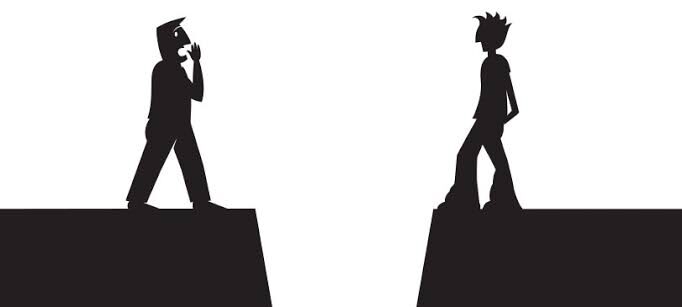
Do you think it’s only your elders calling you selfish and idle just because you are not their age? Whenever you try to correct your elders, they say you know nothing and that they are more experienced than you. Elders always think that the youth of today are creating a communication gap due to prioritising text over face-to-face chit-chat.
What if I tell you that a person in the classical period of ancient Greece had the same complaint with his youngsters? Aristotle, in his foundational work Rhetoric, provided one of history’s first psychological profiles of the younger generation. He noted that the youth believed they knew everything, they carried all emotions to extremes, and that the humour and social interactions of the young often bordered on disrespect.
The generational divide refers to the differences in opinions, behaviour, and communication styles. Another name for it is generational gap, a term that became popular in the 19th century. By Aristotle’s views, we come to know that it’s not a new thing at all. Elders have always clashed with youngsters, and youngsters have always viewed elders as outdated throughout history. Things widening this divide might be technological gaps, shifting cultural values, workplace friction, and upbringing. There are 6 classifications of generations with different perspectives and values.
The Silent Generation, from 1928 to 1945, prioritised face-to-face communication, discipline, and professional working ethics. Baby boomers from 1946 to 1964 are workaholics, politically influenced, and the drivers of the 19th century’s generational gap. Generation X, from 1965 to 1980, grew up in the era of the rising craze of personal desktops, showing an independent nature and work-life balance enthusiasm. Millennials from 1981 to 1996 drove the gig economy and are tech-savvy due to the internet’s arrival. Generation Z, born from 1997 to 2012, is world-renowned for its mediaholic nature, born with a rebellious streak against patriarchy, and prioritising text over direct discussion. Generation Alpha, from 2013 to 2025, was born in the era of AI and raised by remote learning and streaming.
Myth of the Generation Gap
The Silent Generation is notorious for its illiteracy about technology and unaccepting nature towards youth, but the fact is they are learning technology with great speed to connect with their children and grandchildren. Similarly, baby boomers and Gen X are thought to be rigid and the main reason behind conservatism and patriarchy; meanwhile, the truth is exactly the opposite. They are the foundation of corporate, political, and industrial growth. Although they highly value professional degrees, considering them a ticket to stability for their children, they also give their children the freedom of choice in the 21st century.
Millennials are famous for their unpatriotic nature, as they are too westernised and stay busy finding ways to escape the country, but nobody has examined why they want to. The reason is severe inflation and structural economic limitations. In reality, they are highly culturally grounded and entrepreneurial, serving as the growers of Pakistan’s freelance industry. Gen Zs are thought to be lazy, internet-addicted, and disconnected from the real world. Recently, it has been proven that Gen Z is the generation that values family harmony and never embraces patriarchy.
They demand logical reasons behind every baseless act. They believe in optimism and unity and love to struggle for change. Spoiled, detached from street culture, and continuous screen consumers’ are the tags given to Gen Alpha. The truth is that they can easily navigate highly complex tech interfaces and are multilinguals who can shift among different languages effortlessly. They are developing multimedia literacy, which makes them the smartest generation ever.
Reality behind the Generation Gap
Is the generational gap really a problem or just an agenda to divide and rule or to distract from the real problems? According to the Pew Research Center survey, 79% of people agree that there exists a generation gap, which is nearly 20 percentage points higher than in 1979’s survey. Making two groups on the basis of different opinions was always acceptable, but now they are divided on the basis of generations. Younger people blame elders, and elders blame the younger generation. In this blame game, the real culprit finds a way to escape. The gap was always there, and people still take care of their adults and love their minors.
It was never the generational divide but an economic and political divide. The privileges given to the upper class and the rules made by the government to protect them create a border between rich and poor. The shared struggles of the lower-class young and old are due to low wages. Costs of housing, education, security, and food have skyrocketed, but income remains constant. Older people don’t make the younger angry, but the backward political system, injustice, and unfair policymaking do. When governments fail to provide jobs, quality education, and transport, the public becomes furious. Frustration with a disorganised life takes the shape of a quarrel that the media calls a ‘generational gap’ instead of giving it a proper name: improper division of privileges.
Conclusion
The generational divide is not a problem but a reality. We can’t close this natural gap, but we can deal with the real problems. Technology and social media widen this gap. By teaching seniors the use of social media and teaching younger people to manage social media in a way that they don’t get addicted to it, we can solve the issue to some extent. The real solution is to unite and think about why they are getting distant. If all generations think rationally without blaming each other, the real problem will be visible. Humans are not made for isolation. Older people have experience and knowledge; meanwhile, younger people have the technology and spark. If all generations unite, they can drive some meaningful change.