





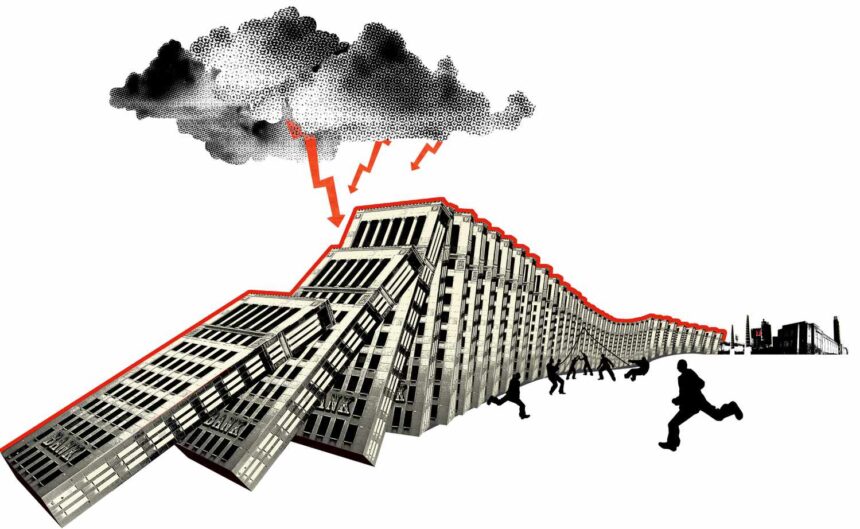
Although the immediate factors such as war, economic crises and climate change affect the development of the states, the main reason lies in the institutional and political framework of the state. There are three main sources defining the recovery and collapse of the states: the inclusive institutions, decentralised power and modernising with the developing world. There are various examples from history and in the modern era to explain the epicentre of the state’s recovery or collapse. For instance, the people of Nogales, Arizona (USA), have a better lifestyle, more opportunities, and better education and healthcare systems than the people of Nogales, Sonora (Mexico). Although both states have the same geographical, cultural and climatic conditions, their destinies are far different. The main difference between Nogales, Arizona, and Nogales, Sonora, is the institutional and political structures. The inclusive institutions led to the prosperity of one side of the land over its other extractive institutional order.
Moreover, in modern history, the case study of Somalia can help to understand the deep structural flaws in the system that lead to the collapse of the state. The authoritarian regime of Siad Barre centralised power that created extractive institutions and political regimes. In which only the military and political elite had the complete authority of the state. While the public institutions such as the judiciary and civil service remain weak. The autocratic regime of Siad could not satisfy the masses. Later, the indulgence in the Ogaden War led to the economic crises, rebellion and extremism which ultimately led to the fall of the Siad regime. Due to the centralised power of the military and political elites, weak civil institutions resulted in being uncompetitive to control the state in crises, which eventually led to the collapse of Somalia. From this example it is evident that the centralised power leads to the mismanagement and ultimately the collapse of the states.
The disintegration of Yugoslavia after the death of Josip Broz Tito shows the importance of a leader to keep the centre strong and what consequences can be faced if the centre of the state is weak. Yugoslavia was a federation with six republics and various ethnicities living together. Each republic had significant autonomous authority. In the era of Tito, autonomous authority worked for maintaining the balance among the republics; later it became the main cause of disintegration. The economic imbalance among the republics, such as Slovenia and Croatia subsidising the poorer regions, created frustration among the republics. Due to the autonomous republics, the centre of Yugoslavia became weak, which ultimately led to independence movements and, simultaneously, the disintegration of Yugoslavia.
One of the major factors behind the collapse and recovery of states is the uneven industrialisation of the world. Some states industrialised and survived in the modern era, while other less adaptive states saw decline due to modern underdevelopments. For instance, Britain, the USA and Germany adapted industrial development. While, on the other hand, Latin American and African states with fewer industrial adaptations faced slow economic and political development. The same phenomenon goes for the modern technologies as well; countries with technological developments such as China and the USA dominate the world. The states with slow technological development go through economic challenges which eventually lead to social and political problems.
From the above examples, it can be claimed that although immediate circumstances play a crucial role in the collapse or recovery of the state, states with decentralised power, inclusive institutions and an adaptive nature towards modern developments lead to the recovery of the states.