





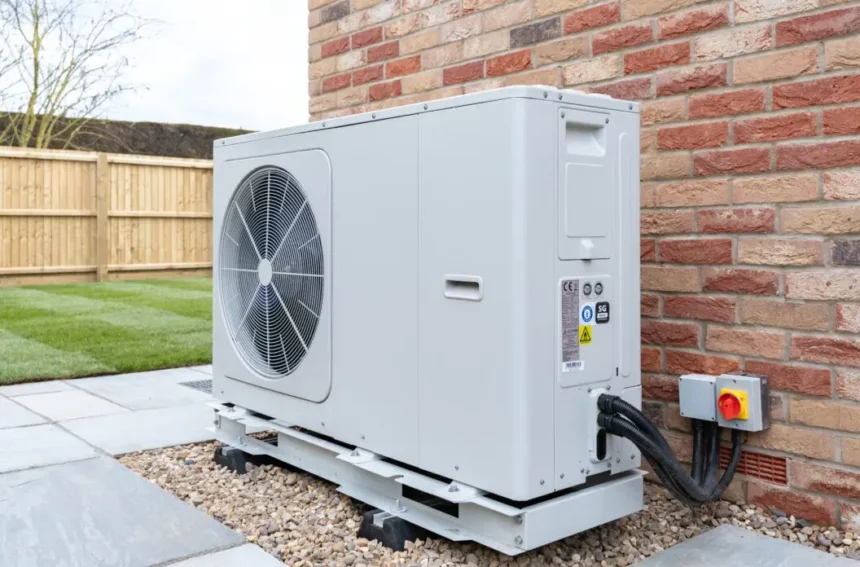
A heat pump is a machine that supplies hot water, heating and cooling for buildings, industries and cities. The main purpose of a heat pump is that it takes air from the environment and converts it into heat to warm up homes. Heat pumps work like an air conditioner; they tend to eliminate heat energy in a reverse manner. As a result, heat pumps have acquired the title of ‘refrigeration in reverse.’ Interestingly, heat pumps can work in almost every type of climate, which makes them an exceptionally effective, renewable and sustainable method for heating and cooling.
The Mechanics of the Heat Pump
The heat pump works through a refrigerant cycle; it is a full cycle consisting of four phases which include evaporation, compression, condensation and expansion. The heat pump, via an exhaust fan known as the evaporator, extracts heat or cold from the air, water, or ground in order to convert the refrigerant within the heat pump into gas.
The main source required for the initial process comes from air, exhaust air, underground heat, water and ground water. The second phase of the cycle is compression; now the refrigerant gas is subsequently sent to the heat pump’s compressor. The compressor pushes the refrigerant gas to a high pressure, causing a rise in temperature, heating up the gas. Moreover, additional energy is required to drive the compressor; this energy can be derived from electricity, thermal energy, or gas.
In the third phase, the process of condensation occurs. This process takes place on the discharge side as the heated and highly pressured vapours travel via a second heat exchanger known as the condenser. This heat exchanger permits the refrigerant to discharge heat into the home’s heating system, because of which the refrigerant transitions from a gaseous to a liquid state.
Reaching the final phase, the condensed refrigerant is then sent through a pressure-lowering mechanism referred to as the expansion valve. The cycle can now be restarted with the liquid refrigerant at a low pressure.
Heat Pumps vs. Boilers
Boilers use gas to produce heat. Whereas the heat pumps take up energy from the environment to initiate a more complex process explained above. One thing to note is that energy utilised by a heat pump is 80% renewable energy, and the additional energy needed in different phases uses electricity or thermal energy.
The heat pumps can become completely carbon neutral if the additional energy used is generated by wind turbines and solar panels. While the boilers use fossil fuels to run, the heat pump runs on renewable energy.
On the surface, heat pumps are seen as a more viable option to pursue. However, the carbon policies and taxation in the current geo-economic landscape make the installation of heat pumps costlier as compared to boilers. Across studies the scholars have concluded that the heat pump is far more efficient than boilers, and it is a faster way for states to decarbonise cities and reach pertinent climate goals. However, the high cost of installation, lack of trained technicians and an imbalance in energy pricing, particularly carbon pricing, are the main roadblocks that governments have to overcome. The UK, specifically, is struggling in this domain, as the cost of electricity is much higher than the cost of gas in Europe.
The Silver Lining
The economic war between boilers and heat pumps has a long way to go, but it is certain if the gap between energy pricing and policy implementation is bridged through the cooperation of manufacturers, the national grid department, researchers, and policymakers. The academic researchers through rigorous research can find solutions to reduce installation costs and ways to use less electricity.
The findings of the research can be utilised by local manufacturers, where they can experiment further to develop a heat pump using local, quality and durable materials to further lower the costs. In the end, the government, through bilateral and multilateral agreements with international organisations and states, can draw policies to levy taxes on the combustion of fossil fuels and develop solutions by expanding emission trading systems, implementing revenue recycling, rebalancing energy taxation and harmonising global tariffs.
The expansion of trading systems would include trade and building sectors, and through national grid systems the fossil fuel suppliers would be forced to pay for the emissions; because of this, the price for oil and gas would rise while the costs of electricity would fall. Apart from this, the policies should ensure that a portion of carbon revenues must be redistributed to the households due to the high installation costs of heat pumps.
This would encourage communities to install more heat pumps, as now a mutually beneficial system of give and take would be established between the national governments and citizens. Lastly, international organisations can help with cross-border frameworks, such as amending Article 6 of the Paris Agreement to incorporate domestic carbon pricing tools, and by implementing Border Carbon Adjustments (BCAs), they would ensure that imported carbon-intensive commodities bear the same regulatory costs, boosting indigenous clean-tech manufacturing.
In essence, the heat pump can be considered a boring technology; however, its efficiency and effectiveness have made it a part of European policies and have introduced alternate solutions to non-renewable sources, reducing the dependency of states on them. Similarly, it would reduce the catastrophic environmental impacts caused by global warming and climate change across the global north and global south, likewise, because Mother Nature does not discriminate between borders; it engulfs the planet as a whole.