





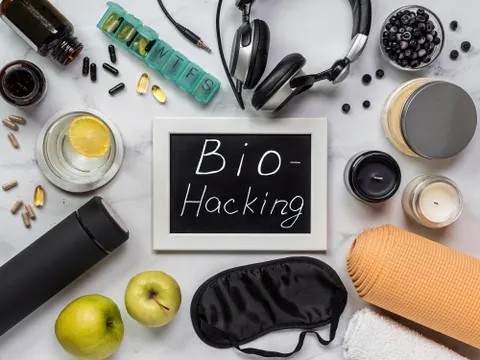
When did being alive become a test? When did we start optimising our bodies for efficiency for the next big test, as if we were some new variation of robots and our lives a test of productivity?
If you have ever ended up on the productivity and life-optimising side of social media, you have probably seen some variation of the “biohacking” trend, and this movement includes a multitude of practices ranging from mild to extreme. Common practices in this new movement include intermittent fasting, ice baths, vitamin stacking, mouth taping, etc.
Biohacking is also known as DIY biology and is the practice of creating daily changes in your life to upgrade and optimise your health in all aspects, including longevity, anti-ageing, and productivity. This movement treats the body like a new computer or piece of technology that can be hacked and decoded to increase efficiency, whether that be through minuscule changes or tech optimisation.
Biohacking has three main levels of intensity, and depending on how deep you have gone down the rabbit hole, you will see multiple levels of extreme practices ranging from healthy to completely performative.
Level 1: Lifestyle and Nutrition Hacking
This is the most basic form of biohacking, and it includes daily practices to optimise health in the long run. This includes practices such as intermittent fasting, which is supposed to help with weight loss and gut health; creating strict sleep routines; circadian rhythm alignment; using blue light glasses, ice baths, and DNA testing to tailor a diet specific to your genetics.
All of these practices are part of a person’s daily routine aimed at creating long-term change and a healthy, balanced life.
Level 2: Grinder and Tech Biohacking
Now this level is a little more intense, and it moves away from small changes to daily additions that help track your body and health. This includes using Apple Watches and other wearable trackers to monitor everything from your heart rate to BMI and glucose monitors to gain physiological data in real time.
This level has an increased focus on technology and using it as an addition to your body, and even going as far as using implantable tech, including chips or magnets, to make payments, track rhythms, etc., and this specific subculture in biohacking is known as grinder culture, with people who are experimenting with such implantable tech being known as “Grinders”.
Level 3: Biological and Genetic Hacking
This level is the most performative and, at times, controversial, with many people and analysts calling it extreme and a form of clout chasing rather than being based on facts and health sciences. This includes practices such as peptide therapy, which entails injecting synthetic chains of amino acids to signal cellular functions such as muscle growth or skin repair. This practice is primarily focused on reducing scarring, stretch marks, and signs of ageing.
Another highly risky procedure includes gene editing, including modifying DNA and changing eye colour, which is a highly risky and unregulated procedure, and in the same boat, we have young blood transfusions, which is a practice including the infusion of plasma from younger individuals to reduce ageing. This practice of biohacking was most famously done by a millionaire named Brian Johnson, who is using multiple techniques to live forever, including blood transfusions from his 18-year-old son, as seen in the Netflix documentary “Life Extended”.
The problem is not the concept of biohacking itself; it is the practice of turning it into an extreme and sharing it on social media like it’s an ideal way of living, even if some of the practices are risky and not based on scientific research.
This social media craze has gamified health and turned these biological metrics into social currency that can be used to flaunt your elite health status online and offline. Furthermore, many influencers in this niche often use extreme practices as shocking hooks to generate views and gain limelight, even if the influence is negative.
Another major issue we face is when we turn health into a trend, especially trends that constantly change. Are we allowing researchers and the medical community enough time to research and fact-check? When we allow something as crucial as health to become another trend, the question arises: What impact are we really creating?
Are we truly helping ourselves live a better life, or are we just creating more noise in an industry that already has contradicting opinions?