





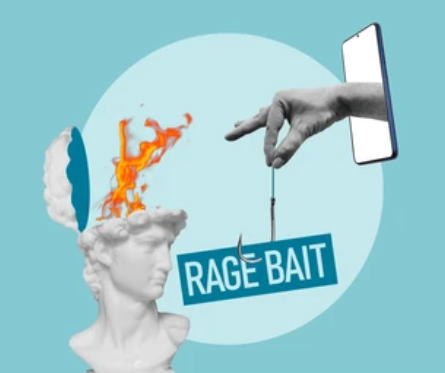
In today’s digital marketplace, attention is not just valuable — it is transactional. Influencers, PR managers, brands and audiences operate within an ecosystem where visibility drives relevance and relevance drives profit. But what happens when that visibility is fuelled not by creativity or credibility but by ‘controversy’ ?
The answer is uncomfortable: it works.
The recent episode involving Saheefa Jabbar Khattak did not just spark outrage — it demonstrated, almost in real time, how controversy converts into reach. In a promotional video for her restaurant, she stated, “I need honest people as helpers for my restaurant… But I want Pathan boys as I do not trust Punjabi and Urdu-speaking people.” The language used was exclusionary, the generalisation sweeping, and the power imbalance obvious. The backlash she faced was immediate and justified, but what followed matters more than what was said.
Outrage surged, and boycott calls began trending. Old clips of the actress on set resurfaced, showing her making classist remarks and acting in a classist manner. Soon came her emotional response — tears, claims of targeted reviews and references to the struggles female entrepreneurs face when people try to tear them down at every opportunity. Sympathy entered the cycle from a few quarters , but just as the discourse began to split between criticism and defense, the actress herself shifted the narrative in an Instagram video: “Don’t you think my marketing is already a case study?”
That is the moment the controversy stopped being incidental and started looking structural.
Outrage is not a byproduct – it is ‘the’ product
Digital platforms do not distinguish between approval and anger; they measure activity. Every tweet, every angry comment, every ‘this is unacceptable’ reel performs the same function: amplification. Outrage is no longer friction in this system; it is the oxygen.
This is why controversy outperforms real, genuine content. It demands participation. You do not scroll past it; you respond to it, and in responding, you expand it as they say, “ Stir the pot, trend a lot. ” Here, the moral quality of the content becomes secondary as visibility becomes the only metric that compounds.
The illusion of ‘mistake’
It is tempting to treat such incidents as isolated misjudgements, a poorly phrased opinion or a moment of carelessness. But that explanation feels insufficient when the lifecycle of the controversy follows a pattern: provocation, backlash, emotional reframing and then strategic public confusion.
Even if the initial statement was not engineered, what comes after is rarely accidental. The decision to engage, to pivot — these are calculated responses within an economy that rewards sustained attention.
When a controversy is later framed as a ‘case study’, it forces a harder question: was this damage control, or was the damage the point?
Audiences are not naive — but they are ‘complicit’
There is a tendency to frame audiences as victims of manipulation. That is only half true. Audiences recognise outrage cycles; they critique them in real time, and yet, they continue to feed them.
The boycott calls, the quote threads, the endless reposting of the original clip — all of it extends the life of the controversy. Even moral condemnation becomes the distribution of the issue because in the attention economy, noise travels faster than truth.
This is the paradox: people reject the ethics of the act, but participate in the mechanics that reward it.
Credibility is slower and more fragile than “virality”
Controversy delivers immediacy. Credibility requires consistency. The two operate on different timelines, and they rarely align.
In the short term, visibility spikes. In the long term, perception settles, and one thing is for sure: perception is less forgiving than algorithms. Audiences may engage with controversy, but they archive it rather than delete it. They remember patterns, not apologies.
For brands, this distinction is decisive. Reach can be bought; trust cannot. An influencer who becomes synonymous with unpredictability, regardless of intent, introduces risk into any association.
The real cost of ‘case study’ marketing
Calling a controversy a ‘case study’ attempts to intellectualise it — to frame it as a strategy rather than fallout. But this framing carries its own consequences. It signals to audiences that their reactions, including legitimate criticism, are inputs in a calculated system.
This is where the backlash sharpens. People no longer respond just to what was said; they resist the idea that their outrage is being instrumentalised and exploited.
And that is a line that if the attention economy approaches, it cannot cross without consequence. This is because once audiences believe they are being played, they stop engaging on the influencer’s terms. The attention does not disappear, but rather turns to bite them.
So, does controversy work?
Yes. It has efficiently, predictably and repeatedly.
However, it also corrodes the very thing influencer marketing depends on: belief. Not in the product, but in the person selling it — and belief, unlike outrage, cannot be manufactured on demand.