





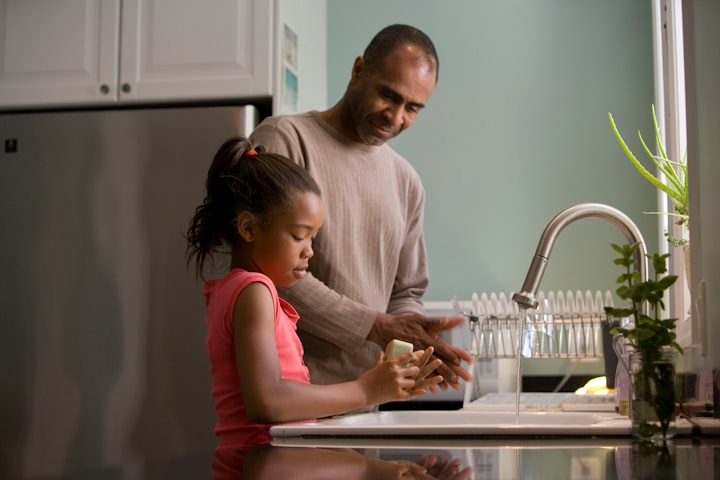
The domestic sphere during much of modern history has been closely linked to women. Household labour, cooking, cleaning, and caregiving were not only discussed as a collection of activities but also as a social expectation that is affiliated to femininity. Meanwhile, men were placed in the role of being providers as their identities were formed by work outside the home to a large extent. The division is gradually being redefined today, though. The emergence of the househusband does not only mark a change in roles, but it is also a transformation of the way we conceptualise gender, work, and the definition of home as well.
The stereotype of the househusband breaks the traditional beliefs. Conventionally, a man who had remained at home when his counterpart had gone to work could have been considered an exception or even not delivered to the expectations of society. However, this arrangement is becoming more apparent in most places in the world, and in some instances, it is becoming more acceptable. This is affected by economic realities. There is a need to have dual-income families, and in certain cases women can earn more than their male counterparts. Under these circumstances, it is even reasonable that men should assume household duties, and it should not be considered an oddity.
This transformation is not entirely economic, though. It is also an indicator of shifting attitudes to gender roles. Especially young generations are more prone to challenging the conventional expectations. The femininity of caregiving or housework is becoming questioned. Men who have opted to remain at homes are not merely occupying a vacancy; they are also in the process of redefining masculinity in its different forms. In this respect the househusband is a larger cultural trend towards flexibility and equality.
The concept of care is central to this change. The problem of domestic work has been underrated due to its invisibility and nonpayment. But it is valuable to the operations of any home. When men assume these roles, this would assist in sensitising more people about the significance of care work. It also prevents the idea that the emotional labour – like taking care of children or dealing with family relationships – is something that the women are more qualified at doing. It points instead to the fact that they are acquired skills, developed through practice and not biology.
House husbands can be able to redefine family structures as well. By being exposed to fathers participating in the daily caregiving process, children can develop a more balanced perspective of gender roles. They are taught that there is shared responsibility at home, which does not exist based on strict boundaries. This may be long-term and affect the future generation in terms of relationships, work and identity. By so doing, individual change is made to be more widespread than social change.
Although these positive developments are present, there are still challenges. Social stigma has not been wiped out completely. Men who become domestic may continue to be judged or misunderstood even in significantly more traditional or conservative societies. Their decision may be regarded as being non-traditional or even not desirable. This shows how the deep-rooted thoughts concerning the male gender persist, and the value is usually associated with monetary support and not caregiving. Because of this, house husbands might have to contend not only with real-life issues but also with social norms.
The issue of identity is also there. Out-of-home work has always been a major source of identity and self-esteem for men. This change of values may be necessary when switching to a domestic role. This can be an affirming and gratifying experience to some that can give them more time to spend with their families and have a sense of purpose. To some others, it can be a phase of adaptation, and they will need to bargain for new approaches to the meaning of success and contribution.
Notably, the emergence of the house husband does not imply mere role reversal. The idea is not to change one strict system with another, but to shift towards becoming more flexible. Ideally, freedom of choice on how responsibilities are assigned should be given to both partners of a household, depending on their situations, likes, and abilities. In this respect, the househusband is included in a bigger debate on equality – not only at the workplace but also at home.
This change has started to be reflected in the media and popular culture, but not always in a very straightforward or stereotypical manner. The household roles of men can be based on humour or novelty even today, which implies that these relationships are odd. Nevertheless, the greater the exposure, the more likely such a concept can be normalised so that more individuals can envisage other forms of running a family.
To sum it up, the rise of the house husband is also a significant development in the redefinition of the domestic sphere. It rebels against the old gender roles, the importance of care work, and new opportunities for the way households may operate. The fact that social attitudes still keep changing, and the fact that men are in domestic positions, indicates that there is a shift towards a more open and adaptable concept of work and identity. After all, the role of a househusband is not only a new one but rather an indication of shifting times, as the demarcations between masculine and feminine, the public and the private, are becoming less hard-line and are now subject to redefinition.