





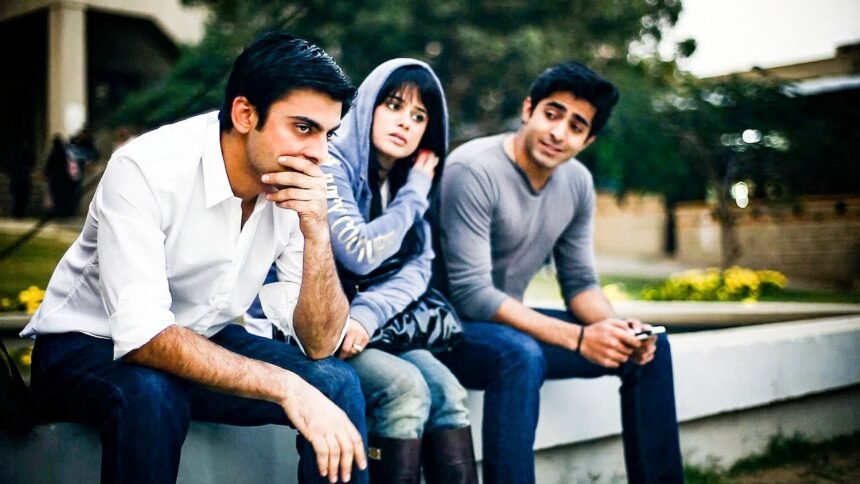
The opinions of young people are frequently dismissed as mere reactions rather than conclusions. The term ‘naive’ becomes part of the discussion without the critic even listening to the argument. This seems like a clever stance to take, but it is actually an easy way out. It allows older generations to ignore criticisms which, for the most part, happen to be right.
What does it really take to recognize a problem? It is the ability to distance oneself from a situation. This becomes increasingly difficult as one grows older and adapts to one’s surroundings. A malfunctioning system ceases to seem unusual once it has been adapted to over a long period of time. Young people lack this habit, precisely because they have not yet learned how to ignore things.
Malala Yousafzai was fifteen years old when she made the claim, under direct threat to herself, that the education of girls was non-negotiable. Adults around her had spent several years living with the presence of the Taliban in Swat by way of caution and compromise. She would not accept that compromise — not because she knew any less than those adults did, but precisely because she was not old enough to believe that limited education was something one had to live with for the sake of peace. Her honesty came from her youth, not in spite of it.
This pattern recurs even in movements that receive far less attention outside of their immediate contexts. The Aurat March — while not solely teenage in origin — is composed significantly of organizers who are of school and university age. They use social media to point out specific cases of harassment, discriminatory inheritance laws, and workplace discrimination that older feminist activism in Pakistan tended to describe in broader, gentler terms. Immaturity is often alleged in response to this direct language. Honesty may be a far better term for it.
Climate activism operates with the same rationale. GreenSquad, established by Fahad Rizwan when he was a teenage boy, created a network that concentrated on waste management and urban afforestation in a country where floods and heatwaves have ceased being remote threats to become regular emergencies. The Climate Action and Advocacy Club, organized by Arooj Khalid, concentrates on students coming from low-income families and perceives climate change as a phenomenon deeply tied to social class and access. These projects were created by young people who could not even legally vote, yet they are actively tackling a problem that has been discussed in political circles for decades without meaningful action. As The Atlantic Council notes, even Pakistan’s climate adaptation strategies fail to include formal mechanisms for involving youth in decision-making processes — despite the vast majority of people affected by climate policies being under the age of thirty.
This is not a statement suggesting that teenagers are always right; it is an argument suggesting that their age does not render them irrelevant. Usually, the complaint made is that teens lack the maturity, the sense of history, or the restraint necessary to judge politics. There is certainly some truth in that. Maturity does matter, and impulsiveness can be a liability. However, experience brings its own form of blindness: the more familiar a problem becomes, the less urgency it carries. A parent who has been dealing with the education system in Pakistan for twenty years may have come to terms with its failures far more than the sixteen-year-old still trapped within it.
There is, however, a more uncomfortable truth hidden in this dismissal — one that adults are unlikely to acknowledge. Listening to youth means recognizing that a problem existed all along that went unnoticed or ignored by preceding generations, and that a teenager can see something you yourself failed to see. It is much easier to claim that a fifteen-year-old is being naive than it is to admit that she is highlighting a flaw in yourself.
None of this requires treating the opinions of teenagers as ultimate, unquestionable truths. Political thinking is informed by experience, and teenagers are certainly not exempt from mistakes or exaggerations. However, the standard currently being enforced is inconsistent. Adult opinions are rarely subjected to the burden of proving “enough” experience, while the validity of a teenager’s opinion depends almost entirely on how controversial or uncomfortable it happens to be. This is not constructive criticism; it is a gatekeeping mechanism under the guise of precaution.
Pakistan is a exceptionally young nation, with a population dominated by people under thirty years old. A country this young cannot afford to dismiss the perspective of its most populous generation simply because of their age. These teenagers are not waiting for anyone’s approval to be right. They are simply waiting for society to stop assuming they are wrong before hearing what they have to say.