





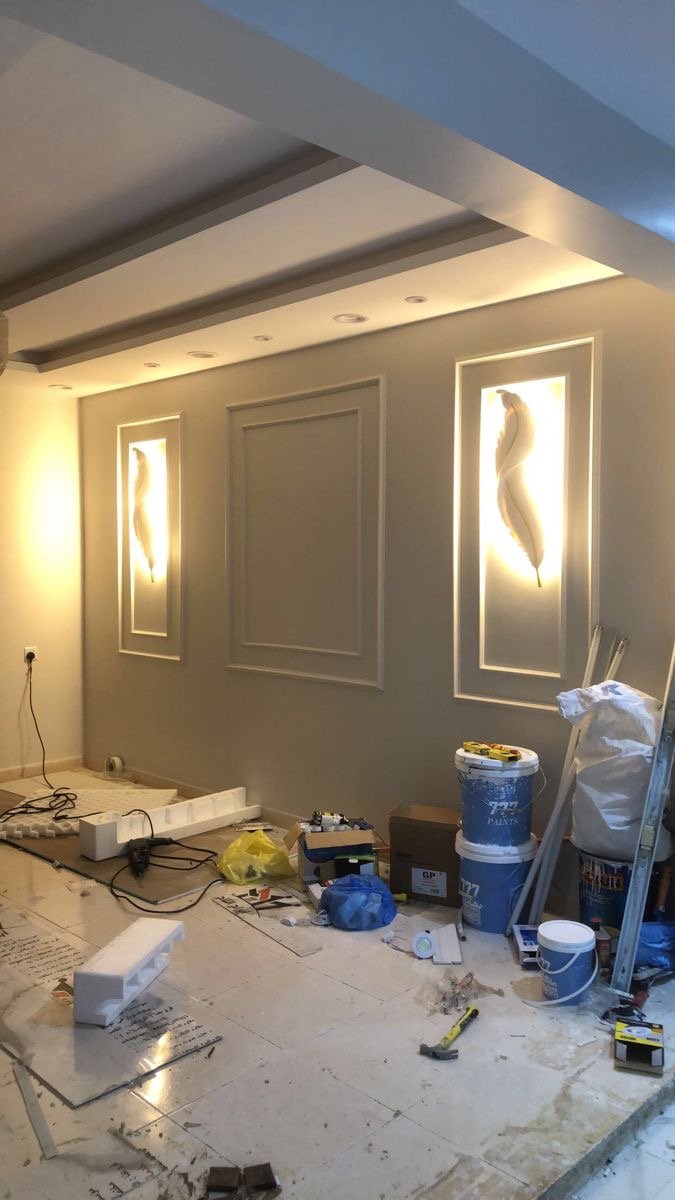
Home ownership is one of the greatest desires of Pakistanis. They perceive it as a safe investment — a source of security, wealth, identity, and culture. While this perspective holds true across much of Pakistani society, an obsession with renovating, upgrading, and continuously improving homes has transformed the way people think about housing, spending money, and judging success. Has it become common for people to evaluate a person’s standing simply by looking at their living room seating? Perhaps.
Today, the home is seen less as a sanctuary to inhabit and more as a never-ending, unfinished project. There are several reasons for this, and the following analysis explores why our homes always seem to remain incomplete.
Renovating Out of Necessity
The impetus for remodelling does not develop accidentally; it evolves gradually, particularly in developing nations with lower per-capita incomes, such as Pakistan. Generally, people renovate because they desire a more comfortable living environment. Energy-efficiency upgrades, for instance, are driven by the pragmatic need to reduce household expenses — such as installing solar panels to mitigate high electricity bills.
In addition, functional needs shift over time: children grow up, aging parents move in, family members begin working from home, or changing household dynamics demand more space. A “perfect” house is inherently subjective — what suits a family today may prove inadequate tomorrow. For example, a couple may purchase a two-bedroom house that, five years later with three children, remains in structural excellence yet no longer fits their spatial needs.
Renovating for Status and Social Prestige
Nevertheless, there is another facet to this “unfinished” mindset: the belief that a residence serves as a public statement of status, identity, and lifestyle. The key drivers of Pakistan’s renovation culture include social prestige, real estate strategy, and evolving lifestyle aspirations. A home frequently symbolises success; perhaps this explains why individuals often upgrade their residences as their wealth increases. Imported tiles, designer kitchens, false ceilings, marble flooring, and ornate gates serve to communicate wealth and elevated social standing.
For many Pakistanis, real estate represents the safest and most reliable investment — viewed less as a place to live and more as an appreciating asset. Having experienced this cultural sentiment firsthand, I find it striking how even those living in rented accommodation frequently remark: “Even if you have nothing else, you must have a place of your own.”
Additionally, media influences — ranging from television shows and YouTube home tours to Instagram, Pinterest, and neighbours’ home improvements — establish shifting expectations of what a modern home should look like. It is human nature to follow trends, yet economic realities often resist them, particularly in Pakistan where ordinary families struggle with food inflation.
Wedding culture also significantly fuels this trend. Extensive renovations are routinely undertaken prior to weddings to impress visiting guests, prepare quarters for a new bride or groom, and present the family in the best possible light. It serves as a visual declaration that the family is progressing and keeping pace with peers.
Furthermore, there is the “ego of ownership”: many individuals dislike living in a space designed by someone else. Even if a house is aesthetically pleasing, it may not feel like a personal achievement unless customized. Designing or altering a house from scratch offers a sense of creative agency, demonstrating that one possesses the wealth and freedom to shape their immediate environment.
Conclusion
To sum up, home ownership itself is sometimes not the final destination. While renovation is often essential and change is a natural part of life, the culture of home improvement in Pakistan has increasingly shifted toward social prestige, status signaling, and identity expression. While not inherently negative, this cycle becomes unhealthy when a home is viewed purely as a luxury asset rather than a place of comfort. In a country where many already face severe economic challenges, this societal expectation places immense pressure on lower- and middle-income families. Perhaps these cultural dynamics explain why our homes are forever being renovated. In the end: “We build homes to hold our lives, yet we spend our lives building homes.”