





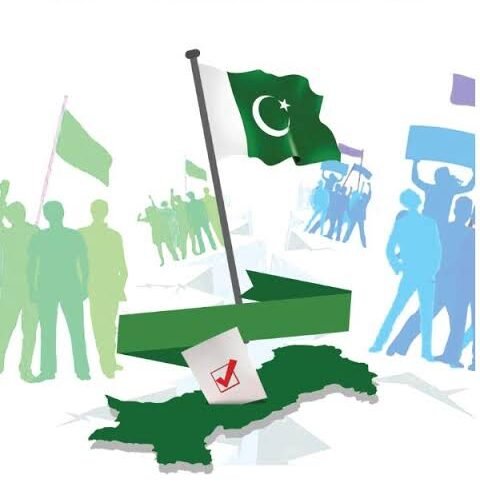
Pakistan’s political arena presents a striking paradox: electoral outcomes rarely depend on competence in governance or policy track records. Candidates face little pressure to show concrete achievements to win votes, as deep-rooted political patronage and unquestioning party loyalty often dictate voter behaviour.
During every election cycle, party leaders make sweeping promises regarding public utilities, social welfare, and economic relief. Prior to the 2018 general election, former Prime Minister Imran Khan pledged ten million jobs for the youth — a promise that remained largely unfulfilled. In recent election campaigns, Maryam Nawaz and Bilawal Bhutto-Zardari promised subsidised electricity for low-income households and immediate inflation control.
Yet following election victories, inflation has reached historic highs, leaving ordinary citizens struggling to meet basic living costs while poverty rates continue to rise.
Campaign Rhetoric Versus Budgetary Realities
Since its inception in 1947, Pakistan has navigated recurring economic crises. Prior to every election, major political parties depict themselves as the sole viable option for national financial stability. Upon entering government, however, these sweeping commitments vanish.
Power has alternated between major political forces — including the Pakistan Muslim League-Nawaz (PML-N), Pakistan Tehreek-e-Insaf (PTI), and Pakistan Peoples Party (PPP) — yet none have established long-term economic progress. Instead, public office has frequently been overshadowed by systemic corruption allegations across party lines, while annual national budgets reflect little of the socio-economic priorities promised on the campaign trail.
Personality Cults and the Absence of Public Accountability
Why do elected officials operate with little fear of public backlash? Several structural factors explain this disconnect:
- Personality Cults: Public accountability remains weak because voters frequently prioritise political personalities over performance. Blind party loyalty — often inherited across generations — discourages critical evaluation. Constructive criticism is misconstrued as partisan hostility, allowing politicians to ignore their manifesto commitments without electoral consequence.
- Judicial and Institutional Weakness: An independent judiciary is essential to democratic governance. However, the legal system has frequently failed to check executive overreach, occasionally providing legal cover to controversial legislative acts. The World Justice Project Rule of Law Index ranks Pakistan 130th out of 143 countries, reflecting persistent institutional vulnerabilities.
- Electoral Engineering and Premature Mandates: Extensive political engineering and electoral manipulation significantly reduce politicians’ accountability to the electorate.
As The Guardian observed regarding Pakistani political dynamics, military oversight frequently shapes political outcomes by discrediting, exiling, or imprisoning primary opposition figures prior to polling. When political leaders assume office without an uncompromised public mandate, their primary allegiance remains tied to establishment patronage rather than the electorate.
Without genuine electoral transparency and institutional accountability, party manifestos will remain temporary campaign tools that disappear the moment votes are counted.