





Mourning has not vanished from our homes, but it has become quiet, private, and now a lot more online.
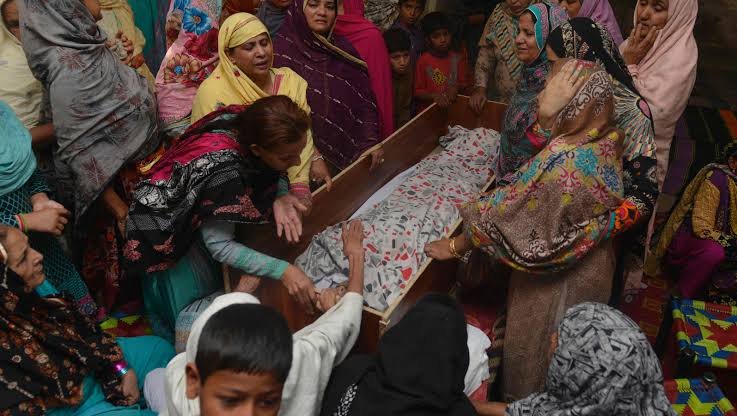
Previously, there was a rhythm in Pakistani households around the presence of death. Chairs would be set out in the courtyard or living room. An aunt would arrive with a dupatta draped over her head, sitting and chatting for hours. The Quran Khwani would take place on the third day, followed by the Chaliswan forty days later — both served as structured, scheduled returns to the wound, ensuring the bereaved sat through their loss in constant company. In this older form, grief was inherently communal and designed to be shared. You were not expected to go off and process it by yourself.
Ask someone under forty in Pakistan today what a period of mourning looks like in their family, and the answer is almost always “smaller.” Sitting for condolences now lasts a day or two at most. Instead of a house overflowing with visitors, there is a WhatsApp broadcast. A Facebook or Instagram post containing a photograph and a brief caption — “always in our hearts” — solicits condolences from people who will likely never step foot inside the home. The Chaliswan is still practiced in some households, but it is increasingly compressed into a single, brief evening rather than an extended ritual.
It is easy to view this transition as erosion — the fading of something sacred as it passes from one generation to the next. In reality, it is more of a renegotiation: less about giving up tradition and more about deciding who gets access to your grief, and for how long.
Some of this shift comes down to pure practicality. The modern urban family is smaller and more geographically dispersed, often living across different cities or continents compared to the extensive biradari networks that sustained multi-day mourning rituals in decades past. Unlike the sprawling joint-family compound, a nuclear family living in an apartment simply lacks the space, household support, or flexibility with work. If a death occurs on a Tuesday and both partners work full-time, taking weeks off in chunks for traditional rites is no longer feasible.
Beyond practical constraints, however, lies a fundamental shift in temperament. Younger Pakistanis — raised in the era of therapy culture and individual mental health awareness — have begun to view grief as something that should not have to be “performed on demand.” The traditional model required the bereaved to sit continuously, appear visibly mournful, and repeat the same painful story to every arriving guest. While this repetition served as a form of catharsis for some, to many today, it feels like forced theater — grief squandered as hospitality, with tea and refreshments served to visitors who often attend merely to be seen attending.
What has emerged is a new middle ground. Emotional expression has not disappeared, but its setting has shifted. A caption beneath a photograph can carry genuine, deep emotion; it is simply directed toward a digital network rather than a physical room. While the older generation mourned in the physical presence of a community, the younger generation mourns before an abstract, dispersed audience — university friends, former classmates, and distant relatives overseas who offer digital reactions rather than sitting in the room.
What is lost in this evolution is the forced companionship of traditional mourning — a collective space where you could not isolate yourself, because someone was always sitting in the adjacent chair. What is gained, however, is emotional autonomy: fewer people performing a melancholy they do not feel, and more individuals allowed to process loss at their own pace, in smaller rooms, surrounded only by the people they truly choose.
Neither form of mourning is inherently more authentic than the other. They simply answer different questions about what grief is ultimately for — whether it belongs to the community, the extended family, or, in the end, the individual.