





In the initial stages of space exploration, the sector was dominated by government agencies, from the days of the space race between the USSR and the USA to the late 20th century. In the late 90s, however, growing public interest in space exploration allowed private companies to start up as well. Some of these companies, such as SpaceX and Blue Origin, are now a recognised part of the space industry and have made significant contributions due to their flexibility and cost-effective technologies.
The emergence of private companies in the space sector appears to have begun with the constricting nature of national agency missions, as government agencies and private companies have differing motivations behind their projects. While government agencies have focused on military defence, large-scale projects such as the International Space Station, national security, and planetary exploration, private companies have had different core ambitions. Such companies value missions focused on colonising Mars, building private research habitats, and pursuing space tourism.

Finances
Government space agencies are funded by taxpayer money, allowing their funds to remain stable for the most part; however, sudden political shifts can affect missions. This was seen recently under the Trump administration with his 2026 budget cuts. NASA’s 2025 budget was $25.4 billion, while their 2026 budget was reduced by nearly 25% to $18.8 billion, causing a number of missions to be delayed or cut, such as the Juno Jupiter Orbiter.
Private companies, on the other hand, are funded by billionaire investors and commercial contracts. While private companies aren’t directly affected by politics, their dependence on investor capital makes them highly vulnerable to market fluctuations. Most private companies have much smaller budgets as well, lying between the $1 million to $1 billion range, limiting their influence and abilities in the long run.
Commercialisation
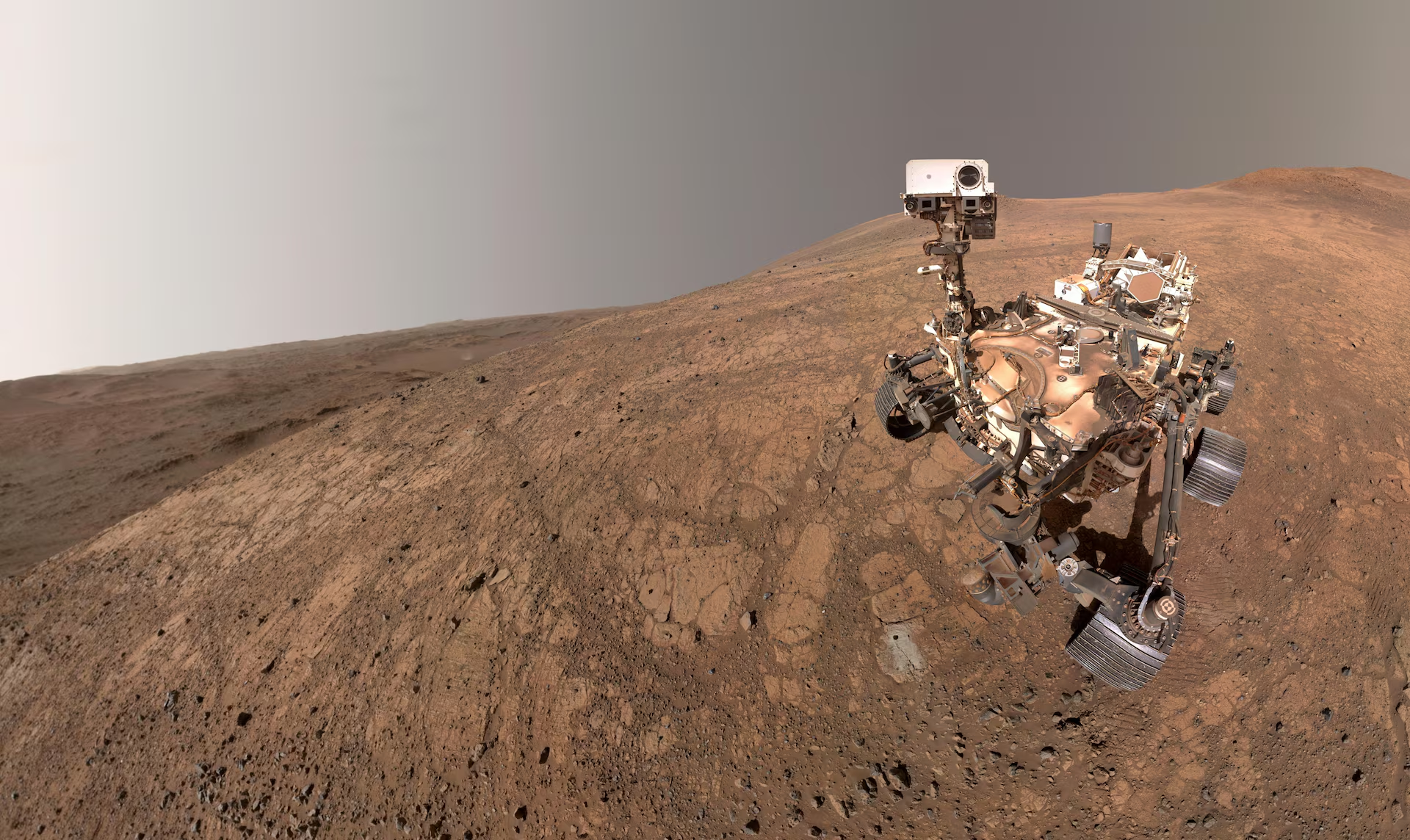
Government agencies are more likely to prioritise space research and exploration, along with international collaboration between agencies. Compared to private companies, they’re more likely to send long-term and high-risk missions, as they don’t aim for profit but for discoveries. They’ve made undeniable progress, with missions such as the Mars Rover, which allowed researchers to map out the planet in more detail than ever before.

companies prioritise profitable ventures such as asteroid mining and space tourism. They develop cost-effective technology with the intent of investment return in the near future. While there are over 70 government space agencies, only 16 have launch capabilities. Private companies can solidify their spot in the industry by working alongside those government agencies while working on their own technologies. SpaceX still generates revenue from NASA contracts, yet is one of the largest private space companies of today.
By bridging gaps in the sector, these companies can make a place for themselves that no government agency can. They can achieve this by providing training programs for astronauts and maintenance crews, logistics and operations teams, or sustainability experts. Another niche to fill is the provision of training environments such as Mars simulations, zero-gravity training, and research in high-altitude flights. These training sessions are necessary for astronauts and all kinds of researchers, and are indispensable to major space agencies.
While private companies have a lot to offer in terms of commercialisation and innovation, governments are still ahead in research and exploration. Until private companies gain launch capabilities, their influence will be minor compared to government agencies, unless major technological breakthroughs happen in the coming years.