





“We are the main characters of our lives.”
This saying centralises our perspective over others. Because who felt this pain except my body? Whose mind had echoes of silence except mine? It places our individual experiences above a collective history.
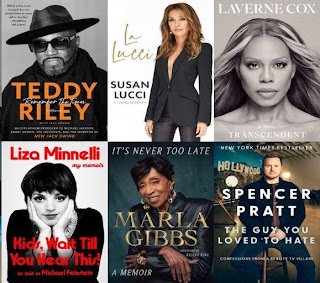
For years, celebrities told their stories through interviews, documentaries, and social media posts. Recently, they have been returning to the book.
Politicians publish after leaving office. Soldiers write after war. Activists, artists, athletes, and influencers all arrive with the same pitch: “Let me tell you what really happened.”
In 2025 and 2026 alone, books arrived from pop stars like Brandy, actors like Christina Applegate and Liza Minnelli, alongside directors, athletes, and former mayors. The shelves are full, and more are coming.
Driving Factors Behind the Boom
We are in a memoir boom, but it should not be confused with history. It is memory, shaped for an audience. While it seems trendy to write a memoir in this day and age, several driving factors are pushing this phenomenon forward.
One is the control of narrative. For decades, public figures had their stories told by journalists, biographers, and documentary filmmakers. Outlets like TMZ and The Shade Room released celebrity news and gossip long before the celebrities themselves were ready to announce it. Now, they can publish first. When Liza Minnelli, at 79, stated she was tired of other people getting it wrong, she expressed what many public figures feel: “If I don’t write it, someone else will” — only for it to be picked apart in comment sections and speculated upon by gossip accounts.
At the same time, there is a growing demand for intimacy. Readers and fans already feel close to public figures through Instagram, podcasts, and interviews. A memoir promises to go deeper, offering childhood details, private letters, journal entries — the scenes that never made the news. That is the true currency: access.
Legacy is another key factor. Many authors publishing now are at a reflective age, considering how they will be remembered. A memoir represents an attempt to answer that question on their own terms. While history is a collective effort, the literary value of a memoir, at its best, does something history books cannot: it gives us interior life.
The Power of Interiority
Trevor Noah’s Born a Crime does not merely explain apartheid; it shows what it felt like to be a mixed-race child hiding in a car. Elie Wiesel’s Night does not simply record Auschwitz; it records what hunger, cold, and fear do to a fifteen-year-old boy.
This is why we read them. Memoir turns public events into human experience. It expands what we can imagine about other people’s lives, giving voice to individuals who would otherwise remain footnotes.
The form rewards voice, structure, and honesty. When it works, it feels less like a press release and more like a bare-it-all conversation, granting access into the innermost self.
The Selectivity and Bias of Recall
Nonetheless, as Nora (1989) argues, memoirs act as “sites of memory” where societies — and in this case, individuals — construct how the past should be remembered. Research shows that memory is not a precise recording, but a reconstruction that can be altered by suggestion and bias (Loftus, 2016).
Both Nora (1989) and Loftus (2016) demonstrate how memory is inherently selective, which explains why political memoirs so frequently omit complex power dynamics. We forget, we exaggerate, and we reorder events to make sense of them. We remember ourselves as far more consistent than we ever were.
Now add motive: a politician writing after a scandal, or a celebrity after an damaging documentary. The memoir then becomes an act of self-justification.
These problems show up repeatedly:
- Selective Inclusion: What gets included and what gets cut is a deliberate choice. Trauma may be detailed over three chapters, while a major mistake receives a single paragraph.
- Partial Archives: Private archives are quoted, but only the excerpts that support the author’s case. A politician may not detail the power dynamics surrounding a sexual assault allegation, writing simply, “She agreed.” Readers often assume the person with the most intimate access must be right. Yet contested events rarely have only one side; compliance under economic dependence or career threat is not simple consent.
- Multiple Main Characters: In war, in political crises, in band breakups, or in public divorces, there are always other main characters holding entirely different memories.
Just because memoirs are beautifully written, we must not treat them as objective truth. Because they are deeply personal, we must not treat them as complete. They are neither: beauty does not equal truth or innocence; memoirs are works of art built from recall.
This explains the memoir’s uneasy relationship with history. History demands corroborating documents, cross-examination, and alternative viewpoints. Memoir asks you to trust one person’s eyes — to sympathise and empathise while walking in their shoes.
How Readers Should Approach the Genre
As readers, we should not call for the cancellation of memoirs; literature in all its forms deserves to be cherished. Rather, memoirs should be read neither with knee-jerk cynicism nor with blind faith, but with sharper questions:
- What is being remembered, and what is being avoided? Gaps tell you as much as pages do.
- Who benefits from this version? If the author held power during a contested event, read with that context in mind.
- What is the literary purpose? Is this written to confess, to explain, to persuade, or to heal? The underlying purpose shapes the memory.
- Where can I cross-check it? Read the memoir alongside news coverage, court records, and counter-memoirs. Let them debate one another to reveal a fuller picture.
We are all main characters in our own lives, which is why memoirs feel so urgent: everyone believes their story matters. The challenge is remembering that history is not made of a single protagonist; it is forged by many, all remembering differently.
The memoir boom is not going away. The task for readers is to appreciate the story while still remembering to ask: “Whose story is this, and whose got edited out?”