





Fast fashion is a business model that focuses on the rapid design and production of ready-to-wear garments, alongside the promotion of cheap clothing reflecting each season’s predicted trends. Its origins can be traced to the 19th century, when the Industrial Revolution transformed the production of clothing from a domestic skill and craft into a highly mechanised and automated process. Although the groundwork for the model has existed for decades, the term ‘fast fashion’ is believed to have been coined by The New York Times in the late 1980s to describe the business objectives of Zara — one of today’s most prominent fast fashion companies. Other major players include SHEIN, Mango, GAP, Primark, H&M, and many more of the biggest brands in fashion today.
The increased demand for cheap, mass-produced clothing has created a system of labor exploitation; garments are often produced in sweatshops in developing nations under extremely unethical conditions. Over 60 million individuals are employed in this industry, yet only 2% are able to earn a living wage.
Ethical Issues of Fast Fashion
Bangladesh is one of the primary places fast fashion companies outsource their labor from. Despite the industry contributing 14% to the nation’s GDP, a reported 91% of Bangladeshi garment workers struggle to afford food and shelter for their families, and a quarter of them have reported abuse at the hands of the managers who run the sweatshops.
Globally, 75% of garment workers are female, leaving women disproportionately affected by the exploitation within this industry. The articles of clothing we wear come at the cost of the dignity of women we will never know. While people in the Global North continue to shop mindlessly to participate in trends that die out within a week, women elsewhere suffer in conditions that would make any person turn away in distress.
It is important to be mindful of where we shop and to ensure that the factories where our clothes are produced comply with the standards set by the International Labour Organization (ILO). However, enforcement of these standards relies on the governments where factories are located, and they are often overlooked or ignored — as evidenced by the fact that only 1% of brands disclose whether their workers earn a living wage. If information regarding a brand’s labor practices is unavailable or hidden, the company is likely engaged in unfair and exploitative practices, and it becomes the duty of the consumer to refrain from purchasing from them. Additionally, it is essential to consider whether a purchase is truly necessary, and whether it can be bought secondhand instead.
Environmental Impacts of Fast Fashion
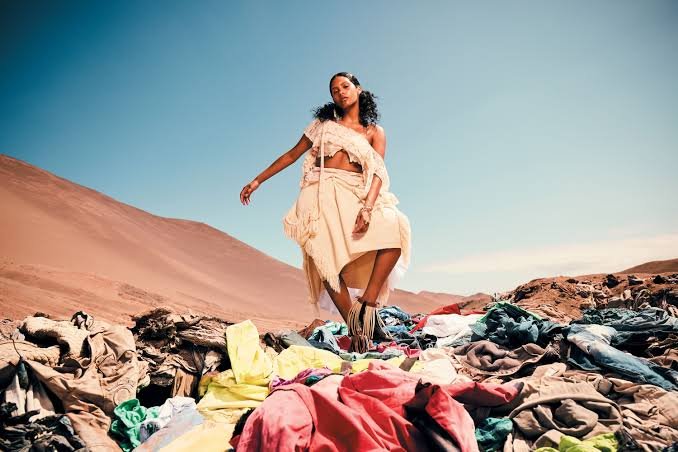
The European Environment Agency classifies the fashion and textile industry as the sector with the fourth highest consumption of primary resources and the fifth highest greenhouse gas emissions. The fashion industry accounts for an estimated 4% to 10% of global greenhouse gas emissions and is predicted to emit nearly 2,800 million tons of carbon dioxide annually by 2030. An estimated 92 million tons of textile waste is dumped in landfills yearly, but these landfills are rarely local. The majority of the world’s textile waste is exported to countries across Africa and Asia, such as Uganda, Ghana, and Kenya. While consumers in developed nations continue to buy new items weekly, developing nations are quite literally drowning in discarded clothing, as seen in Chile’s Atacama Desert.
As online shopping platforms such as Amazon, SHEIN, and Temu continue to gain popularity, reflecting on the individual consumer’s role in sustaining hyper-consumerism becomes increasingly important. While low prices may seem appealing, fast fashion garments are typically made of polyester and other synthetic materials, all of which take decades to decompose.
When someone donates old clothes to a charity shop, they often expect the items to be resold locally. However, less than 30% of donated clothing is resold domestically; the majority of discarded clothing is exported to West and East Africa. Among the top importers of textile waste are Kenya and Tanzania, where old clothes are sold to retailers in commercial bales known as Mitumba. Most of the clothing in these bales is completely unusable — serving as little more than textile waste exported by the Global North to offload the egregious volume of trash it produces. These unusable textiles are sometimes burned for fuel; however, due to the high concentration of synthetic fibers, the resulting smoke causes severe eye irritation and severe respiratory issues for local communities.
While it is true that many national economies heavily depend on the fast fashion industry — as seen in Bangladesh — the environmental stress and human toll created by the sector far outweigh any justification to maintain the status quo without severe structural reforms. To start, governments should make it mandatory for brands to disclose and verify compliance with international labor standards. Garment workers must be paid a living wage, and strict regulations must be enforced on factories to ensure managers cannot exploit their workforce in any way.