





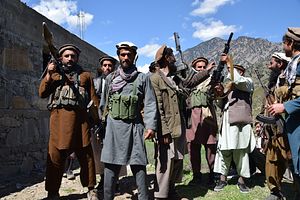
On 24 May 2026, a deadly blast in Quetta near the railway track resulted in dozens of deaths. Terrorism is a growing issue in Pakistan. In 2025, Pakistan was the most impacted country by terrorism, and the Global Terrorism Index 2026, published by the Institute for Economics and Peace, ranked it No. 1 for terrorism. Most of the terrorist attacks have been associated with Tehreek-i-Taliban Pakistan. The roots of this terrorism lie in Afghanistan. Pakistan’s involvement in the Afghanistan wars largely affected its security. The Soviet-Afghan War lasted for a decade, from 1979 to 1989, after the Saur Revolution in 1978, when the PDPA (People’s Democratic Party of Afghanistan) took power. The Afghan Mujahideen resisted the communist reforms of the PDPA government. Soviet forces entered Afghanistan to support the government. The Mujahideen had the support of the United States and Pakistan. Millions of Afghans migrated towards Pakistan and Iran. The CIA provided weapons to the Mujahideen. The war caused instability in Afghanistan and ultimately led to the emergence of the Taliban. It also played a role in the weakening of the Soviet Union.
Afghanistan had long been the victim of superpowers. After the 9/11 attacks, the United States invaded Afghanistan and started military operations against the Taliban government as they refused to hand over Osama bin Laden to the CIA. In a short time period, the Taliban were ousted, and a new government was formed, including Hamid Karzai and Ashraf Ghani. The United States aimed to make Afghanistan terrorist-free. Pakistan sided with the US in this war. Pervez Musharraf allowed the United States to use Pakistan’s air bases. Pakistan in return got financial assistance from the US, but in the long run it created many challenges that are continuing to haunt Pakistan. A large number of refugees caused a humanitarian and economic crisis in Pakistan. The Afghan Taliban, in anger (because Pakistan supported the US against them), carried out various terrorist activities against Pakistan.
Pakistan repeatedly alleged that the Afghan government sheltered militants. Balochistan and KPK are the most affected regions. APS Peshawar was attacked in 2014, killing innocent children. Pakistan’s involvement in the war caused non-recoverable damage to Pakistan, and the result is the loss of 70,000 lives in a war Pakistan has nothing to do with. Although America left Afghanistan in 2021 after the Doha agreement, Pakistan is still paying a heavy price for its involvement in the War on Terror. If Pakistan had denied America access to its air bases, it would be very difficult for the United States to start and continue the war for so long, but our rulers have always tried to make America happy no matter at what cost. This is how a single wrong decision has the tendency to affect generations.