





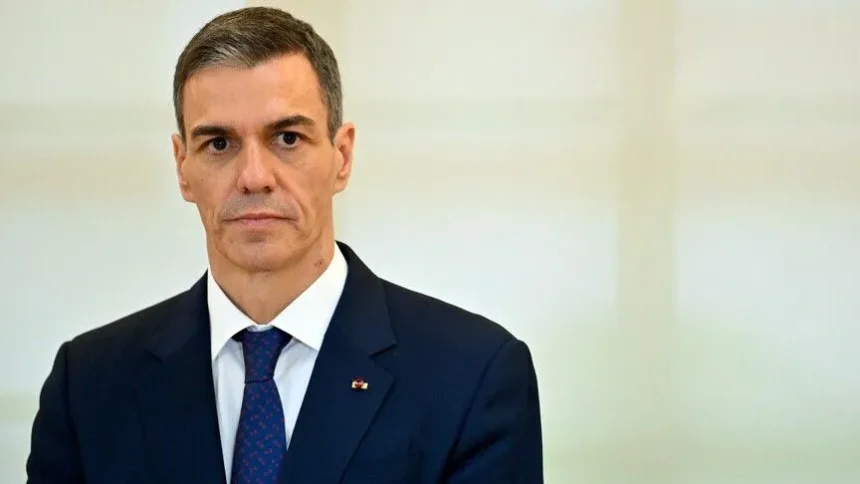
Spanish Prime Minister Pedro Sanchez said on Thursday there was currently no solid evidence that Morocco orchestrated the mass arrival of migrants in Ceuta, rejecting allegations that have drawn criticism from both opposition parties and some of his government’s left-wing allies.
Sanchez told parliament that Spanish intelligence services had, “for now,” ruled out Moroccan involvement in the crossings, but said his government would respond firmly if evidence emerged establishing Rabat’s responsibility.
His remarks followed Spanish media reports citing a police intelligence assessment that allegedly linked Moroccan security forces to the arrival of around 72,000 migrants in Ceuta on July 30 and 31. The reported assessment suggested the operation went beyond migration and had broader political objectives.
The prime minister also disclosed that Spain had summoned Moroccan Ambassador Karima Benyaich on August 21 to protest remarks by Moroccan ministers concerning the status of Ceuta and Melilla, Spain’s two North African enclaves.
Morocco’s justice minister had described the territories as a Moroccan “historic and geographical right” and called for a “definitive solution” under which they would be returned to Moroccan control.
The previously undisclosed diplomatic summons intensified criticism of Sanchez’s handling of relations with Rabat. Opposition leader Alberto Nunez Feijoo accused the government of dealing with the dispute “covertly” and alleged that it had concealed information about Morocco’s possible involvement in the migration crisis.
“The operation came from Morocco, was consented to by Morocco and there are indications that Morocco coordinated it,” Feijoo said, calling on Sanchez to resign over what he described as either “incompetence or complicity.”
Criticism also came from parties that normally support the government. Enrique Santiago of Sumar accused Morocco of organising the influx, while Sumar lawmaker Aina Vidal said Madrid’s “appeasement policy with Morocco has failed.”
Gabriel Rufian, parliamentary spokesman for the Catalan separatist ERC, went further, alleging that Morocco had deliberately used migration to destabilise the Spanish government in coordination with outside actors. No evidence establishing such coordination was presented in the account.
Sanchez acknowledged that his government had made mistakes in managing relations with Morocco and the migration crisis. “We have had our successes, also our mistakes, like everyone,” he told lawmakers.
He announced that Spain would seek a permanent presence of the EU border agency Frontex in Ceuta and said King Felipe VI should visit Ceuta and Melilla “in the coming weeks.”
Government estimates indicate that about 5,000 migrants who entered during the mass crossings remain in Ceuta, an enclave with a population of roughly 80,000.