





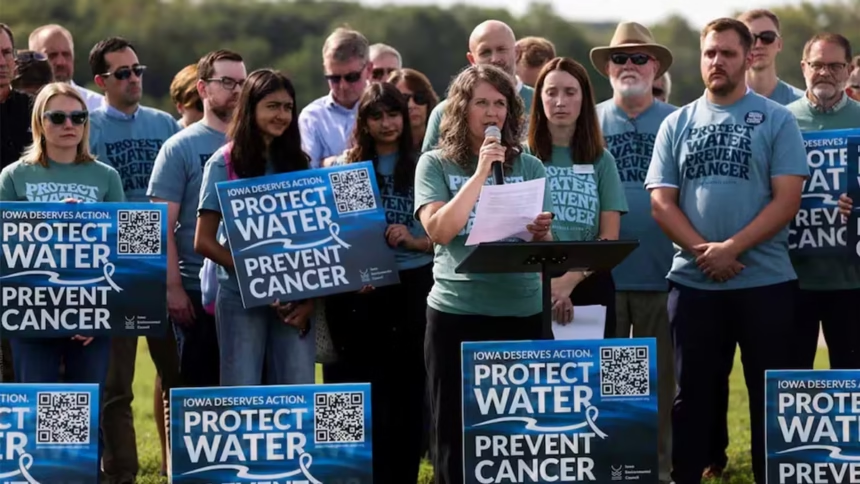
Cancer has emerged as a major concern in the US midterm elections, with candidates in Iowa highlighting the state’s rising cancer rates as a key campaign issue.
Pacing a stage at the Iowa State Fair, flanked by his wife and four of their six children, Republican US Congressman Zach Nunn spoke passionately about an issue that has emerged as a key concern in his competitive midterms race: cancer.
“Look, my mom is a survivor. I know that it has touched all of us, our family, our friends,” he said at the August event, touting his efforts to bring more money for cancer screening to Iowa’s third congressional district.
Two days before, his Democratic challenger in November’s election, state Senator Sarah Trone Garriott, had discussed cancer on the same stage.
“We know Iowa has a cancer problem. All of us have friends, neighbors, maybe we’ve even experienced it ourselves,” she said.
They were not the only hopefuls to talk about it: five of the six House, Senate and gubernatorial candidates who appeared at the fair discussed Iowa’s high cancer rates, reflecting the extent to which the disease has become a bipartisan campaign issue this year.
Candidates, advocacy groups and strategists say the state’s rising cancer rate – the second highest in the country behind Kentucky – has for the first time emerged as a major issue alongside kitchen-table concerns such as the cost of living.
While the causes of cancer are often complex and not well understood, Iowa voters’ concerns are driven in part by worries that the state’s worsening water pollution from nitrates and other chemicals may be to blame for a spike in cases.
Every major candidate in Iowa’s competitive races for Congress and the state governorship has talked about their plans to tackle cancer in recent speeches, social media posts or on their websites, according to a Reuters review of campaign materials.
The candidates have pledged a range of actions from increasing cancer screening to improving water quality monitoring. Democrats have used the issue to push for expanded healthcare access, while Republicans have promoted greater treatment options and research funding.
After more than a decade of decline, Iowa’s cancer rate began to rise in 2014, and it has had the second-highest cancer rate in the nation since 2023, according to reports by the Iowa Cancer Registry, which tracks and studies cancer cases among Iowans.
It is one of just three states where cancer is rising, driven by higher rates of lung, prostate and breast cancers, among others, according to the National Cancer Institute at the National Institutes of Health.
Tim Hagle, a political scientist at the University of Iowa, said he can’t remember cancer ever being such a significant concern in past elections. The issue has taken hold in part this year because it ties into voter concern about other health issues, like Republican-backed cuts to Medicaid, the federal health program for lower-income Americans, he said.