





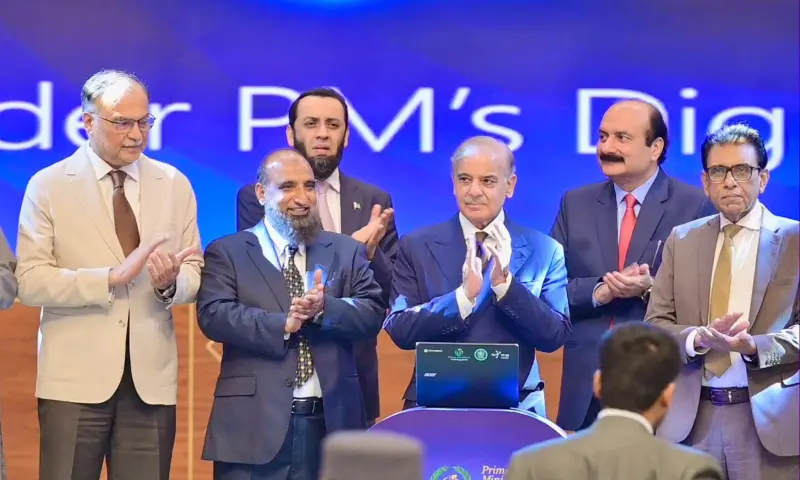
Prime Minister Shehbaz Sharif announced on Sunday that the federal government would distribute 500,000 Chromebooks to students across Pakistan over the next two years, as part of an initiative to improve access to modern technology and educational opportunities.
The announcement came during the launch ceremony of the Prime Minister’s Youth Chromebook Scheme in Islamabad, where the premier emphasised the government’s responsibility to equip young people with the technological resources needed to succeed.
Addressing the gathering, Shehbaz said providing students with modern digital tools was both his duty and the state’s “collective responsibility”, enabling young people to become “the great builders of Pakistan”.
He described Pakistan’s boys and girls as the country’s most valuable assets and emphasised the importance of investing in their future.
The prime minister said the devices would be awarded to students on the basis of their hard work and ability, emphasising the importance of recognising academic potential.
He expressed hope that access to Chromebooks would help students participate in remote learning and broaden their educational opportunities.
According to Shehbaz, the initiative would enable young people to attend school remotely and gain access to educational opportunities that could help them become among the most educated people.
The premier stressed that financial hardship should not prevent talented students from acquiring the knowledge and skills necessary to advance their education.
Recalling previous laptop distribution programmes undertaken by Pakistan Muslim League-Nawaz (PML-N) governments, Shehbaz said approximately 600,000 laptops had been distributed over a decade.
He contrasted that figure with the new government’s target of providing 500,000 Chromebooks within just two years.
“These wonderful instruments will be in your hands so that you are not lagging in intelligence and skills,” he told students.
The prime minister reiterated that intelligence, determination and hard work should not be constrained by poverty, underscoring the government’s stated commitment to expanding educational access through technology.