





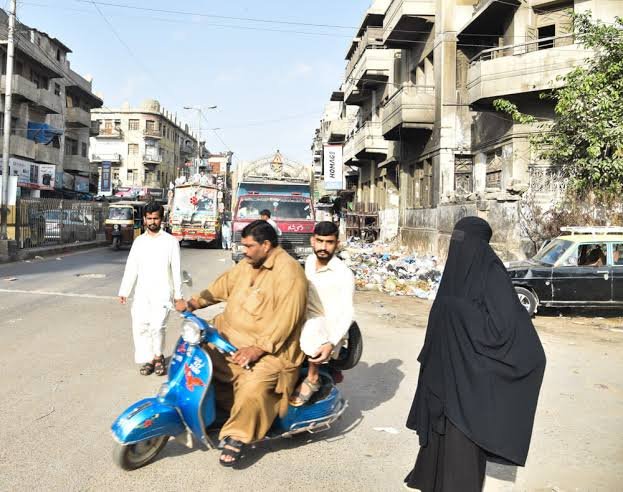
As we progress into late 2026, it is no longer a shock for us to hear about another woman, another man, or another child who is murdered.
But why are we slowly coming to accept this dark reality? Why are people slowly accepting that this is all inevitable?
The truth is, we have raised our men in such a way that it is now irreversible, whether in our schools, our workplaces, or our own homes. We shunned the women for years; we let the men roam free with no accountability. We taught the concept of Sabr to the women, but we told the men never to tolerate it. We told our women that boys will stay boys; it is their duty to protect their own “honour”.
What irony. Pakistan is now ranked 148th in gender equality according to the Global Gender Gap Index reported by Dawn.
Currently, Pakistan has the world’s second-highest number of out-of-school children (OOSC), with an estimated 25.1 million children aged 5-16 not attending school, representing 35 per cent of the total population in this age group (Education, n.d.).
In Pakistan, 28% of women aged 15-49 have experienced physical violence, and 6% have experienced sexual violence. 34% of ever-married women have experienced spousal physical, sexual, or emotional violence. Five per cent of women have experienced spousal sexual violence (Pakistan Demographic and Health Survey 2017-18). 56% of women who have experienced any type of physical or sexual violence have not sought help and/or talked with anyone about the violence (Gender-based Violence, n.d.).
We started with abuse. Pakistani men and women alike hid it behind closed doors.
But it turned to murder. Slowly, the next generation of men could not control their urges.
Women face the most severe consequences of Pakistan’s structural inequalities in the form of a growing femicide crisis. Gender-based violence remains widespread and includes acid attacks, forced and child marriage, rape, trafficking, forced conversion, and domestic abuse. Hundreds of women are killed annually in so-called “honour killings,” often by relatives, over perceived family shame. At least 405 cases were recorded in 2024, but the real figures are likely higher, due to low reporting and weak, inconsistent enforcement. Also in 2024, over 2,000 domestic violence cases and 5,000 accounts of rape were recorded, reinforcing Pakistan’s status as one of the most dangerous countries in the world for women. According to a 2025 United Nations report, two out of every three Pakistani women are denied reproductive autonomy and are subjected to abuse and pressure regarding their reproductive health (Watch, 2026).
It is evident that men who commit homicide have abused or have shown signs of controlling behaviour beforehand. Evidently, it is not their first rodeo. For such men, femicide is not about losing their control. It is an act of desperation to reclaim their control.
Our streets are no longer safe. We cannot send our children outside to play. We cannot walk to our schools, hospitals or workplaces. We try to stay shunned in our homes, too afraid to go out unnecessarily. It is to the point where we cannot trust our partners, our family, or our friends.
So, ask yourself today: are we really living in “The Islamic Republic of Pakistan”? Where Islam is misused by the men who play judge, jury, and executioner to silence women.