





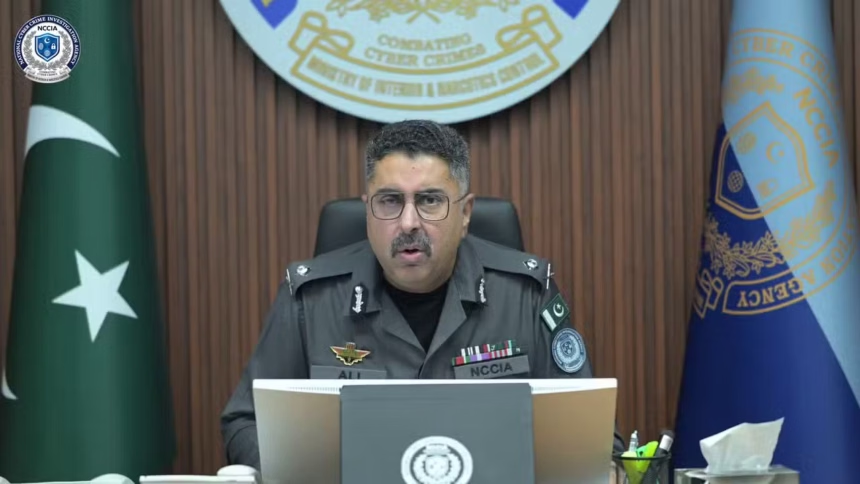
The National Cyber Crime Investigation Agency (NCCIA) has warned that individuals involved in online trolling, negative propaganda or unlawful campaigns targeting judges and the judiciary could face strict legal action under Pakistan’s cybercrime laws.
The warning was issued by NCCIA Director General Syed Ali Nasir Rizvi in a video message shared on the agency’s official account on social media platform X.
Rizvi emphasised that the agency would not tolerate what he described as defamatory or malicious online campaigns against members of the judiciary, warning that those responsible could face prosecution under the Prevention of Electronic Crimes Act (PECA).
Questioning the practice of publishing offensive material about judges on social media, he said individuals could not be allowed to post objectionable content targeting members of the judiciary without facing potential legal consequences.
The NCCIA chief maintained that anyone found violating the law through online statements or campaigns against judges would be dealt with in accordance with the relevant provisions of PECA.
He stressed that the agency was determined to enforce applicable cybercrime legislation against individuals engaging in unlawful activities directed at judicial institutions.
Rizvi also expressed concern over the growing practice of online trolling, questioning how personal attacks against judges could be considered acceptable conduct.
He urged social media users to exercise responsibility when publishing or sharing material concerning members of the judiciary and other state institutions.
The director general made clear that the warning applied to individuals from all sections of society, regardless of their professional or social standing.
He added that whenever online content concerning the judiciary or any other institution was found to violate the law, the relevant legal provisions would be enforced.
The NCCIA’s statement signals the agency’s intention to take action against online campaigns it considers unlawful, particularly those directed at judges and judicial institutions.
The warning, however, did not identify any specific individuals or cases against whom proceedings had been initiated.