





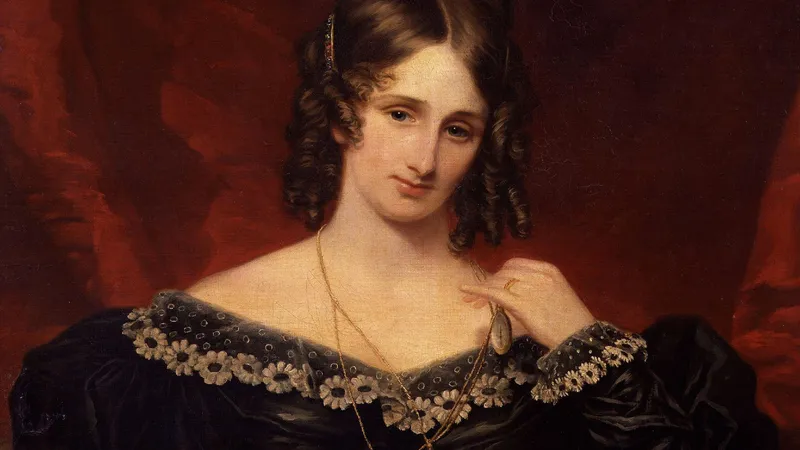
Literary history tends to view Mary Shelley as a child prodigy: a young girl who stumbled on a masterpiece. This framing reduces her intelligence and the radicalism of her contribution. Shelley, who was only 19 when he wrote Frankenstein, scared readers and laid the philosophical groundwork for modern science fiction.
Describing Frankenstein as merely a Gothic horror story underestimates its ambition. The novel by Shelley questions scientific advancement, moral accountability, and the side effects of uncontrolled desire. Shelley posed what transpires when creation is faster than compassion long before artificial intelligence or genetic engineering became a topic of discussion. The monster, who is wrongly described as a villain, is, rather, a moral reflection – a way in which humanity fails to consider anything that it introduces to the world.
The age is a fact that is repeatedly emphasised by Shelley as an unbelievable one to be able to call a genius. This response stems more from cultural prejudice than literary quality. When their prodigies are male, they’re visionaries; when they’re female, they’re a curiosity. She was intellectually nurtured in the atmosphere of political radicalism, scientific research, and philosophical discourse, but the combination of these concepts was all her own.
The satire is seen in the historical memory of her. It is often misstated that Shelley is the wife of Percy Bysshe Shelley, because she lived long enough to outlive him and contributed to the world more work that arguably surpassed his contribution to culture. It is completely ironic: a woman who cautioned about humanity being so obsessed with givers that they end up forgetting about their own creations has become the victim of association.
Frankenstein is strangely modern today. It addresses fears of unethical technology and innovation without responsibility. Shelley was not afraid of science but of arrogance. Her work asserts that responsibility without intelligence is dangerous – a lesson never learnt.
Mary Shelley did not become a teenage miracle. She had been a narrative philosopher, a science of imagination, and the unknown founder of a genre that has ever since determined the way humanity considers its own future. The fact that she did this at the age of nineteen is not new, but it is one of the questions we should ask ourselves about the definition of authority, genius and the voices that we listen to.