





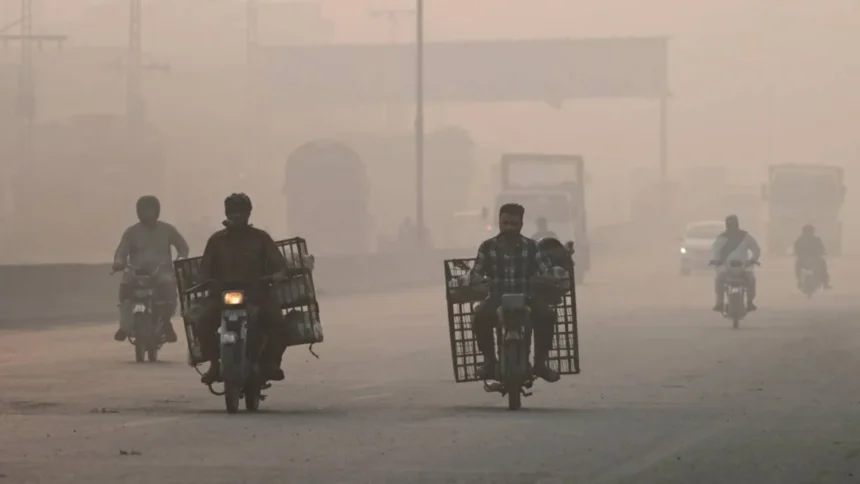
Lahore has been ranked the world’s second most polluted city as deteriorating air quality continues to affect Punjab, prompting authorities to warn residents against prolonged exposure to hazardous smog.
The provincial capital recorded unhealthy levels of air pollution, while several other cities across Punjab also experienced elevated concentrations of pollutants, raising concerns about public health as the annual smog season intensifies.
The worsening conditions have been attributed to a combination of vehicle exhaust emissions, industrial pollution, construction dust and the burning of agricultural waste, compounded by weather patterns that prevent pollutants from dispersing.
Lower temperatures, weak winds and atmospheric conditions that trap polluted air near the ground have contributed to the accumulation of smog over major urban centres.
Environmental authorities have continued monitoring air quality across Punjab and implementing measures intended to control emissions and reduce the impact of pollution on residents.
Health officials have advised people to minimise unnecessary outdoor activities during periods of particularly poor air quality, especially when pollution concentrations reach levels considered harmful to health.
Children, older adults and individuals suffering from respiratory illnesses or cardiovascular conditions face heightened risks from exposure to polluted air.
Prolonged exposure to smog can aggravate asthma and other breathing difficulties, while fine particulate matter can penetrate deep into the lungs and contribute to serious health complications.
Educational institutions, businesses and transport operators have also been urged to comply with government guidelines designed to reduce public exposure and restrict activities that contribute to air pollution.
Punjab has experienced recurring episodes of severe smog in recent years, particularly during autumn and winter, when seasonal weather conditions combine with emissions from transport, industry and agriculture.
Lahore, one of Pakistan’s largest urban centres, has frequently faced particularly poor air quality during these months, disrupting daily activities and raising concerns about the longer-term health consequences for residents.
Officials have emphasised that tackling the problem will require sustained action beyond temporary restrictions imposed during periods of severe pollution.
Measures identified as essential include stricter enforcement of vehicle emission standards, improved regulation of industrial pollution, better management of construction dust and coordinated efforts to discourage the burning of crop residues.