





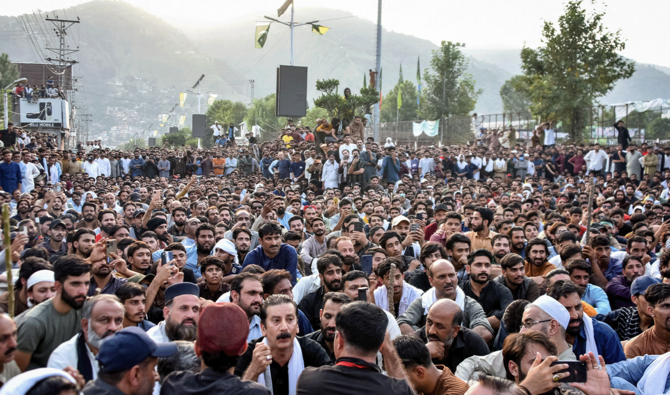
Azad Jammu and Kashmir generates significant hydroelectric power for Pakistan, yet for decades, its people paid electricity duties well above local production costs. Anger peaked in 2023, when the residents took to the streets, eventually uniting under one banner: the Jammu Kashmir Joint Awami Action Committee, the JKJAAC.
The committee presented a 38-point Charter of Demands. In October 2025, the government agreed to 36 demands, leaving two unresolved, including the issue of 12 refugee seats. To address this, the government had agreed to form a high-level committee to address the issue before elections. Eight months later, that committee had made no meaningful progress, and the elections were now weeks away. The government calls it a constitutional challenge. The people of Kashmir call it a broken promise.
The Unresolved Demand: The Battle Over 12 Seats
The AJK Legislative Assembly has 53 total seats: 41 elected by residents of AJK and 12 reserved for descendants of refugees who had fled to Pakistan in 1947.
The JKJAAC argues that Kashmir, as a disputed territory, should have the right to decide its own government. Currently, the 4th or 5th generation of those refugees do not live in Kashmir. The everyday challenges faced by Kashmiris hold less significance for those who do not experience them firsthand.
Conversely, the supporters of the 12 seats argue that they represent the Kashmiri refugees who were displaced and now live across Pakistan. In theory, any candidate can run for these seats, whether they are from a Kashmiri nationalist party or a major national political party like the Pakistan Muslim League (N) or the Pakistan People’s Party.
The opponents of the 12 seats reason that in practicality, the party running the federal government has more funding, better media access and deeper political reach, leading to a better campaign. Secondly, the election machinery, the administration, the local government offices, and the polling infrastructure that oversees the voting process fall under the control of whoever governs the federal government. Opponents reason that the party in power federally has an administrative advantage, giving them an unfair edge in elections.
Kashmir Goes Dark
The JKJAAC planned a protest on 9 June 2026 for the unresolved demands. Closer to the date, the authorities moved to seal Azad Kashmir. Security forces detained more than 100 JKJAAC supporters and labelled the committee as a terrorist group.
A significant portion of Kashmir’s economy runs on remittances from family members working elsewhere in Pakistan and abroad; when the government imposed a curfew across the region and suspended all mobile and internet networks, the families had no way to access their own money. The daily wage labourer, the woman running a roadside stall, the students going to university — all of them were locked inside.
The people of AJK were not just mourning their dead; they were also quietly going hungry, and the world could not see it.
What could potentially happen to AJK’s Legislative Assembly if the seats are not abolished?
If Party A wins 23 of the 41 territorial seats inside Azad Kashmir. Party B wins only 18 territorial seats. But Party B wins 10 of the 12 refugee seats. In the final result, Party A will have 23 seats and Party B will have 28 seats. Party B will form the government even though Party A is more popular among the voters actually living in Azad Kashmir.
What could the future behold?
If the government in Azad Jammu & Kashmir is not by the people, for the people, it will not only affect them but also the entire state. Even if the system is constitutionally valid, will it really be democratic?
A government in Azad Kashmir that is politically aligned with the federal government may become more hesitant in openly challenging Islamabad on issues pertaining to Azad Kashmir. When people feel their concerns are not being strongly represented, they tend to come out onto the streets. Then how many more protesting parties will be labelled as terrorists?