





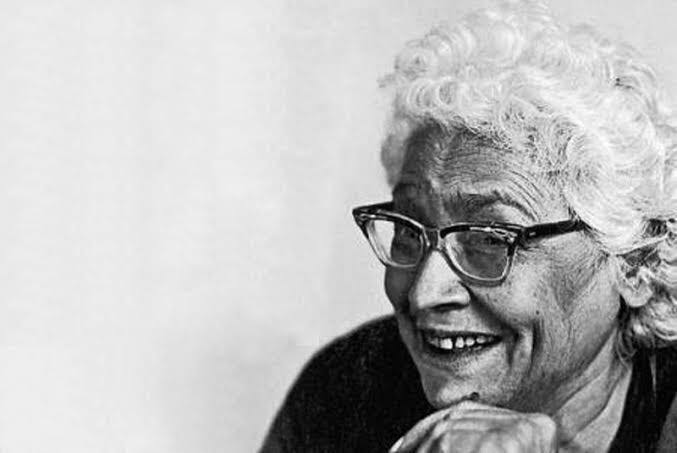
I first encountered Lihaaf (The Quilt) by Ismat Chughtai when I was 18 years old, in my classroom at Lahore College for Women University. It was not part of our curriculum, but one of our teachers wanted us to read it. Picture a classroom filled with girls from diverse backgrounds and experiences, many of whom were unfamiliar with the type of intimacy depicted in Lihaaf. Naturally, it became something almost humorous in the room. We were told to read it at home, and when we came to class, the teacher asked one of us to read it aloud. I still remember my classmate reading it while we kept laughing continuously, some of it at the apparent absurdity of what we were hearing, and some of it out of that peculiar thrill that comes with first encountering sexuality in literature. I also remember a moment where a repeated emphatic expression like “sharappp, sharapp” was read aloud very dramatically, and we all burst into laughter. Looking back now, it is clear how much we missed at the time and how unaware we were of the way the story was actually engaging with female sexuality, desire, and pleasure in a subtle but powerful way.
I was not entirely new to these ideas because I had already read writers like Mumtaz Mufti and Saadat Hasan Manto beforehand, and I knew what raw Urdu literature stood for and represented. Still, I felt a kind of positive shock at the audacity of a woman writing about such themes. The irony was that I was sitting in a female-oriented university, a space full of women with a female teacher where we otherwise had a lot of freedom, yet even there, a certain internalised patriarchy and misogyny still lingered and quietly held us back. What struck me most was that Urdu literature, while it may not always explicitly name female sexuality, has always carried hints of it; it is raw, poetic, deeply literary, and at the same time unflinchingly real. So the story itself was not entirely unexpected in spirit, but its boldness still felt startling. And I kept wondering: if this can still shock us decades later, how much more must it have shocked people when it was first written, and yet why do we, especially as women, feel the need to constantly measure that shock through the imagined gaze of men or society at large?
What sometimes makes me uneasy is how, when a woman writes a story with supposed sexual undertones, it is reduced only to sexuality. Why cannot we move beyond that lens and also see the subjugation, trauma, and deeper social realities underneath it? I remember that Saadat Hasan Manto also faced charges of obscenity, yet critics were quick to transform that controversy into a more philosophical debate about society, morality, and truth. But when it comes to Ismat Chughtai, the first response is often to question the temerity of the woman herself and to focus on the shock value of female intimacy and sexuality. That is certainly one layer, but there are many other dimensions beneath it that deserve to be seen and discussed as well.
So the idea is that Lihaaf has a particular kind of genius that makes the boldness of it, or the intrepidity of it, almost invisible. When it was first published in 1942 in the Urdu literary journal called Adab-e-Latif, it almost sounds oxymoronic, given a journal with the word “adab” in it, and in this respect, Chughtai, according to society, was doing exactly the opposite of what such a journal stood for in her story.
When the British colonial authorities charged Chughtai with obscenity under Section 292 of the Indian Penal Code in 1944, she appeared before the Lahore High Court and issued a challenge so simple yet so complicated. She wanted people to point it out, to show her the sentence, the phrase, and the exact word that was obscene, and the prosecution could not, not because it was not there in the story but because it was so extraordinarily and seamlessly blended in, and the daring aspect was so thoroughly woven into the fabric of the whole story that it was impossible to point it out; that was the obscenity of the quilt, and the quilt could not be unstitched.
If you look at it closely, the story’s premise is basic. There is a young girl who is also the narrator, and she is sent to stay with a woman named Begum Jaan, who is the wife of a wealthy Nawab. The Nawab is indifferent to his wife and prefers to spend time with his own companions. Begum Jaan, on the other hand, remains isolated within the gilded cage of the zenana (women’s quarters), where she forms an intimate bond with her maidservant Rabbo. The child narrator observes this household through her eyes and her limited understanding. In the darkness of the room, when they lie down at night to sleep, the quilt takes different forms, sometimes like a monster and sometimes as if Begum Jaan is doing something strange under it. It continues to rise and fall, but the quilt, that great elephant of a thing, is never still, and this description of the quilt as an elephant is symbolic, something heaving, alive, and enormous; it is not incidental because it becomes the story’s internal sensory metaphor that reflects Begum Jaan’s inner life, so vast and unknowable to society, and also the child’s confusion and fear. It even mirrored the surprise of my classmates when it was read aloud, when it did not make sense to many of the girls, and I understand how it made no sense to the child narrator as well.
There is one aspect that rises from the story and the charge: the obscenity, if it exists at all, lives entirely in the space between the text and the reader’s own mind. Chughtai was not writing the forbidden; she was constructing the precise conditions under which the reader’s imagination writes it for her, and that is a rigorous, formal choice. Through the eyes of a child, it becomes impossible to interpret directly. Therefore, the story spills into two simultaneous tracks, the innocent track and the knowing track, and the reader inhabits both at once, with the discomfort of that doubleness becoming the real site of the story. The quilt becomes an epistemological object because it represents domestic life, desire, and the limits of knowledge, and if one thinks alongside Plato’s allegory of the cave, where shadows are inferior copies of a higher truth, in Chughtai’s story, the shadows cast by the quilt are not copies but the truth itself, an undulating outline with no purer form behind it. That is the truth of Begum Jaan’s life, her desire and suffering existing in an unnameable form because the world refuses to allow any other expression of it.
When Begum Jaan lies down in the afternoon, Rabbo sits beside her and presses and kneads her body, the rhythmic sound continuing for a long time, while the child watches from the doorway and feels an odd heat in her face without understanding it. The doorway becomes a threshold, a liminal space between inside and outside, innocence and knowledge, and between official meaning and what cannot be named, and the child sees something she cannot name, while the reader, through her eyes, supplies the naming, and, in that sense, the complicity is complete.
What needs to be understood in the story is that female sexuality is not necessarily to be seen as a transgression or as a metaphor but as a reality, as an ordinary fact. Similarly, domestic violence is not to be seen as just the grinding texture of marriages but, again, as a reality that exists in lived, everyday space. What made people uncomfortable about this story was precisely this: that realities were not disguised or softened into symbols but presented as realities. The interior lives of women are depicted in a way that feels radical even today, and what unsettles the reader is not exaggeration but recognition. It is also the fact that the story does not reduce the woman to an object of observation or moral judgement but instead insists on understanding her as a subject with desire, discomfort, isolation, and complexity that cannot be neatly explained away.
In that sense, Lihaaf refuses the comfort of distance. It does not allow the reader to stand outside the lives it portrays and judge them safely; instead, it draws the reader into the act of interpretation itself. The unease it produces comes from how closely it mirrors what is usually left unspoken, especially in domestic spaces where silence is often mistaken for normalcy. And perhaps that is why the story continues to matter: it does not offer resolution or reassurance, but instead leaves behind a kind of moral and emotional discomfort that forces the reader to confront what is seen, what is implied, and what is too easily ignored.