





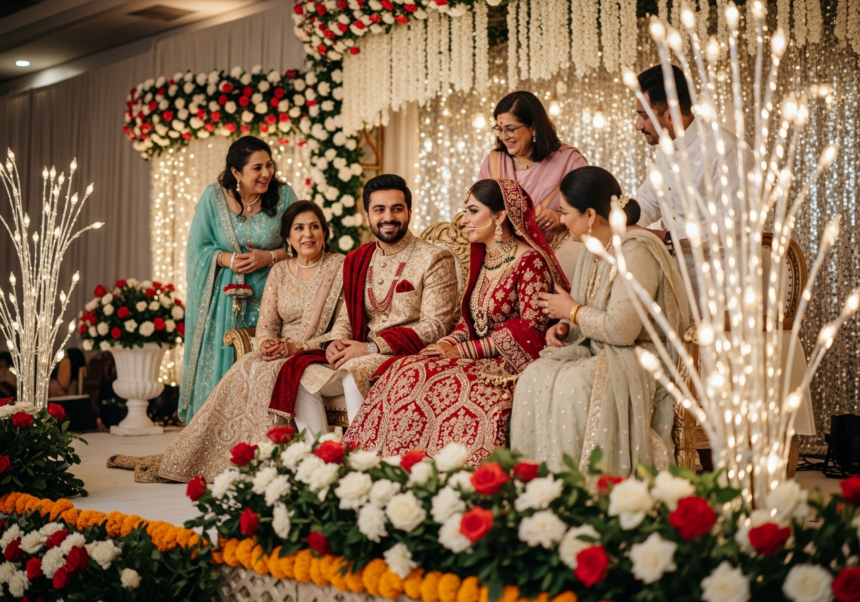
Before the wedding even begins, the psychological warfare starts with the arrival of the invitation card — usually involving mild suspicion regarding the background or character of the opposite party, whether groom or bride.
A seasoned wedding veteran knows how to establish an absolute monopoly on household chaos well before the event. After all, it is an unspoken tradition that at least one distant aunt must take offence at you for no discernible reason. The most important rule? The domestic drama must endure across all days — from the very first strike of the dholak to the final piece of mithai boxed up after the valima.
Phase One: The Almost-Bridal Ensemble
Then comes the strategic planning. You certainly do not need to be the bride or groom to dominate the event planning discussions; after all, why should the couple monopolise the spotlight when you are present?
The minute the invitation arrives, sit actively in front of your laptop and search: “Trending Bridal/Almost-Bridal Looking Dresses 2026.” You will be presented with endless options, but you must on no account ignore the color red. Who ever claimed crimson was reserved exclusively for the bride? You can — and should — wear it without hesitation.
Next, match your jewellery to the ensemble, keeping one crucial rule in mind: the total weight must not be less than that of a newborn infant. If your jewellery feels lightweight, you are doing something fundamentally wrong:
- The Necklace: Must be heavy enough to cause noticeable cervical strain.
- The Bangles: Must produce a sharp, continuous metallic echo that reverberates across the banquet hall.
- The Jhumkas: Must be oversized enough for guests on stage to spot them while you are still negotiating the entrance venue.
Every day is your day. Why hesitate to make someone else’s wedding entirely about you?
Phase Two: Rehearsal and Entrance Protocol
Selecting the outfit and jewellery is only the beginning. You must practice your grand entrance at home beforehand, much like a bride practising her walk in heavy heels and an embroidered dress — though hers will obviously be far less elaborate than yours. Master the catwalk: tripping on such a high-stakes occasion is unacceptable, and a standard gait simply will not suffice. Be dramatic.
Enter the hall like a film star, visualising dramatic background scores as though you are the undisputed guest of honour. If the crowd does not turn to stare at you in utter awe, you have failed at this stage. Come prepared.
Greet everyone in your path with theatrical intensity, as if you have been desperately longing to see them:
“Oh my god, look how much you’ve grown, my little baby! Remember when I used to hold you in my arms?”
“Long time no see, Shabana!” — as though you did not just sit next to her last week.
The entrance marks the beginning of the performance you are about to deliver. By the end of the evening, every guest will remember your name, face, and outfit. You are here to outshine top film stars — the bride and groom are merely background extras.
While gliding through the venue and greeting guests, ensure you step into every open camera frame. Act entirely indifferent to photography, then casually adjust your dupatta, laugh delicately, and say:
“Fine, since you’re so eager, let’s take a quick picture.”
Phase Three: Stage Occupation and Post-Stage Duties
One vital rule must be observed: despite arriving notoriously late, you must reach the main stage immediately and refuse to vacate the premises until the venue management begins switching off the floodlights. This is where your dress will directly rival the bride’s, creating genuine confusion among late arrivals as to whose wedding it actually is. If guests can easily identify the bride, you simply did not try hard enough.
Engage the couple as if you have known them since before they were born. Eat alongside them, laugh unnaturally loud, and ensure your smile dominates every official photograph. History will preserve the memory of your presence through these album frames; decades later, future generations will look at the wedding album and wonder who the glamorous auntie in every single photograph is.
If you happen to step down from the stage temporarily, several crucial secondary duties await your attention:
- Critique the Decor: Publicly remark on how the floral theme clashes with the linens, emphasizing how your cousin’s wedding seven years ago was far superior.
- Deploy High-Precision Lenses: Scan the crowd to identify which young guests are next in line for marriage, actively gathering prospective biodata.
- Intervene in Conversations: Randomly insert yourself into private group discussions and make their affairs your immediate business.
These are merely foundational guidelines — the true technique lies in your personal charm and execution. Always remember: sharing the spotlight is never an option. All the dramatic flair you have been cultivating since childhood exists for this very moment!