





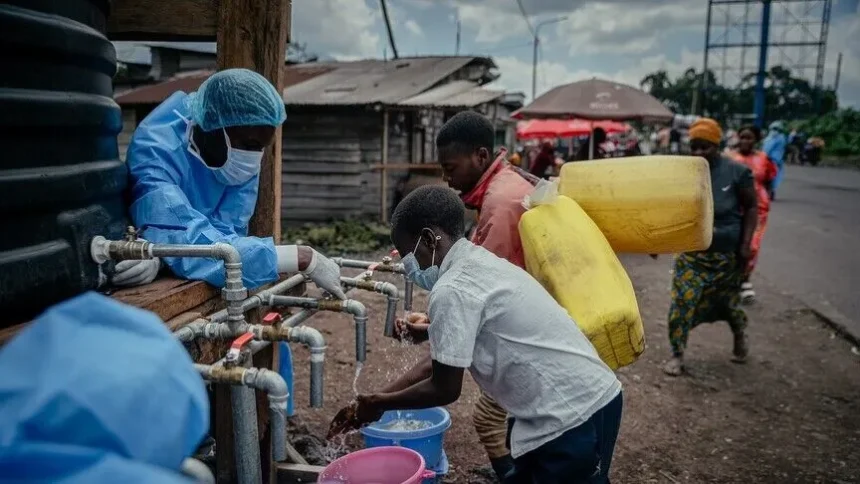
Schools across the Democratic Republic of Congo reopened on Tuesday for the new academic year despite an expanding Ebola outbreak that has killed nearly 3,000 people and spread across six provinces.
Education Minister Raissa Malu said the academic year had begun nationwide, including in communities affected by the outbreak, with authorities seeking to maintain access to education while adapting teaching arrangements to local health risks.
“Some parts of our country continue to face insecurity and conflict, while others face the health risk linked to the Ebola virus disease,” Malu told reporters in Kinshasa.
“But our duty remains the same — to make schools work wherever possible and to preserve the right to education wherever circumstances make the situation more difficult,” she said.
Around 31 million students are expected to attend schools across the country during the academic year.
Malu said conventional classroom teaching would continue wherever public health conditions permitted, with schools required to follow recommended measures aimed at reducing the risk of infection.
In areas facing greater danger, authorities could introduce a simplified distance-learning system to prevent prolonged disruption to education.
The outbreak, caused by the Bundibugyo virus, has now affected 60 health zones across Ituri, North Kivu, South Kivu, Haut-Uele, Bas-Uele and Tshopo provinces.
According to a Health Ministry update issued Tuesday, the number of confirmed cases has risen to 6,100, including 2,950 deaths, with Ituri remaining the epicentre of the outbreak.
The decision to reopen schools presents authorities with the challenge of keeping millions of children in education while responding to an epidemic that continues to spread across parts of the country.