





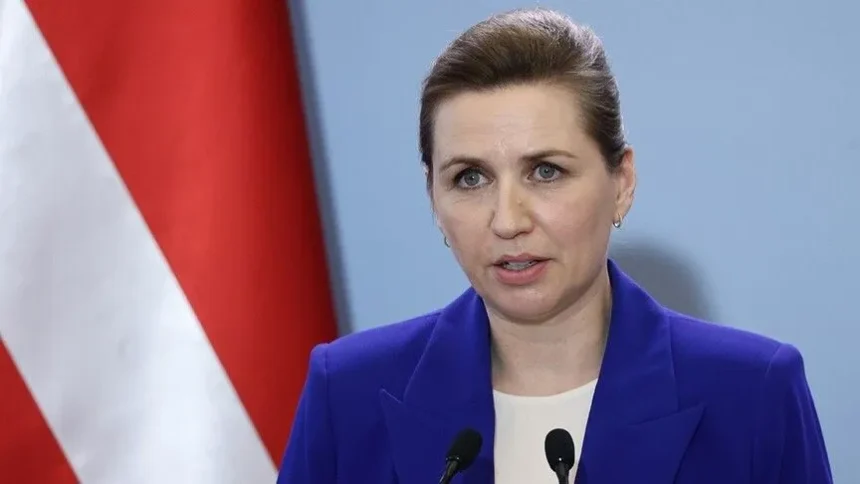
Danish Prime Minister Mette Frederiksen on Wednesday called for discussions on banning headscarves in public primary and lower secondary schools, describing the religious garment as a symbol of oppression and reigniting debate over religious freedom and personal choice in Denmark.
Speaking to Danish newspaper Jyllands-Posten, Frederiksen expressed her opposition to the wearing of headscarves by schoolchildren.
“The headscarf is, in my eyes, an expression of oppression,” the prime minister said.
Her remarks have prompted renewed discussion over whether religious head coverings should be prohibited in public schools, although the proposal faces resistance within Denmark’s governing coalition.
According to The Copenhagen Post, at least one of Frederiksen’s coalition partners opposes introducing such a ban, highlighting divisions within the government over the proposed restrictions.
The latest proposal forms part of a broader debate in Denmark over the place of religious clothing and practices in educational institutions.
In June 2025, Frederiksen announced plans to extend the country’s existing prohibition on full-face veils to schools and universities.
Denmark introduced a nationwide ban on clothing that conceals the face in public places in 2018, a measure affecting garments such as the burqa and niqab.
The government has also sought to discourage the establishment of dedicated prayer rooms in educational institutions, arguing for changes to the regulation of religious practices in educational settings.
However, the proposed restrictions have drawn criticism from human rights organisations and religious groups, which warn that prohibitions on religious clothing could undermine fundamental freedoms.
Amnesty International and other critics have raised concerns that such measures discriminate against religious communities and interfere with individuals’ freedom to practise their faith.
Opponents also argue that restricting women’s clothing choices in the name of combating oppression could itself undermine their personal autonomy.
The debate highlights competing views over religious expression, gender equality and the role of the state in regulating clothing in public educational institutions.
Unlike Denmark’s existing prohibition on full-face coverings, the proposed headscarf restriction would concern a garment that generally leaves the wearer’s face visible.
Any move to introduce such a ban would require the government to address opposition within its coalition as well as concerns about religious freedom and discrimination.
No agreement on implementing the proposed headscarf ban has been announced.