





With a rise in the cost of living and severe climate shocks, ordinary households in Pakistan are paying twice for the crisis not created by them.
From a general perspective, the climate crisis in Pakistan is usually considered the one damaging the infrastructure, livelihoods and the natural environment. To an extent, yes, the climate shocks bring high-intensity floods, high temperatures and appeals from the government to the global partners to fund climate-resilient initiatives. However, climate change also adversely impacts the lives of ordinary Pakistani citizens, which, quite often, is not mentioned in the headlines but is felt by people in their day-to-day lives. This can be in the form of them experiencing an abrupt spike in the prices of the goods and services, rising bills and volatile incomes, all of which reduce their purchasing ability. Climate change is not only an environmental catastrophe, but it also brings economic challenges for Pakistan.
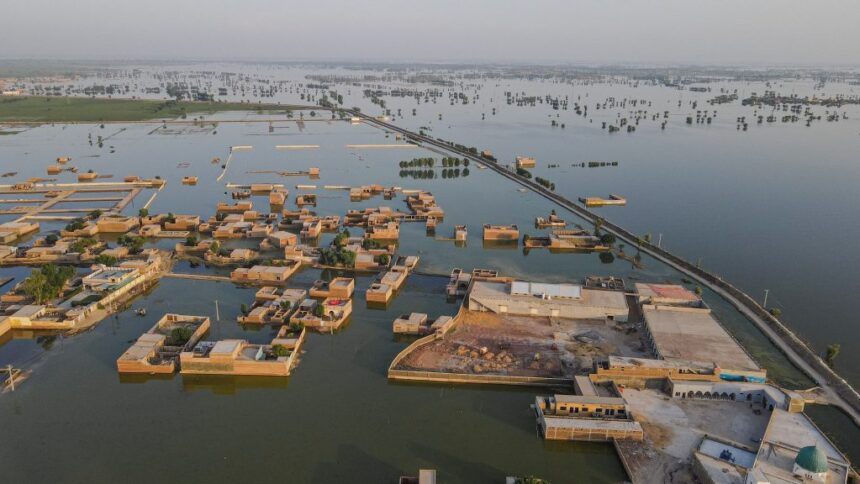
Pakistan’s contribution towards the global greenhouse gas emissions is less than 1 per cent. However, according to the Global Climate Risk Index, the country has been ranked as one of the most climate-vulnerable countries in the world. This vulnerability can cause economic instability in the country. For instance, the floods in 2022 drowned one-third of the country, causing financial losses of more than $30 billion. This affected over 33 million people, as per the 2022 post-disaster needs report of the government of Pakistan and the World Bank. While at the state level, reconstruction initiatives were highlighted, their lasting economic turmoil in the lives of the citizens was not given the attention it deserved by the government, as it left the incomes of many households and living costs disturbed.
The agriculture sector is climate-sensitive and extremely volatile in Pakistan, which can affect the crop yields (such as wheat, rice and vegetables). The Asian Development Bank mentioned that in Pakistan, climate change can reduce crop production by 8–10 per cent by 2040, especially when there are few adaptation initiatives. In 2023, Pakistan’s Consumer Price Index reported that food inflation was more than 30 per cent. People in low- and middle-income countries usually spend a large sum of their income on food, and a slight rise in prices can make them lose a lot and push them into poverty.
With the intense occurrence of heatwaves across South Asia, climate stress has reduced the labour productivity and the incomes of the people (such as those working in agriculture, construction and other outdoor sectors) by 5 per cent by 2030, as per one study from the International Labour Organisation (ILO). The limited working hours of those who earn a daily income can reduce their earnings, while for the urban residents, it could be in the form of unstable incomes due to a turbulent economy hit by climate disasters.
One significant burden for the low- and middle-income families in Pakistan is the frequent rise in energy prices. As Pakistan invests in energy infrastructure and seeks to stabilise the power sector, electricity tariffs have continuously risen. There is a dire need for the government to make energy reforms, as climate adaptation initiatives contribute to an increase in energy prices. With a rise in temperatures, demand for cooling and electricity also increases in Pakistan during the summer season, which makes ordinary households suffer from a dual financial crisis, such as an increase in consumption and rising electricity tariffs. Water scarcity is another major issue which can lead to stress for households. According to the Pakistan Council of Research in Water Resources (PCRWR), Pakistan is reaching the water shortage limit, with per capita water availability falling from 5000 to 1000 cubic metres from 1951 till today.
Climate variability can change the pattern of rainfall; it can melt glaciers or cause frequent droughts. For urban households, a shortage of water can also mean buying a private water source or investing in a storage system, which can further raise expenses for already scarce budgets. At the macroeconomic level, government funding in climate-resilient infrastructure and disaster preparedness is important for Pakistan. But, practically, many fiscal adjustments for these initiatives can rely on indirect taxation and high utility prices, which can influence the livelihoods of low-to-middle-income families in the country.
Simply put, the victims of the climate crisis pay for it twice: once through them getting affected by it and second through them contributing to its mitigation initiatives in Pakistan. This raises an important concern that climate resilience must be fairly distributed in terms of its burden within Pakistan, which already faces structural issues such as high inflation, currency fluctuations, limited fiscal space, etc. When climate policies unintentionally put a burden on the poor and working-class households, they tend to receive less public support required for long-term climate action to address the impact of the climate crisis in Pakistan.
As envisioned under Pakistan’s third nationally determined contribution (NDC 3.0) report, an equitable approach is required to make the use of climate finance transparent in its access and create a positive impact on the lives of vulnerable communities rather than just building large infrastructure. Secondly, climate adaptation policies should boost social protection, like targeted subsidies, climate-resilient agriculture support, and income security for climate-exposed workers. There should be a just transition to clean and renewable energy, with efforts made to empower local governments and village organisations to design and deliver climate adaptation programmes. These should be aimed at protecting women, farmers, vulnerable populations, etc.
Policymakers should understand that the climate crisis has socio-economic and political impacts on society, affecting the well-being of the people in Pakistan. Investment in climate-resilient initiatives can be burdensome for the citizens who have to face a high cost of living due to crop failure, reduced labour productivity due to extreme temperatures and a sudden increase in electricity bills due to energy stress and increased demand during the summer season. The government and policymakers must ensure that the burden of climate adaptation and mitigation is equitably distributed and does not push the majority below the poverty threshold.