





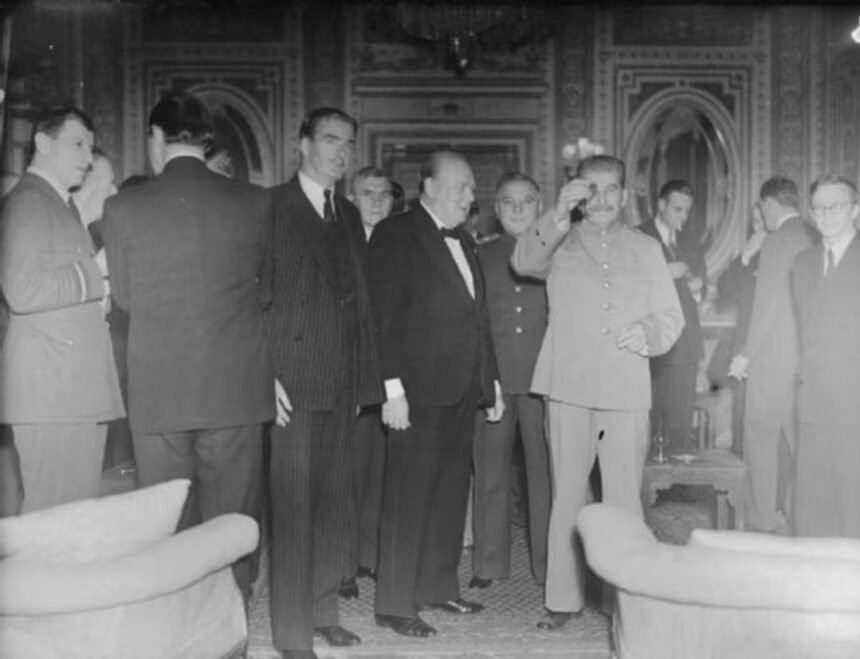
Winston Churchill kept a glass in his hand all day, yet rarely slurred a word. His secret to functioning at an elite level was a deceptive trick his family called “Papa’s cocktail.”
Shortly after waking, Churchill would pour a minuscule splash of Scotch whisky into a large tumbler of water. His private secretary, Jock Colville, described the mixture as resembling a weak mouthwash flavoured with whisky. Churchill would nurse this single, highly diluted drink slowly throughout the entire morning, keeping his actual blood-alcohol level incredibly low during his peak working hours.
The myth of the incapacitated, staggering statesman was largely a persona Churchill encouraged to disarm his opponents. In reality, he was a steady maintainer, not a binge drinker. When he did consume heavier alcohol, it was carefully paced and always anchored by large meals. Churchill had a lifelong fondness for Pol Roger champagne, which he drank regularly with lunch and dinner. After meals, he would switch to brandy or cognac. By spreading his intake across a 12- to 15-hour waking day and always pairing it with food, he avoided the sudden blood-alcohol spikes that cause visible intoxication.
He also possessed a naturally high physical tolerance. His reliance on alcohol was formalised in 1931 after a near-fatal car accident in New York; an American physician famously wrote him a prescription for a daily minimum of 250 millilitres of spirits. While historians view this note as a humorous Prohibition-era loophole rather than a medical necessity, it cemented his public reputation.
Wartime associates noted that Churchill never lost his cognitive sharpness during meetings. His massive output of speeches, books, and strategic planning remained intact. He simply understood exactly how his body processed alcohol, proving his own famous claim that he had taken more out of alcohol than it had taken out of him.