





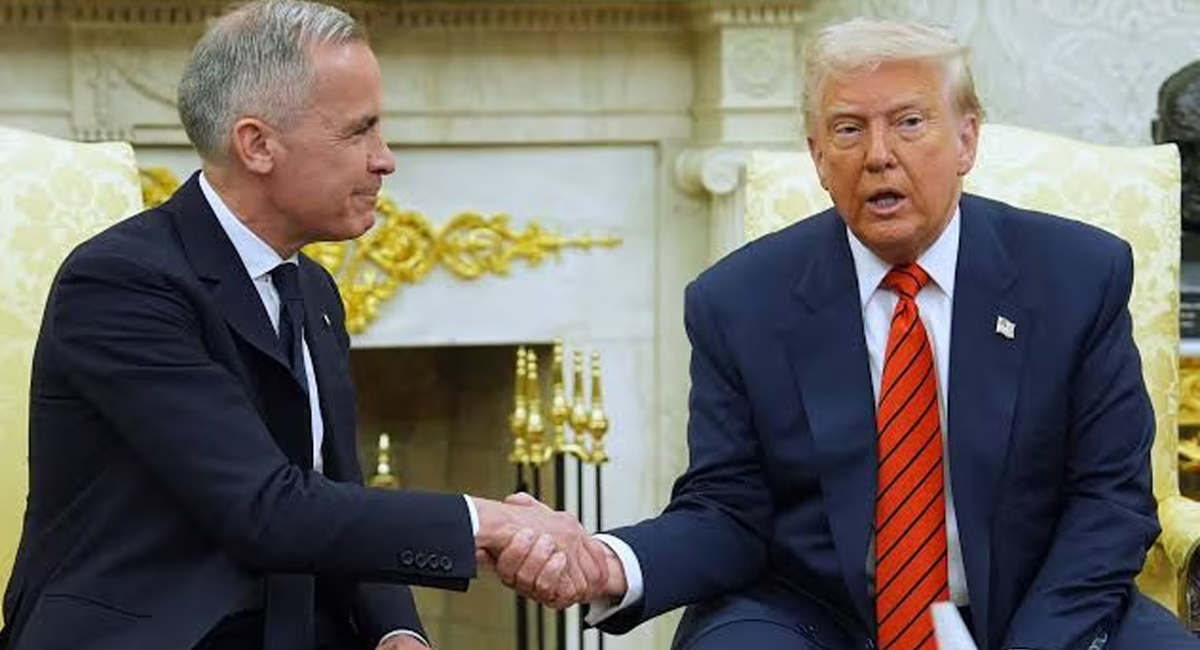
Canada will announce new measures on Tuesday in response to US President Donald Trump’s latest tariffs, as a deepening trade dispute between the two longtime allies shows little sign of easing.
The Canadian government said its finance, industry and labour ministers, along with other officials, would hold a news conference in Ottawa to outline measures aimed at protecting Canadian workers and businesses.
Canada and the United States failed to reach an agreement on Friday to prevent new 50 per cent US tariffs on selected Canadian goods, which took effect on Saturday.
Trump escalated tensions further on Monday by saying tariffs on Canadian automobiles would be doubled to 50 per cent next year. Canadian vehicles currently face a 25 per cent US tariff on their non-US content, while imported steel generally faces a 50 per cent duty.
Canadian Prime Minister Mark Carney, who rejected what he described as a “bad deal” with Washington, has announced retaliatory tariffs that will take effect on September 8. The measures are expected to target US steel and dairy products as well as agricultural equipment, paper and electronics.
“Our goal has always been to get the best deal for Canadians, never a deal at any price or on any time frame,” Carney said.
He accused US negotiators of seeking terms that threatened key Canadian industries, including the automotive, steel and aluminium sectors.
“That is one of the main reasons why we said no,” Carney said, adding that strengthening domestic production and diversifying Canada’s international trade had been “plan A from the start.”
Carney also claimed US negotiators made last-minute demands concerning Canada’s trade agreements with other countries and raised issues affecting the French language and Quebec culture.
US Vice President JD Vance, however, blamed the breakdown in negotiations on what he described as Canada’s “unreasonable last-minute demands.”
The stakes are significant for both economies. Around 70 per cent of Canadian exports go to the United States, while Canada remains one of Washington’s largest trading partners in goods.