





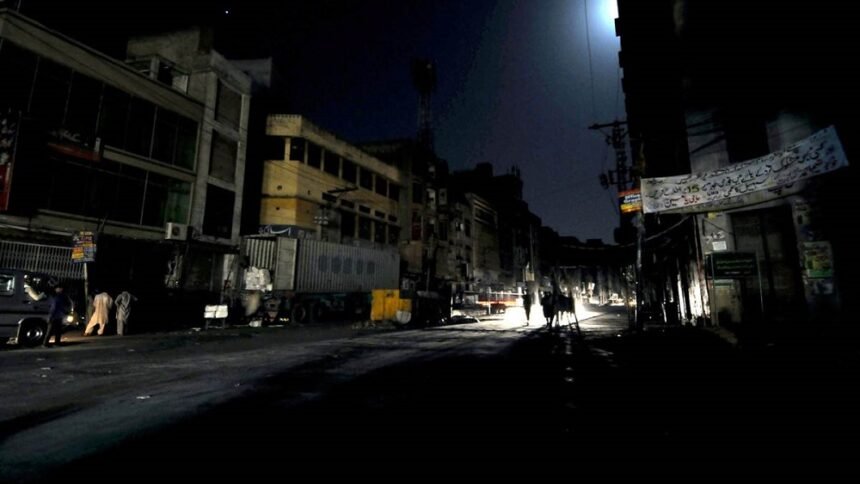
The fan slows first. One second it’s pushing hot air around the room; the next it’s surrendering, blade by blade. You don’t check the switch. You already know. The power’s gone again. You reach for your phone to check the time, the percentage, and the hours you have left. This isn’t an inconvenience. This is rehearsal. You’ve done this too many times to be even a tad bit surprised.
Load shedding in Pakistan lives on as muscle memory. We don’t react anymore. We just prepare. We charge devices early. We store water. We plan meals around outage schedules. Darkness has been domesticated. And the moment a failure becomes routine, it stops feeling like something that can be challenged.
If you ask me, these outages don’t feel accidental anymore. Not when they arrive with such discipline. Not when entire areas are plunged into darkness while others glow uninterrupted. Not when the same explanations: fuel prices, circular debt, theft—are repeated for decades without resolution. A crisis that lasts this long is no longer a malfunction. It’s a structure. And structures don’t survive unless they serve someone.
In most countries, electricity is so basic it’s practically invisible. No one campaigns on it. No one thanks the government for keeping the lights on. It exists, and that’s the whole point. In Pakistan, uninterrupted electricity is treated like a political achievement. Every election season, “no load-shedding” is announced like a vision statement rather than an obligation. And that promise works to date, just because we’ve been trained to expect darkness.
This is how deprivation becomes leverage. When the lights go out, frustration rises. When they return—even briefly—gratitude follows. A permanently unstable system gives politicians control over something intimate: your evenings, your sleep, your productivity. Darkness lowers expectations. Stability, however temporary, feels like progress.
And let’s be honest, this darkness isn’t shared equally. The wealthy switch on generators, inverters, and solar panels humming behind walls. Offices stay lit. Malls glow. Meanwhile, students lose study hours, small shops shut early, and hospitals ration backup power. Women bear the heat indoors, unpaid labour multiplying while comfort disappears. Load-shedding sharpens inequality.
Responsibility, meanwhile, evaporates. Circular debt. Fuel prices. Weather. Theft. Previous governments. Every explanation floats by without consequence. The system is made deliberately incomprehensible. Confusion leads to protection. If no one can trace the failure, no one can punish it.
Then election season arrives, and suddenly the darkness softens. Emergency fuel is imported. Outages shorten. Press conferences bloom. The message doesn’t need to be spoken: see what happens when we’re in charge? Vote correctly, and the lights might stay on. Electricity becomes a campaign tool rather than a public service.
This is where voter sentiment shifts in dangerous ways. Chronic load-shedding exhausts people. Exhausted citizens don’t vote on ideals but instead on relief. They stop asking for reform and start bargaining for comfort. Democracy doesn’t always collapse loudly. Sometimes it sweats itself into submission.
We’re told to admire our resilience. To celebrate how well we cope. Generators hum. Inverters click. Solar panels rise where money allows. Every private solution lets the state retreat further. Every candle lit is a quiet acceptance that failure will not be corrected.
So let’s just stop asking when the power will go out. That question itself proves how low expectations have fallen. Ask instead why uninterrupted electricity ever became negotiable. Why a basic right was transformed into a campaign promise? Why did we accept darkness as our political climate?
And the next time a politician promises “no load-shedding,” pause. Not in hope—but in anger. Because they’re not offering you progress.
They’re admitting how long they’ve been allowed to leave the lights on.