





How rising fuel prices are reshaping Karachi for the Poor
For some, rising petrol prices mean more expensive drives. For others, it means a child missing school, a family choosing between healthcare and food, or an entire day’s earnings disappearing on the way to work.
In Karachi, people face high transport costs due to high fuel costs; however, this issue is compounded by the fact that the city itself charges low-income individuals multiple times. The documentary Karachi Rising (2013), produced with funding from the International Institute for Environment and Development (IIED), highlights this issue. One individual from Lyari says, “Why are the poor always being sent to the edge of the city? Surely they should have space in the middle of the city?”
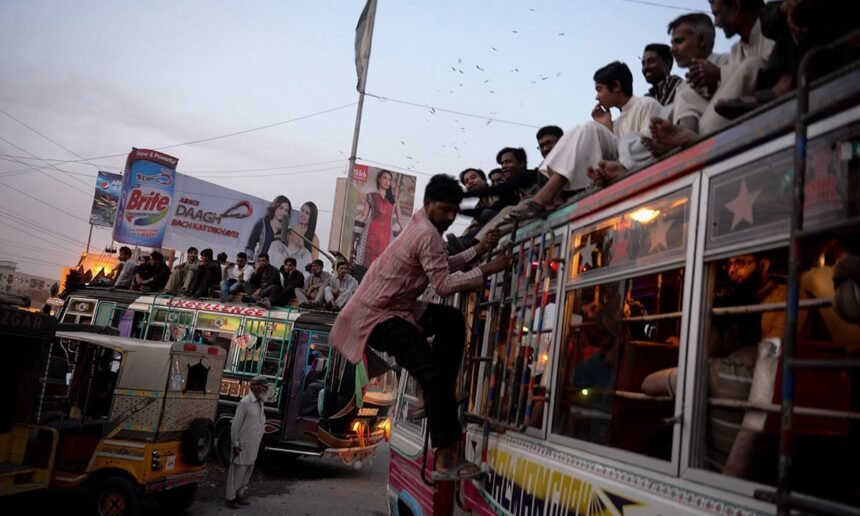
The documentary shows how having a lower-cost home can cause issues. Those who moved to the edge of the city found that transport costs had more than doubled. Women in particular work further affected, as their mobility is not only restricted by affordability but by social Expectations and concerns about personal safety. The documentary shows that these women in Karachi have to travel for about four hours daily to and from their workplace through public transportation such as buses. While the alternatives are not equally accessible or acceptable: travelling by motorcycle is relatively fast and affordable, but there are cultural barriers that stop the women from using them freely because of safety issues, cultural discouragement, and a negative perception of women travelling alone.
Kulsoom moved to Surjani Town after finding an affordable plot of land to buy on instalments. However, this caused her to lose time due to having to wait for 2 hours for a bus into the city. Transport costs are clearly an issue here because it is not a one-off cost.
Those who work as delivery drivers in Surjani or Orangi and travel to commercial areas, or those working as domestic workers travelling to homes in Clifton, will feel the impact of increased fuel prices more than a high middle-class man living in DHA owning a paid-for private car. Increased petrol prices may be a slight inconvenience to him; however, those travelling from bus to bus, or even on their own motorcycles, will see it as an active threat to their routine.
Karachi can’t ask these residents to adapt while overlooking the structural issues of the city that cause these exact issues. Affordable housing near places of work, reliable public transport, safer travel, and clear land use planning are essential. It ensures everyone has equal access to education, work, and public life.
The low-income population of Karachi shouldn’t have to become used to travelling for 2 hours on overcrowded buses and increasing fares due to fuel shocks. Exhaustion isn’t a reasonable price for earning barely a living. If the poorest individuals in the city have to pay the most to get to a place of opportunity, then who is this city really for?