





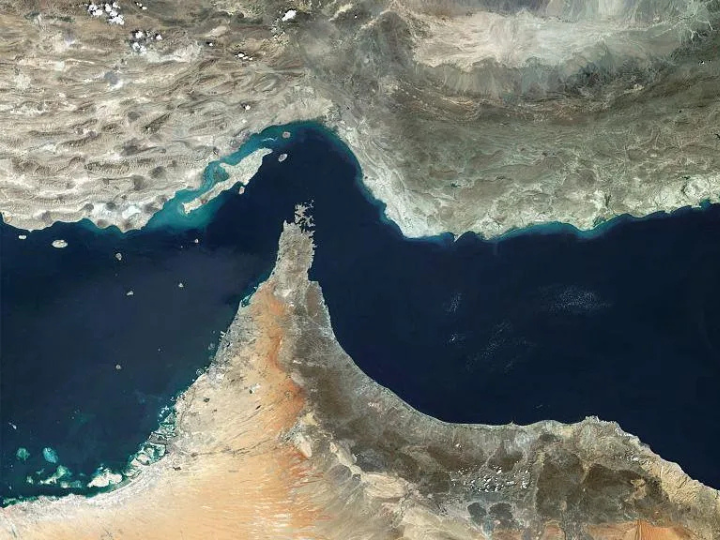
The Strait of Hormuz is one of the most important maritime passages in the world. It connects the Persian Gulf with the Gulf of Oman and the wider Indian Ocean. A large share of global oil and gas supplies passes through this narrow waterway. Any military tension in this area creates consequences far beyond the Middle East.
For Pakistan, the issue is not distant. Pakistan depends heavily on energy imports. Any disruption in Gulf shipping routes can directly affect energy prices, economic stability, and regional security. This makes the Strait of Hormuz not only a strategic issue but also an international legal concern.
International law recognises the importance of freedom of navigation. Under the United Nations Convention on the Law of the Sea (UNCLOS), ships have certain rights of passage through maritime areas. However, these rights are not absolute during situations of armed conflict. States may attempt to restrict movement by claiming security concerns, but such actions raise serious legal questions.
The main legal problem is the balance between state security and freedom of navigation. A country involved in a conflict may argue that restricting ships is necessary for self-defence. Other states may view the same action as a violation of international maritime law and global trade rights.
The United Nations Charter provides the basic framework for the use of force. Article 2(4) prohibits the threat or use of force against the territorial integrity or political independence of another state. Article 51 allows self-defence in response to an armed attack. The difficulty is that modern conflicts often involve indirect actions, military pressure, and threats against strategic locations. This creates legal uncertainty.
The Strait of Hormuz also shows the connection between international humanitarian law and economic security. Although international humanitarian law mainly focuses on armed conflict and the protection of civilians, attacks on critical infrastructure and trade routes can have wider humanitarian consequences. Rising fuel prices and supply disruptions can affect ordinary populations, especially in developing countries.
Pakistan faces particular challenges because of its geographical and economic position. The country has strong economic links with Gulf states and relies on stable maritime routes for energy security. Any prolonged crisis in the region could increase import costs and create pressure on Pakistan’s economy.
At the same time, Pakistan has an interest in maintaining regional stability. A conflict affecting the Strait of Hormuz could increase tensions in a region where Pakistan has important diplomatic and economic relationships. Islamabad has traditionally supported dialogue and peaceful dispute resolution, but it must also manage the practical consequences of regional instability.
Another important legal question is whether international institutions can effectively protect global trade routes. The United Nations Security Council has the authority to respond to threats to international peace and security, but political disagreements among major powers often limit its effectiveness.
The Strait of Hormuz represents a larger challenge for international law. The rules exist, but enforcement remains difficult when powerful states are involved. Maritime law can define rights and obligations, but it cannot always prevent political decisions that create conflict.
For Pakistan and other developing countries, protecting international trade routes is not only a legal issue. It is connected with economic survival, energy security, and regional peace.
The future of the Strait of Hormuz will test whether international law can protect shared global interests in an increasingly unstable world. The question is not only who controls the waterway. The bigger question is whether international law can ensure that critical routes of global commerce remain protected from the consequences of conflict.