





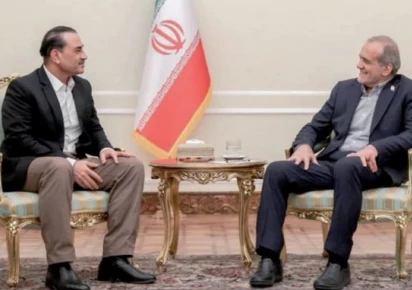
Pakistan’s Chief of Defence Forces and Army Chief Field Marshal Asim Munir has urged Iran to use its influence to discourage Yemen’s Houthi group from attacking Saudi Arabia’s oil and economic infrastructure, Pakistani government officials told Anadolu.
The appeal came during a telephone conversation between Munir and Iranian Foreign Minister Abbas Araghchi on Wednesday, as Islamabad continues diplomatic efforts aimed at reducing tensions in the Middle East.
Iranian state media confirmed that the conversation took place while Araghchi was visiting China.
“The army chief discussed the overall regional situation, with special focus on Houthis’ attacks and revival of stalled direct talks between the US and Iran,” a Pakistani source familiar with the discussions said.
According to the officials, Munir asked Tehran to “use its influence” with the Houthis to help bring an end to strikes targeting Saudi energy and other economic infrastructure.
The sources described Araghchi’s response as “hopeful” but provided no further details about the Iranian foreign minister’s position.
Iran has maintained that it does not direct Houthi actions. Iranian Foreign Ministry spokesman Esmaeil Baqaei recently said Tehran does not interfere in Yemen’s affairs and described the Houthis as independent actors “pursuing their own interests.”
The conversation followed the interception of a drone near Makkah on Tuesday. Saudi Arabia said the aircraft was destroyed before entering restricted airspace over the holy city, while the Houthis denied launching it. The incident prompted condemnation from several countries, including Muslim-majority states.
The diplomatic engagement also comes amid closer defence cooperation between Islamabad and Riyadh. Pakistan and Saudi Arabia signed a bilateral defence agreement last year, followed last month by the trilateral Makkah defence agreement involving Pakistan, Saudi Arabia and Türkiye.
Yemen’s conflict dates back to the Houthi takeover of Sanaa in 2014, which was followed by a Saudi-led military intervention in support of the internationally recognised Yemeni government in 2015.
Fighting has intensified again since July, when the Houthis announced a maritime blockade targeting Saudi Arabia. The group has since claimed territorial advances along the Red Sea coast and around the strategically important Bab el-Mandeb Strait, while attacks on Saudi oil infrastructure have added to concerns over regional energy supplies and global oil prices.